
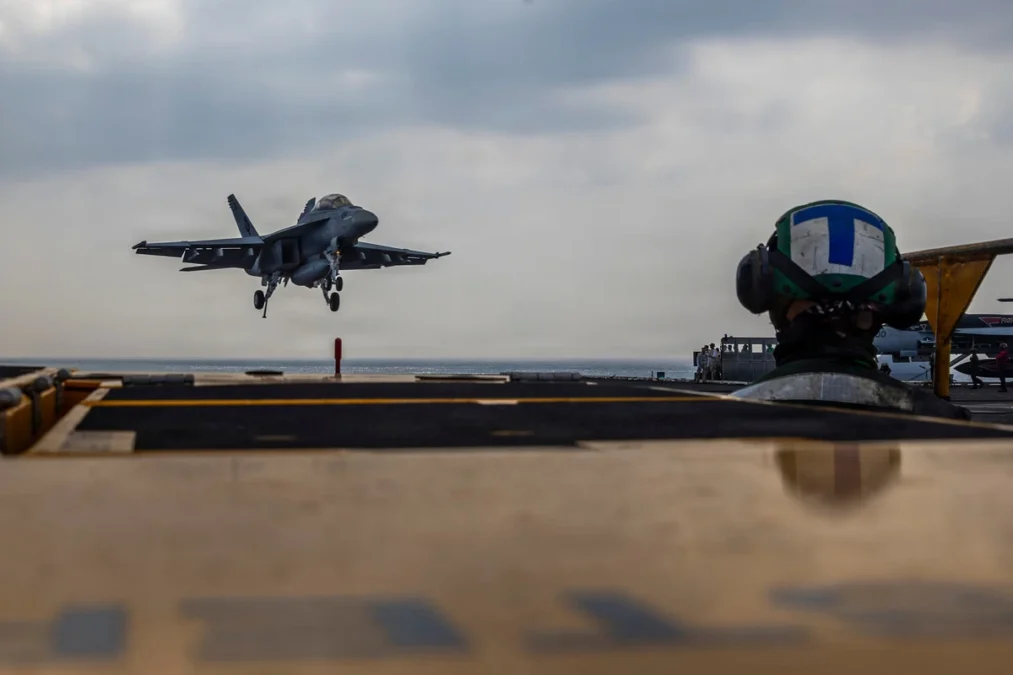
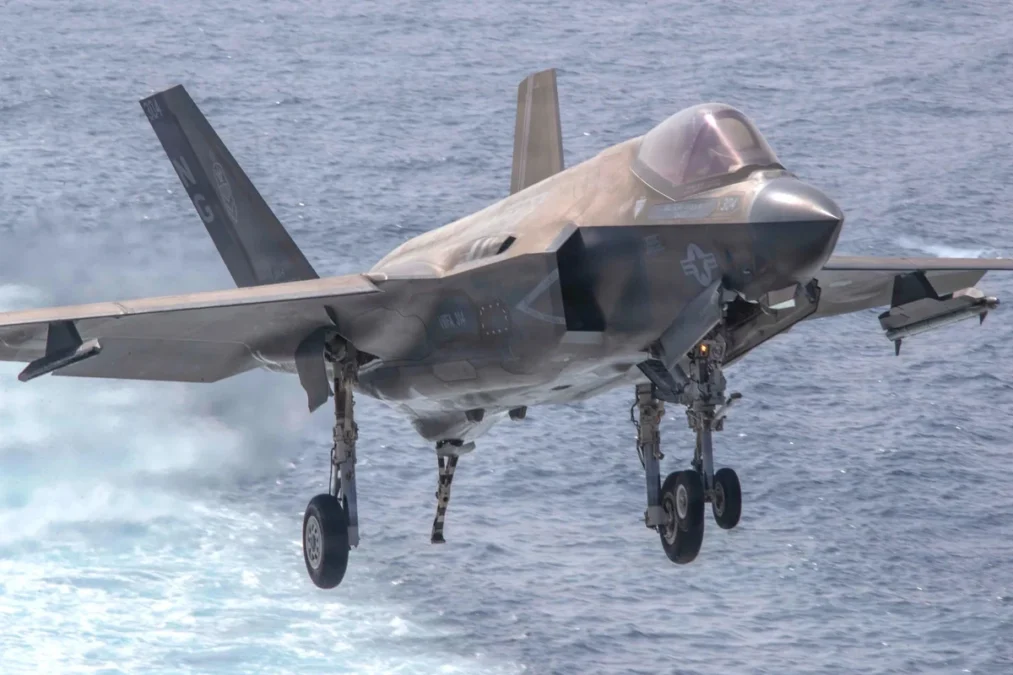
February 4th, 2026: In an important military decision which highlights the increasing tension in the Middle East, U.S. shoots down Iranian drone in the sky, which was flying near a US Navy aircraft carrier, American officials say. The US officials believe that the drone was aggressive and did not respond to any warning signals, this is what made a US F-35 fighter jet destroy the drone to save the carrier and its crew. There were no reported injuries or harm.
It occurs during the period of increased tension between the US and Iran, as military actions in the strategic waters become more intense. As military conflicts persist, the two nations have shown that diplomatic negotiations are currently under consideration thus pointing out to the thin line that exists between military efforts and diplomatic efforts in the region.
Related Stories

Drone Approaches USS Abraham Lincoln With ‘Unclear Intent’
On Tuesday, an F-35C fighter jet of the U.S. shoots down Iranian Drone Shahed-139 that was heading to an aircraft carrier, USS Abraham Lincoln, in the Arabian Sea. The US Central Command characterized the actions of the drone as aggressive and of uncertain motive and used self-defence measures to protect the carrier and the men on board.
The shoot-down happened when the carrier strike group was off the southern coast of Iran approximately 500 miles (800 kilometers). The military said that no US personnel were injured or any equipment damaged during the incident.
Incident Timeline
F-35C Fires to Protect Carrier. The U.S. shoots down Iranian drone when an F-35C Joint Strike Fighter is fired out of the deck of the USS Abraham Lincoln. The drone went on to the carrier even after the US forces in international waters de-escalated the situation.
The Shahed-139 is a variant of unmanned aerial vehicle employed by Iran to do the reconnaissance and long-range missions, and the intentions of the approach to the carrier were not obvious, but the US military regarded them as the possible threat.
Other Maritime Tensions Of The Same Day
Iranian Forces Harass US Flagged Merchant Ship. The US military announced another case of the Iranian Islamic Revolutionary Guard Corps (IRGC) several hours after the U.S. shoots down Iranian drone. In the Strait of Hormuz, two IRGC boats and an Iranian Mohajer drone came near the US-flagged merchant vessel Stena Imperative and caused a temporary threat of boarding the ship. The American naval troops came in to bring the tanker safely.
Such clashes are an indication of a greater trend of maritime and airline provocation between Tehran and Washington as the tension increases in regard to security, diplomacy, and strategic control in the region.
Greater Accident: Wider Situation and Diplomacy
It is against this backdrop of an escalated geopolitical pressure that the U.S. shoots down Iranian drone. The US has recently deployed military resources such as the USS Abraham Lincoln carrier group in the Middle East. No matter the war conflicts, diplomacy is still alive. The US special envoy meeting with Iranian officials is said to be scheduled even later in the week as the two sides trim around the venue and agenda differences.
This is because the president of Iran has publicly indicated that he is ready to have a fair and equitable negotiation but there are outstanding issues that are keeping relations between the two nations under tension.
The Implications As U.S. Shoots Down Iranian Drone
The case where the U.S. shoots down Iranian drone sheds light on the dynamism and the complexity of the existing security relations in the Middle East. It reflects:
- Increasing militarization of the major strategic waterways such as the Arabian Sea and Strait of Hormuz.
- Constant distrust between Tehran and Washington even after continuous diplomatic talks.
- The growing use of unmanned aerial systems in contemporary naval conflicts.
The stability in the region is still in a precarious position as the two sides keep their military preparedness in balance with the negotiations.
Also read: The City Of Dubai Introduces Driverless Pods To Transform City Mobility