
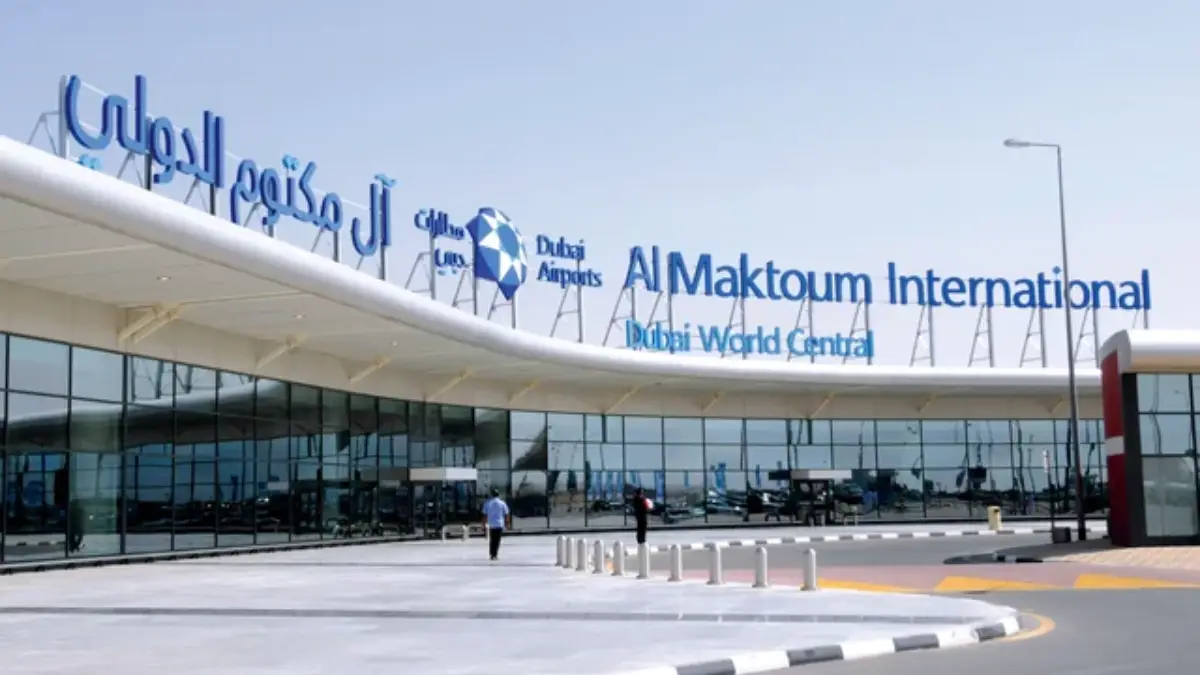
The global aviation sector is preparing for a massive infrastructure realignment. This monumental shift will fundamentally reshape travel and logistics across the United Arab Emirates. According to a report published by digital insights platform Two Continents, Al Maktoum International Airport (DWC) is officially positioned to absorb the city’s entire commercial network. This means that DWC airport will take over DXB flights sequentially over the coming decade.
To prevent confusion for international travelers, it is vital to distinguish between these two massive hubs. Dubai International Airport (DXB) is the city’s historic inner-city airport, while Al Maktoum International Airport (DWC) is the expanding mega-hub located in Dubai South.
Related Stories

This structural transition marks the end of an iconic era. However, it also signals the birth of an unprecedented aerial gateway. The upcoming shift is driven by a practical reality. Essentially, the sheer scale of Dubai’s success has pushed its original infrastructure to its absolute physical limits. Furthermore, the city requires a sustainable model to handle expanding global passenger traffic. Therefore, economic planners have decided that DWC airport will take over DXB flights to ensure the country maintains its position as the crossroads of the world.
DWC Airport Take Over: The Timeline
Moving a massive aviation network requires an incredibly meticulous approach. Consequently, authorities have established a highly structured, multi-phase migration timeline. According to statements from airport officials, the official window for the full transfer of commercial passenger travel is scheduled between 2032 and 2035. This intentional, long-term runway ensures that the receiving infrastructure at Dubai South can be fully built. Additionally, engineers can stress-test the new facilities under live conditions before DWC airport takes over DXB flights permanently.

In the meantime, maintaining parallel operations allows the city to manage growing demand without risking the passenger experience. While developers have expressed significant interest in the prime urban land currently occupied by the older city airport, a dual-hub model is simply impractical. Operating two massive, competing international airfields in such close geographical proximity makes little financial sense. Furthermore, running a single consolidated hub dramatically reduces inner-city traffic congestion. For this reason, the strategy dictating that DWC airport take over of DXB flights represents the most efficient use of national infrastructure capital.
Global Impact
To understand the global stakes of this transition, one must examine the staggering metrics that the city routinely logs. The older city hub currently connects the emirate to 291 unique destinations across 110 countries. Hence, it is the nerve center of East-West trade, business and international tourism. Any capacity reduction at the facility has a significant impact on global supply chains, since millions of travelers pass through the facility monthly.

Official data from Dubai Airports shows that DXB handles an average of nearly 8 million passengers every month. In fact, during peak periods like December, a routine spike to 8.7 million monthly travellers is observed. The yearly average sits at nearly 95.2 million. This is why it is essential for the international airlines to ensure that there are no operational delays as DWC airport takes over DXB flights.
Additionally, Dubai’s airspace is vital for Dubai connecting to the airspace of major global economies for their network of commerce. India is the top country market with Saudi Arabia, United Kingdom and Pakistan trailing closely. The need for more space is essential due to the continued escalation of demands in the region. Dubai South’s infrastructure development will ensure that the country can accommodate the next generation of travellers. This will eventually open up an ultimate capacity of 260 million passengers per year when DWC airport takes over DXB flights.
Engineering to Manage Global Traffic Growth
The move towards Al Maktoum International Airport marks a complete rethinking of modern travel services. The AED 128 billion master plan is designed to give designers and engineers the freedom and space to incorporate the latest, most sophisticated technologies on an industrial scale, that are not possible in the confines of the older urban core. There are five parallel runways and advanced biometric processing corridors in the new mega-hub. As DWC airport is set to take over DXB flights, one can only assume that the lines will be much shorter and baggage will be processed much quicker.

What’s more, there will be a complete transformation of domestic travel with the new airport’s immediate connection with the national Etihad Rail network. The rail line will reduce the time of travel from the airport to Abu Dhabi to 30 minutes. The next step is the shift to operation as the massive project is expected to continue through 2057 when full build-out will be reached. Dubai is making use of raw data and turning it into actionable long-term infrastructure, securing its logistics future. Finally, when DWC assumes full responsibility for flying DXB, the country will be geared to greet the future of international aviation.
Read More: Gold Price Fall Brings Welcome Relief to UAE Retail Buyers