
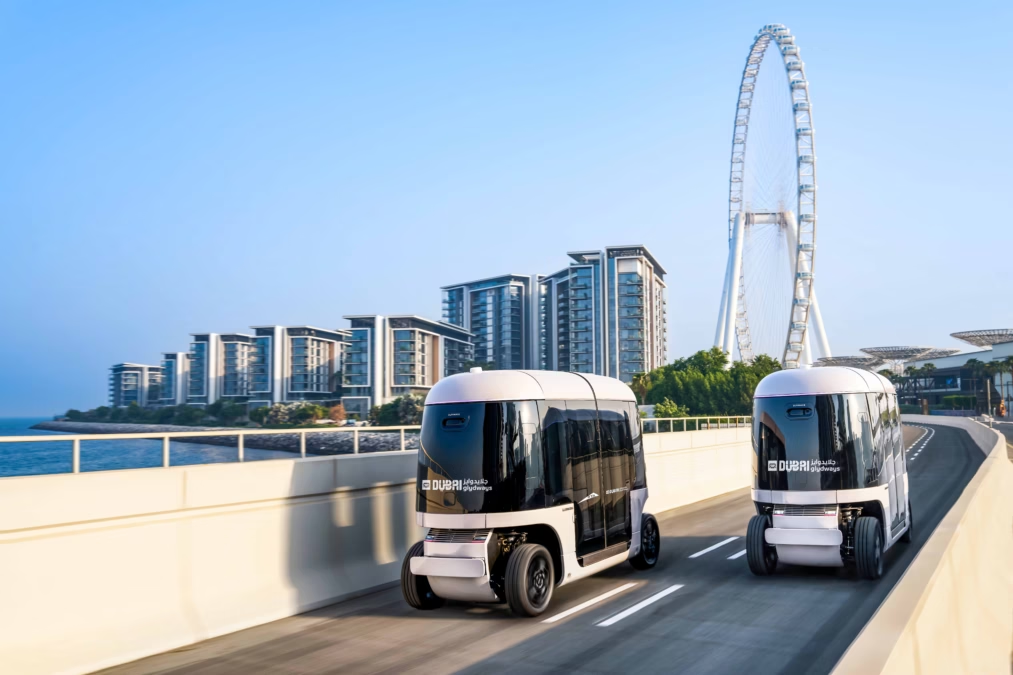
Small pods. Dedicated tracks. Zero traffic. Dubai Glydways just started its four-week trial at Bluewaters, and if it works, commuting in this city will never look the same.
Dubai has never stopped rethinking how people move around the city. From its expanding Metro network to new mobility solutions, the focus remains on making journeys smoother and more connected. The latest development is now being tested at Bluewaters, where autonomous electric pods could offer a new way to cover those final few kilometres.
Related Stories

Dubai Glydways is the most ambitious attempt.
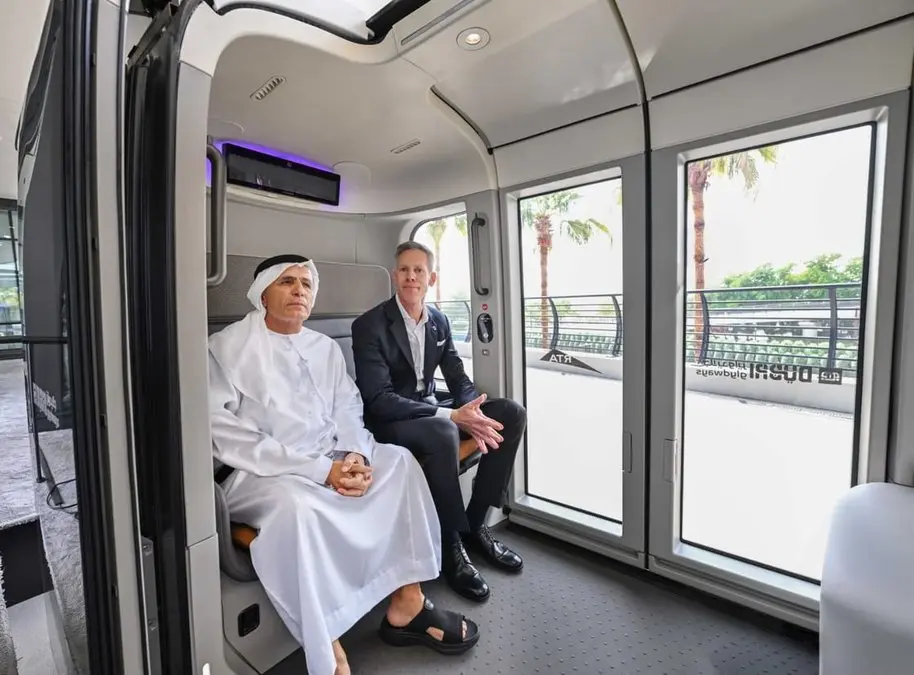
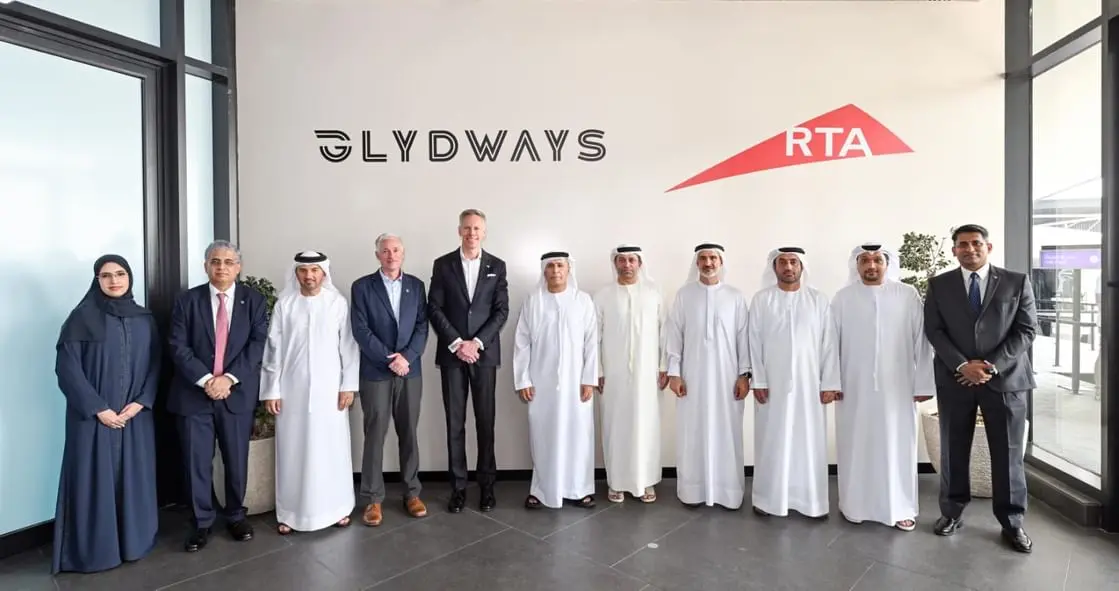
The Roads and Transport Authority launched the trial operation of the Dubai Glydways automated transit system at Bluewaters on October 11th a five-minute ride that His Excellency Mattar Al Tayer, Director General and Chairman of the Board of Executive Directors of the RTA, took himself, marking the beginning of a four-week test period that could shape the future of how this city moves at the neighbourhood level.
What Glydways Actually Is
Before understanding what the trial means for Dubai, it helps to understand what Glydways is, because it sits in a category of transport that most people have not encountered before.
Related Stories

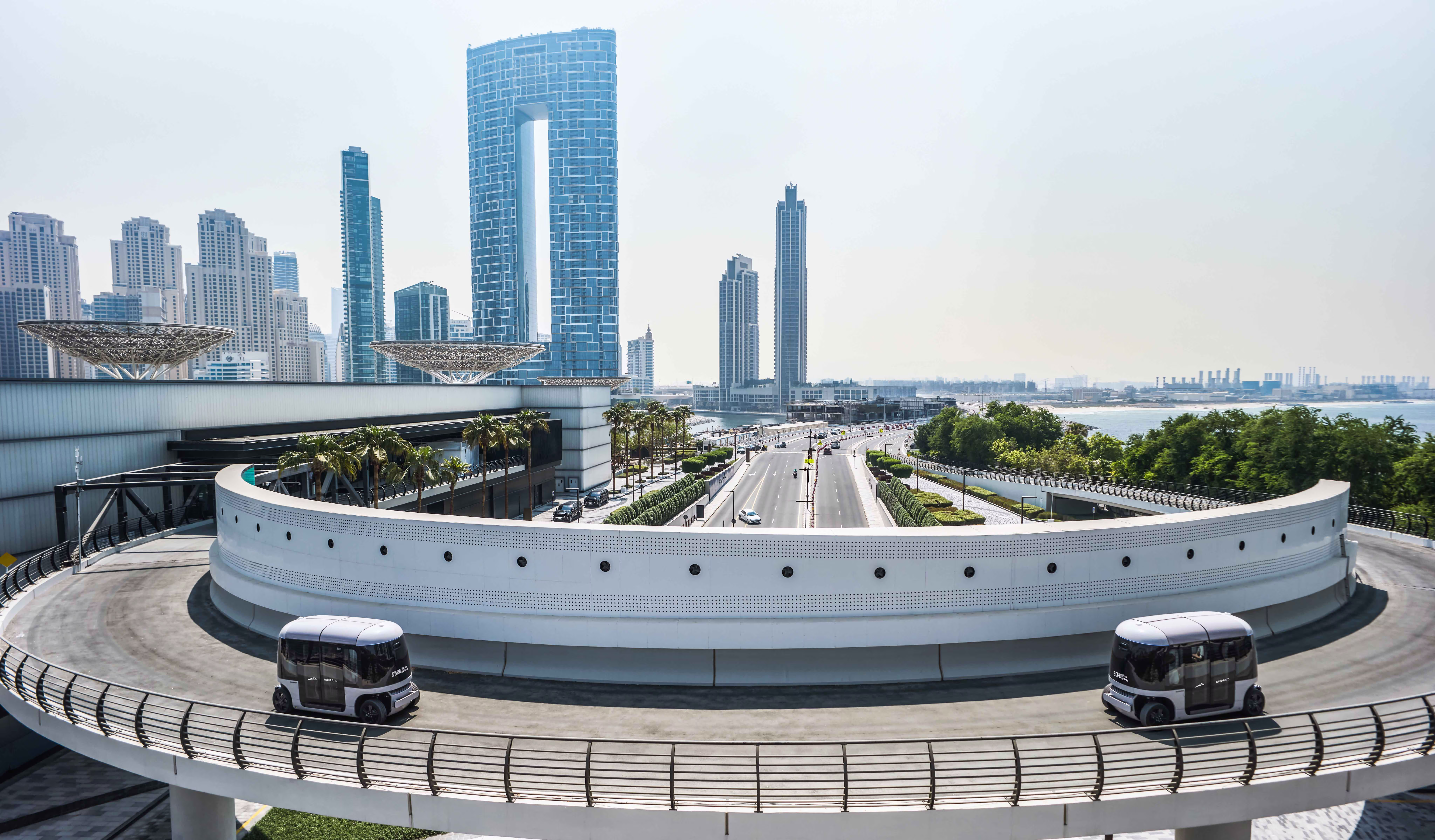
Founded in 2016, Glydways is an American company specialising in automated transit networks built around small autonomous electric vehicles that run on dedicated, narrow guideways rather than shared roads. These guideways can be constructed at ground level or elevated, using lightweight structures that integrate with existing urban infrastructure without requiring the kind of full-scale construction that a metro line or tram network demands.
Think of it as a system that sits between a personal vehicle and a mass transit network combining the directness of a car journey with the scalability and sustainability of public transport. Each Glydways vehicle carries between four and six passengers, travels at speeds of up to 50 kilometres per hour and can cover up to 250 kilometres on a single battery charge. The vehicles run on demand, around the clock, taking passengers directly from their departure point to their destination without intermediate stops meaning no waiting for other passengers to board, no shared route diversions.
The technology powering these journeys is substantial. Twenty high-resolution LiDAR sensors, radar systems and high-definition cameras form the sensory layer of each vehicle, feeding data continuously into the artificial intelligence systems that manage movement, spacing and safety. The system can virtually link more than ten vehicles simultaneously with gaps between them of less than one second, a capability that gives the network the high-frequency throughput of a mass transit system while preserving the point-to-point character of individual travel.
Mark Seeger, Founder and Co-CEO of Glydways, put the ambition clearly. The trial in Dubai, he said, represents an important step in demonstrating what automated transit networks can deliver for modern cities flexible, high-capacity, on-demand mobility that adapts to the genuine shape of how people actually move through urban environments.
The Numbers That Make This Interesting
Every transport solution sounds compelling in a press release. The statistics behind Glydways give a clearer sense of why the RTA considers this worth testing seriously. The system can carry more than 20,000 passengers per hour in both directions. That is a figure that competes with light rail and bus rapid transit networks, achieved through a vehicle that is considerably smaller and a guideway that is considerably cheaper to build.
Related Stories

Capital costs for the Glydways infrastructure are approximately 90 percent lower than comparable transport modes. Operating costs run around 70 percent below equivalent alternatives. For a city that is constantly evaluating how to extend its transport network into new communities and destinations without the expense of full metro expansion, those figures represent a genuinely different kind of conversation.
The on-demand model also addresses a core limitation of scheduled public transport: the mismatch between fixed timetables and the unpredictable rhythm of real urban life. A system that responds to when you need it rather than when it has decided to arrive changes the fundamental relationship between resident and transport network.
The Bluewaters Trial and What Comes After
The four-week trial at Bluewaters is not an end point. It is the beginning of a structured evaluation process designed to generate the data the RTA needs to make informed decisions about where and how the Glydways network can be extended across Dubai. The trial assesses the performance of autonomous driving, sensing, communication and control systems in a real operational environment. It measures journey time, ease of use and vehicle movement management. It generates the operational indicators that will shape the case for future expansion.
The routes under consideration for that expansion are revealing. A 2.8 kilometre connection between National Paints Metro Station and Bluewaters is among the proposals. Routes serving Jumeirah Village Circle, Dubai Festival City, Business Bay and Mohammed Bin Rashid City are also being studied.
Each of those locations shares a common characteristic: they are dense residential or commercial zones where the Metro does not currently reach directly, and where the gap between the nearest station and the final destination is precisely the kind of journey that discourages public transport use. A reliable, on-demand, point-to-point connection across those gaps would meaningfully extend the effective reach of Dubai’s existing Metro network without requiring a single kilometre of new track.
Dubai’s Track Record of Actually Following Through
What makes the Glydways announcement credible rather than theoretical is the city it is happening in.
Dubai has a documented history of taking mobility ambitions from announcement to operation, and doing so at pace. The Metro launched in 2009 and now carries around 40 percent of all public transport journeys in the emirate. The Palm Monorail gave the original Palm Jumeirah its own transit link. Autonomous vehicles have been tested across multiple RTA programmes. The Dubai Self-Driving Transport Strategy set a target of 25 percent autonomous journeys by 2030 and unlike similar targets in other cities, that goal is being backed by practical infrastructure decisions rather than just policy language.
The Dubai Mobility Labs facility at Dubai Silicon Oasis, launched just weeks ago, creates a controlled environment where autonomous vehicle technologies can be tested across 248 distinct scenarios before being deployed on public roads. Glydways had already undergone evaluation through that framework before the Bluewaters trial began.
Al Tayer framed the broader context plainly. Dubai’s role, he said, is not just to adopt future mobility technologies but to serve as a global platform for developing, testing and deploying them, a model that attracts international companies like Glydways partly because the city’s governance structure allows ideas to move from trial to implementation faster than almost anywhere else.
What This Means for the Resident Experience
Strip away the technical specifications and the strategic framing, and the Glydways trial is ultimately about a simple question: can a Dubai resident, standing outside a Metro station with two kilometres left to travel, get to their destination without flagging a taxi? If the four-week trial at Bluewaters generates the data the RTA is looking for, and if the proposed routes to JVC, Business Bay, Festival City and Mohammed Bin Rashid City eventually come online, the answer moves meaningfully closer to yes.
That last kilometre has been one of the persistent quiet frustrations of urban life in Dubai for years. The system being tested at Bluewaters right now was designed specifically to solve it.