

An experienced astronaut who has spent much more time in space than had originally planned states that the UAE takes human spaceflight seriously.
Suppose you packed your bags for an eight-day journey and only got back home 286 days later—this is exactly what occurred with Sunita Williams in 2024. This week Sunita Williams is in the news in the UAE, as the former NASA astronaut has visited Abu Dhabi and has praised the country’s space initiatives. She gave a speech on Tuesday, 27 October 2026, at the UAE Space Biotech and LEO Commercialisation Symposium in Masdar City.
Related Stories
The Mission That Ran Long
The eight-day mission planned for 2024 had to be abandoned because of technical problems with Boeing’s Starliner, the spacecraft coming back without any crew, and as a result, Williams remained on the International Space Station for 286 days. This background is relevant to the Sunita Williams UAE story since she knows well what a long time spent in orbit entails. Her recovery took almost two years, whereas after her previous mission it had taken about one year. “It is difficult to get used to gravity,” she said.
What She Said About the UAE
While on stage, Sunita Williams took part in a panel with UAE astronaut Mohammed Al Mulla. Her conclusion was concise and direct: “The UAE has already committed itself to sending astronauts into space.”
Although her comment is brief, it is significant given that she has spent 608 days in space during her 27-year career. Mohammed Al Mulla, a former pilot with the Dubai Police who was selected for the UAE astronaut program in 2021, also offered his own view: “We have realized that we need to go to space together; it has never been something that is done by one person or one country alone.”

Her New Job Is Commercial
Williams currently acts as an astronaut adviser at Vast, a US-based commercial space company that was established in 2021. Its first space station, Haven-1, is scheduled to launch in early 2027.
“My job is to assist in setting up these companies and getting the work underway,” she stated. The link between Sunita Williams and the UAE is in keeping with a wider trend.
Related Stories

The ISS is expected to be withdrawn around 2030 or 2031, which means that private space stations will now form the next phase.
The UAE’s Bigger Space Plan
Salem Al Qubaisi, who is the director general of the UAE Space Agency, stated that commercial stations offer the nation an opportunity to play a role in shaping future research and emphasized the importance of international partnerships, reciprocal access to facilities, and joint missions.
The Sunita Williams UAE buzz is linked to the National Space Strategy 2031, the aim of which is to ensure that the UAE becomes one of the world’s top ten space economies by the year 2031.
Related Stories

In May, Sheikh Hamdan bin Mohammed, Dubai’s Crown Prince, also launched a strategy with a value of one billion dirhams that comprises the International Space Co-operation Programme.
A Satellite Made in Abu Dhabi
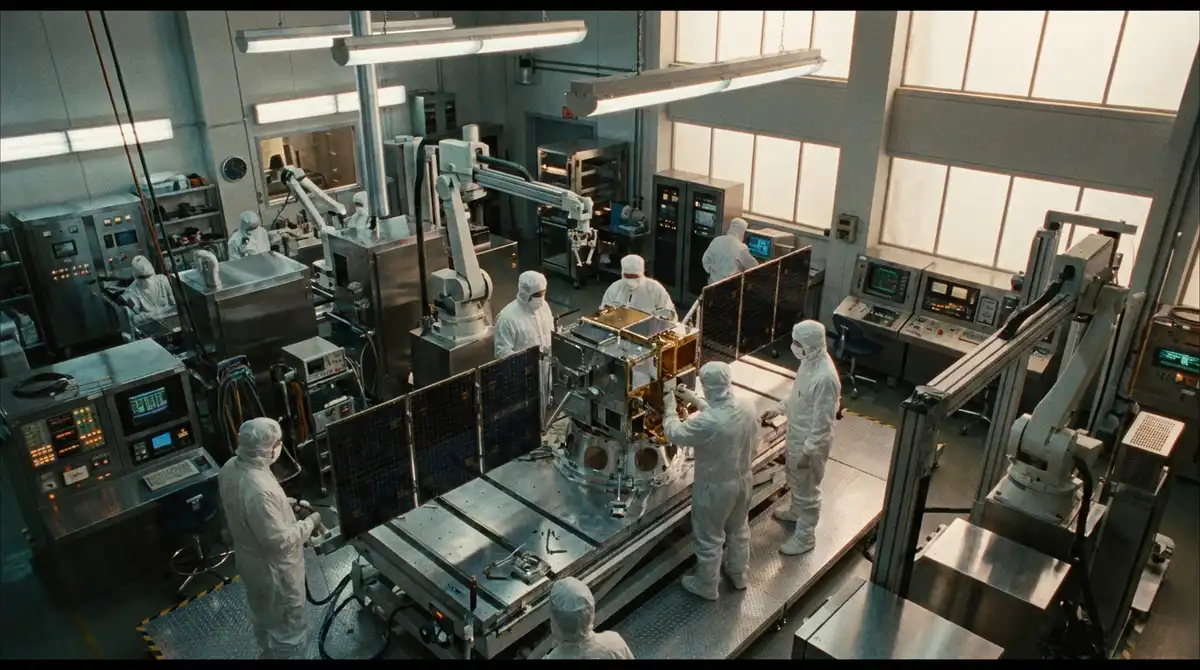
Space ambition involves more than just astronauts. Altair-1 is the first satellite to have been completely built in the UAE; it was designed, put together, and tested in Abu Dhabi before being launched this month from Vandenberg Space Force Base in California as part of the SpaceX Transporter-18 ride-share mission.
For those who are keeping an eye on the Sunita Williams UAE news, this is a good indication that the country is not only hosting panels but is also developing its own hardware.
Why It Matters
The praise from someone who has been through an extremely long mission is worth mentioning. It won’t itself cause a rocket to be launched, but the Sunita Williams UAE moment illustrates how the UAE’s space journey is viewed from outside. All the plans, the funding, and the astronauts are already in place. The next stage is the one that everyone will be watching.
Also Read: Dubai Honours Visionaries Reshaping Arabic for the Digital Age

