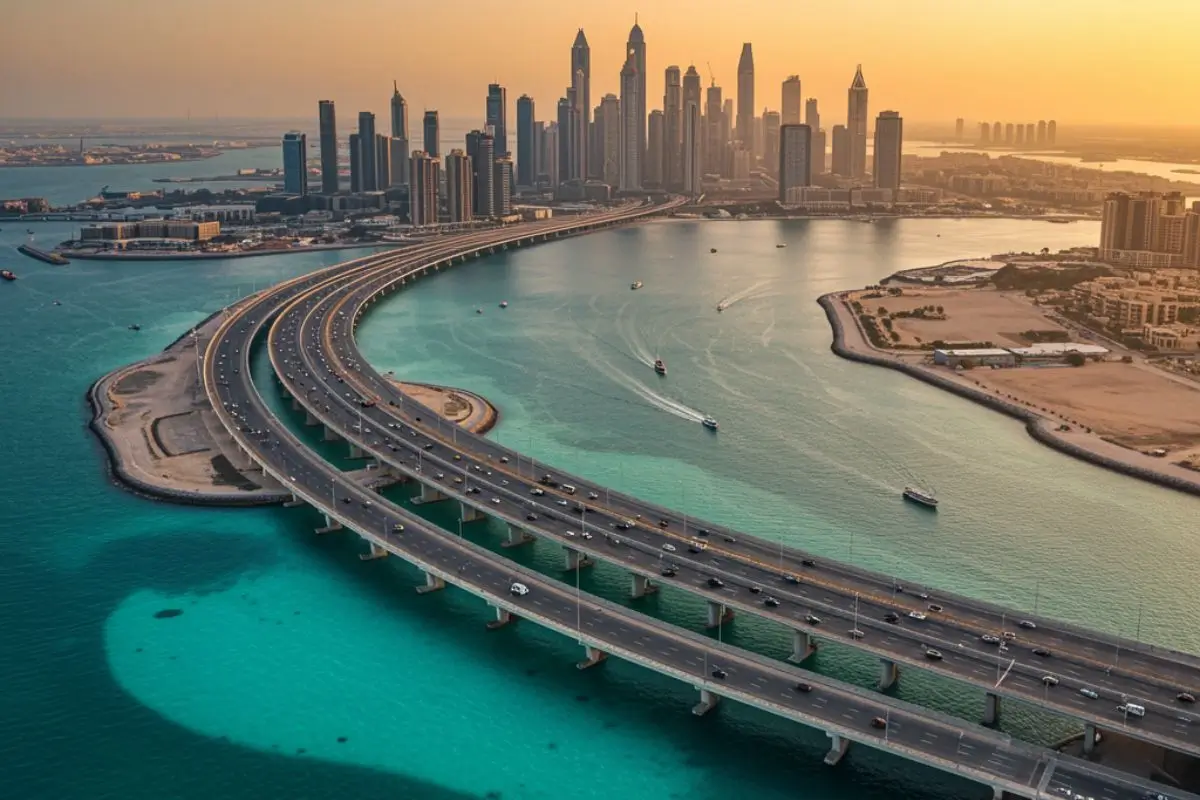
A fresh wave of improvements hits Al Qudra Road as RTA revamps its main Al Qudra Road bridge. Traffic now moves faster thanks to fewer holdups. More lanes open up, allowing smoother flow through busy neighborhoods. Growth zones link together more directly than before. The overhaul reaches deep into areas shaping Dubai’s expanding footprint.
Dubai Reaches Major Infrastructure Goal
One more piece of concrete now stretches over Al Qudra Road with the opening of a new Al Qudra Road bridge — a fresh four-lane crossing just swung open in Dubai. This move comes as part of broader upgrades meant to untangle jams along a stretch seeing rapid growth. On February 8, a Sunday, officials from the city’s transport agency confirmed the Al Qudra Road bridge was live. That day marked yet another step forward in reshaping how people roll through this area. Built where Al Qudra meets the connector between Arabian Ranches and Dubai Studio City, the Al Qudra Road bridge addressed a junction that had choked daily when rush hit. Now cars slide through smoother where they once crawled.
Newly Opened Al Qudra Road Bridge Details
600 meters long, the fresh Al Qudra Road bridge carries four lanes, easing vehicle flow through the crossing. Part of a broader plan to upgrade key junctions on Al Qudra Road — a vital route connecting homes and growing areas — the Al Qudra Road bridge was delivered by RTA. Now open, the intersection handles 191% more traffic: hourly volume jumps from 6,600 vehicles to 19,200 vehicles. Instead of sitting still for 113 seconds, drivers wait only 52 seconds —55% less time stuck in place due to the Al Qudra Road bridge upgrade.
Connecting Key Roadways
Starting at the junction with Sheikh Mohammed bin Zayed Road, the Al Qudra Road bridge becomes part of a longer route. Moving forward, it follows Sheikh Zayed bin Hamdan Al Nahyan Street before meeting Emirates Road. From there, the path carries on using Al Qudra Road as its backbone. Connecting far-flung homes to major job centers happens through this stretch supported by the Al Qudra Road bridge. Shops, workplaces, and places to relax sit within reach thanks to this link. Better roads mean people spend less time stuck in transit. Travel grows steadier whether someone lives nearby or just visits, with the Al Qudra Road bridge playing a central role. For many, getting around feels less unpredictable now.
Northern Bridge Opens in February
One lane over the Al Qudra Road bridge crossing opens next week. The north span, part of a pair straddling Sheikh Zayed bin Hamdan Al Nahyan Street, lets drivers through starting February 15. 700 meters long, it carries two paths eastbound, two westbound as part of the wider Al Qudra Road bridge project. Work still runs full time on the opposite side, where the south structure takes shape. Travel toward Al Qudra City gains smoother flow from the change. So does movement aiming for Sheikh Mohammed bin Zayed Road. Pressure lifts slightly at a known choke point in Dubai’s grid thanks to the phased opening of the Al Qudra Road bridge.
Al Qudra Road Project Full Scope
One long bridge on Al Qudra Road stretches far, built big with clear purpose as part of the Al Qudra Road bridge development programme. Upgraded crossings appear at busy spots, while new spans add up across 2,700 meters of structure. Old road segments grow wider over nearly 12 kilometers, reshaped for smoother flow connected to the Al Qudra Road bridge network. When finished, trips along this route could take as much as 70 % less time. Instead of almost 10 minutes, drivers might move through in under 3 minutes. Commuters win when seconds vanish day after day due to the Al Qudra Road bridge upgrades.
Serving Expanding Neighborhoods and New Projects
From Sheikh Mohammed bin Zayed Road straight through to Emirates Road stretches the upgraded Al Qudra Road Bridge setup, now connecting more households than ever. Easier movement shows up for people living in Arabian Ranches 1 and Arabian Ranches 2, along with residents in Dubai Motor City, Dubai Studio City, DAMAC Hills, Mudon, and The Sustainable City. With so many people moving into these neighborhoods lately, roads must keep up — and the Al Qudra Road bridge helps them do exactly that. Built for around 400,000 residents and visitors, the system supports expanding living zones without slowing anyone down.
Al Qudra Road Gets Major Intersection Improvements
Past the fresh bridge, work stretches into reshaping where Al Qudra Road meets Sheikh Zayed bin Hamdan Al Nahyan Street under the Al Qudra Road bridge upgrade plan. A new span, seven hundred meters long, carries four lanes one way, then four back. Ramps branch off with twin lanes apiece, letting vehicles merge smoothly while leaving central lanes undisturbed. With these changes tied to the Al Qudra Road bridge network, delays should fade, movement steadies, risk drops at this crossing point.
More Bridges Improve Movement Between Areas
Half a kilometer along Al Qudra Road now rises a new elevated crossing, built for vehicles heading toward Sheikh Zayed bin Hamdan Al Nahyan Street when bound for Jebel Ali. This adds to ongoing upgrades near the existing Al Qudra Road bridge. Elsewhere, stretching 900 meters into the sky, another pathway forms above ground, guiding traffic with downtown Dubai and the international airport on their minds. These bridges, once complete, strengthen how the Al Qudra Road bridge system connects areas — cutting sharp turns, smoothing transitions, making travel less stop-and-go.
Wider Service Roads, More Capacity
Alongside the revamped junction linked to the Al Qudra Road bridge, new access lanes — around 3 km long — are going in along each flank of Sheikh Zayed bin Hamdan Al Nahyan Road. Thanks to these upgrades, adjacent areas will connect more smoothly, easing entry and exit points. Once construction wraps up, the intersection can manage close to 2.5 times its earlier volume each hour, rising from 7,800 vehicles to 19,400 vehicles. With the broader Al Qudra Road bridge enhancements in place, wait times during backups drop sharply.
Al Qudra Road Improvements for Long-Term Needs
Starting at Emirates Road, upgrades move westward toward the roundabout near Town Square Dubai, touching areas like Mira Developments and DAMAC Hills 2. A wider path unfolds across 3.4 kilometers of Al Qudra Road, making space for smoother movement. From there, a fresh route extends south, stretching 4.8 kilometers straight into Emirates Road. More room appears along 4.8 kilometers of that main corridor too, adjusting capacity where it is needed most. These layers build quietly beneath future traffic flows, matching how Dubai plans to grow beyond today’s edges.
Also Read: Dubai Police Hosts GCC Forum to Strengthen Regional Security and Education