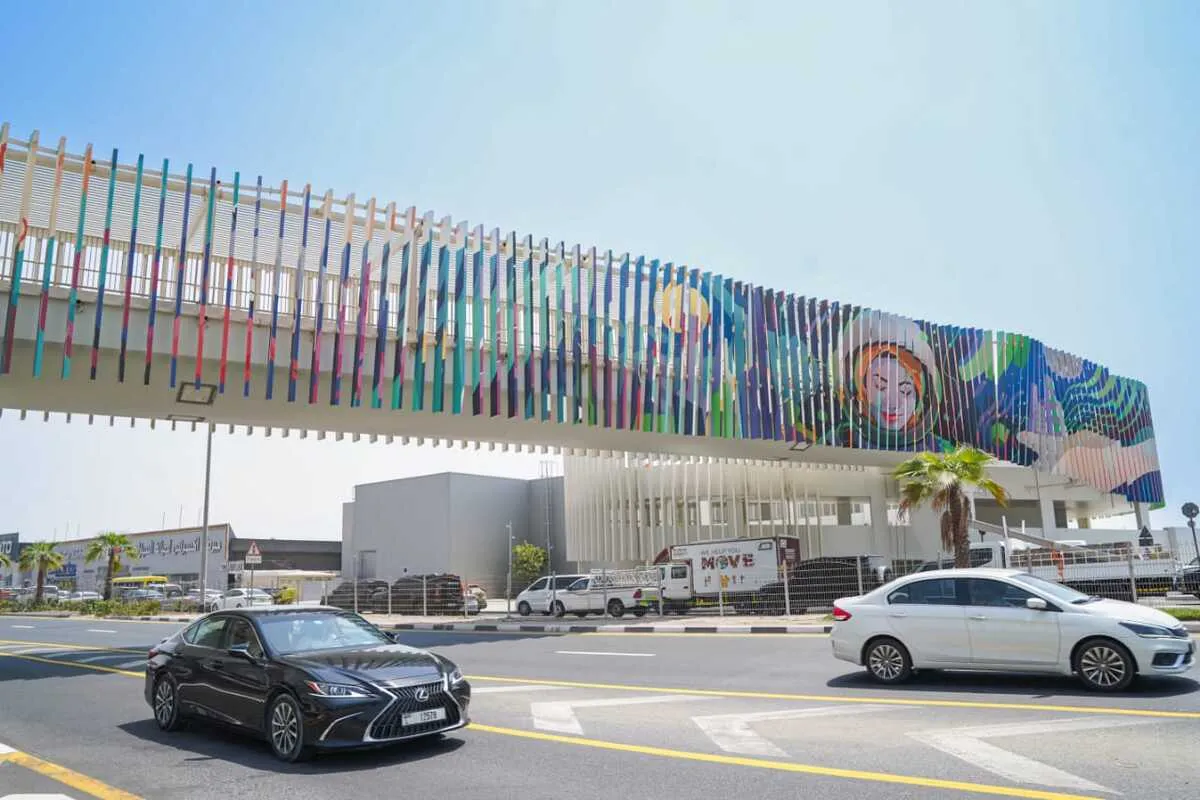
Dubai- UAE: The Dubai RTA mural bridge has been completed recently in Al Quoz. The Roads and Transport Authority (RTA) of Dubai has recently presented a bold new urban infrastructure involving the creation of a maker of stepping up connectivity, active mobility, and the local culture in the center of the city’s creative hot spot. It has not only been functional but also a refreshing visual highlight on Al Manara Street within Al Quoz Creative Zone that has been completed recently in Al Quoz the pedestrian and cycling bridge but is also covered in colorful mural art, the vibrant character of the area.
The Dubai RTA mural bridge is 45 metres long and 5.5 metres wide and is 6 metres elevated above the ground level with two access ramps, each 210 metres long, to make it accommodating to pedestrians, cyclists, and operators of soft mobility equipment. According to RTA, its design is a blend of aesthetics that is consistent with the artistic personality of the surrounding district and transforms the mundane mobility infrastructure into a canvas that highlights the blend of art and practicality.
The Dubai RTA mural bridge is not the only aspect of a larger program that will see approximately 4 kilometres of pedestrian and cycling tracks developed, as well as the creation of three integrated mobility centres. These connections and intersections connect major components of Al Quoz Creative Zone to major transport hubs including the Onpassive Metro Station and the Al Quoz Bus Station and support the smooth movement throughout the cultural district on a multimodal basis.
Turning Streets Into Urban Spaces
In addition to enhancing connectivity, the project brings varied urban areas, which could be converted temporarily to host occasions. Vehicles can also be stopped in the chosen streets of the space and converted to pedestrian urban oases where people can hold cultural festivals and meetings. One of such examples is the Al Quoz Arts Festival, which will be held on 24 and 25 January, and during which the streets surrounding the new infrastructure will be turned into creative spaces in the city. RTA is providing this offering in strategic partnership with Alserkal Avenue and Dubai Culture and Arts Authority (Dubai Culture) to emphasize the fact that RTA is not only dedicated to mobility, but also to cultural activation.
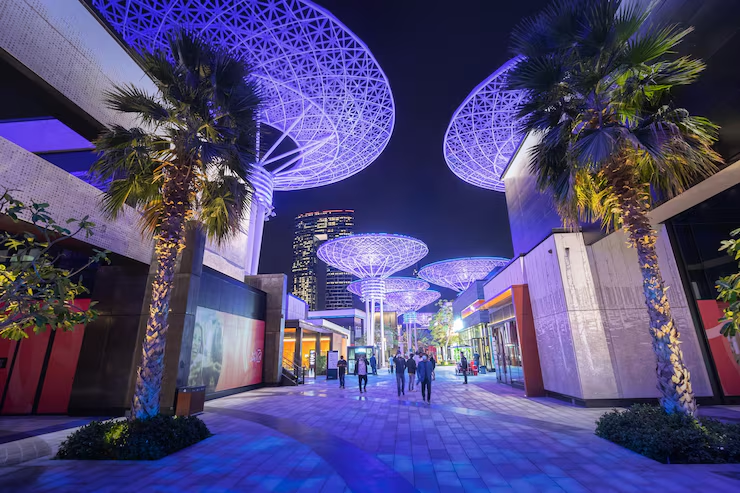
Al Quoz has been continually developing to be one of the most powerful cultural centers in the city of Dubai. The area is a destination of contemporary art galleries, performance spaces, design studios and creative enterprises attracting both residents and visitors as well as innovators. Mobility infrastructure like the Dubai RTA mural bridge facilitates this transformation by enhancing accessibility, making it safer, and promoting non-motorised transport methods that collide with the human-scaled urban environment of the district.
Moving The 20-Minute City Vision Forward
Mattar Al Tayer, who is the RTA Director-General and the Chairman of the Board of Executive Directors, emphasized the wider vision of the city mobility that this project prospers. In his opinion, the new Dubai RTA mural bridge infrastructure will decrease the use of personal transport and increase the effectiveness of transport in the Al Quoz Creative Zone. The initiative helps the city to embrace the concept of the 20-Minute City in the city of Dubai, an urban planning design that aims to make necessary services and lifestyle destinations reachable within a short walk, or a bike ride to homes of people.
According to RTA, this will be in line with the initiatives to make urban living more sustainable, healthy and low-carbon based. It is projected that the growth of interconnected green and walkable areas would have environmental benefits, improved quality of life, and economic activity as it would create new investment and business opportunities to be made in the zone.
Culture, Connectedness, And Community
The Director-General of Dubai Culture, Hala Badri, celebrated the completion of the soft mobility and transport integration projects pointing out that they would make the creative district even more attractive. Such projects like the Dubai RTA mural bridge, according to her, do not only improve the physical infrastructure, but also help to make the area socially and culturally active. Through investment in the projects that enable innovators and highlight opportunities in the creative economy, Dubai still continues to claim its position as a global center of cultural industries and innovative talent.
The Dubai RTA mural bridge painted and the cycling and walking network around it are the signs of a new era in Al Quoz, and these elements must be integrated into the everyday routine of the community life, meaning mobility, art, and interaction with the community. It is a monument of the changing attitude of Dubai to city planning: to the infrastructure and the self, to the connectivity and to the creativity, to the transport and the life of masses.
The Dubai RTA Mural Bridge
The Dubai RTA mural bridge project contributes to the vision of Dubai to become less attached to personal vehicles, more active, and healthier, as well as to design an urban environment friendly to people. On the whole, the project is a good sign of the current trends in Dubai on the progressive approach to urban planning, in which transport, creativity, and community development integrate to enhance the quality of life.
Also read: Trump Confirms U.S. Fleet Deployment Toward Iran: Says He Is Watching Them Closely