Dubai-UAE: The United Arab Emirates Government and the World Economic Forum officially re-affirms to develop the Global Strategic Intelligence Programme, a groundbreaking initiative at the 56th Annual Meeting in Davos, Switzerland. Offering a significant step toward inoculating a hi-tech foresight and proactive decision-making processes with the core of public governance, the programme is designed to assist governments to work in an age of fast global change.
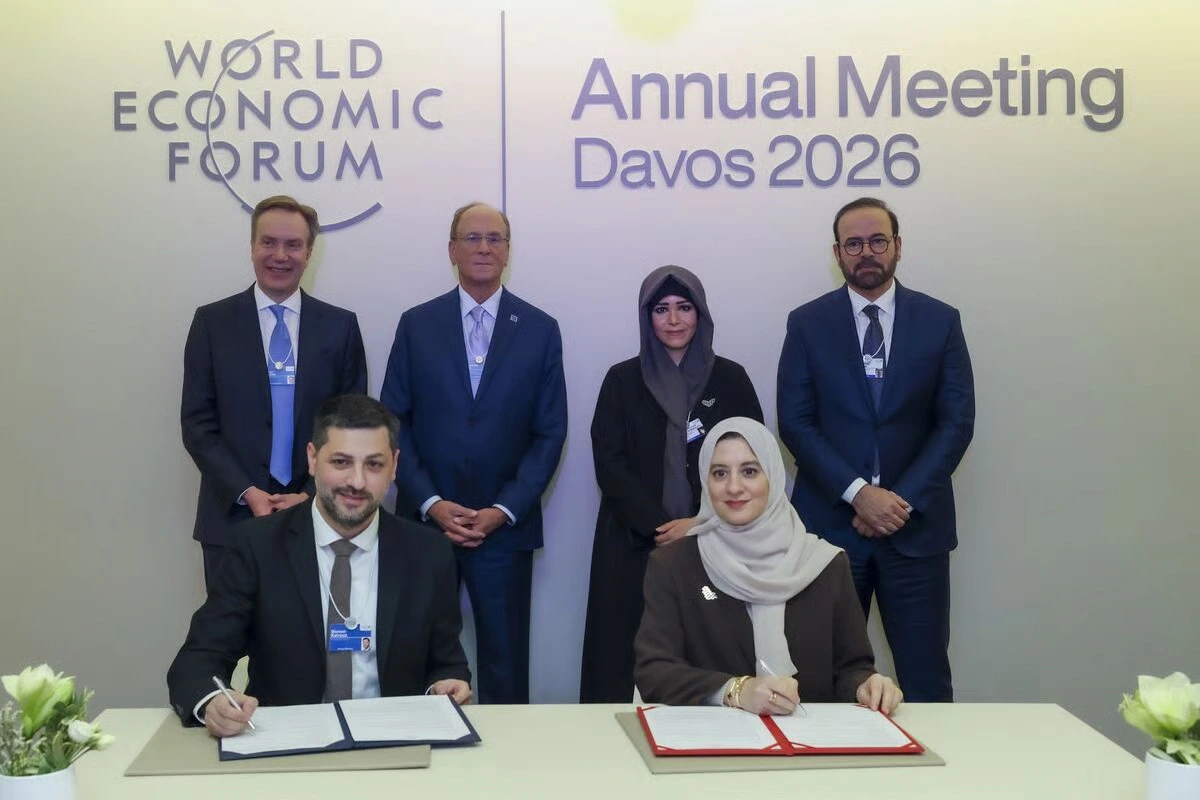
The signature of a Letter of Intent occurred at a high-level engagement of key leaders of the global and Emirati communities, including the Sheikha Latifa bint Mohammed bin Rashid Al Maktoum and Mohammad bin Abdullah Al Gergawi, Minister of Cabinet Affairs of the UAE, as well as Børge Brende, President and CEO of the World Economic Forum (WEF) and Larry Fink, interim Co-Chair of WEF Board of Trustees and CEO of BlackRock. The partners themselves signed the agreement through Huda Al Hashimi, who is the Deputy Minister of Cabinet Affairs, Strategic Affairs, and Maroun Kairouz, the Managing Director of the WEF.
Constructing A Proactive Governance Of An Uncertain Future
The key objective of the Global Strategic Intelligence Programme is to change the policy-making in government bureaucracies to be more proactive in the sense of preparedness rather than reactive. It has a mission of making strategic intelligence, which is the scientific study of trends, risks and opportunities, a strategic governmental instrument. The programme will allow institutions to understand general trends in the world more effectively, predict future disruptions, and make effective decisions in a world that is volatile in nature thanks to improvements in artificial intelligence and state-of-the-art data analytics.
Strategic intelligence is not merely about collecting information but complex information synthesised into action structures, which drive the design of policies. Governments can cease short-term problem solving and transition to long-term resilience building by relying on AI-driven insights and technology platforms. By doing this, they are more likely to react to events of an economic shock, technological change, geopolitical stress and climate change.
Huda Al Hashimi says that the UAE already incorporates strategic intelligence into its system of governance, and this ensures that the country is determined to advance decision-making, preparedness, and social welfare in the spheres of operation of the populace. She termed the Global Strategic Intelligence Programme initiative as an important contribution by the UAE to future planning on the global level and stressed that the initiative will lead to international cooperation and mutual education among countries.
International Cooperation And Foresight
Stephan Mergenthaler, Chief Technology Officer and Managing Director at the WEF praised the achievements of the past few years between the Forum and the UAE. He emphasized the importance of strategic intelligence in the center of the government decision-making process demonstrates the worth of future-oriented governing, especially in the era when social, technological, and economic pressures change at an unprecedented pace. The subsequent stage of the partnership of the Global Strategic Intelligence Programme will assist policymakers not only in the UAE but globally to deal with uncertainty, use opportunities and enhance governance systems that are not limited to national levels.
According to experts, the Global Strategic Intelligence programme is timely when most governments in the world are getting to realise the constraints of only reactive forms of governance. Other nations such as Singapore and Finland already include strategic foresight in the process of national planning, relying on the strategic planning of scenarios and trends analysis to be more prepared against the future. Singapore, as an example, uses horizon scanning as a part of its planning systematically through the Centre of Future Strategies, whereas Finland has a National Foresight Network, which provides information to its budgeting and policy decisions.
An Increasing AI And Data Presence In Policy Making
The focus on artificial intelligence and sophisticated data systems is a wider trend in the way governments operate in complex policy environments. Officials can use AI-enabled platforms to comb through extensive data in the global sources, academic studies, professional networks and real-time data, which would have been inaccessible to analyse manually. Such systems are able to show trends, emerging risks and strategic inflection points much earlier in advance of becoming urgent crises, something that is becoming more vital in geopolitical and economically disruptive times.
This Global Strategic Intelligence programme is based on the past collaboration between the UAE and WEFs, including the We the UAE 2031 Strategic Intelligence platform, which was launched in support of the national strategy of the UAE through AI-driven insights in key areas. This is the platform that brings together the knowledge of the world and the expert analysis to inform long-term policymaking and enhance government capacity.
The Global Strategic Intelligence Programme
Strategic intelligence is a governance frontier in a world where complex, overlapping challenges such as digital transformation and geopolitical competition, climate uncertainty and socio-economic inequality are emerging as frontiers of governance innovation. The Global Strategic Intelligence Programme is not only created to benefit the UAE or WEF members, but it could be an example of how the future-ready governments should be created worldwide, i.e. it should not be reactionary, solitary, and unintelligent as well.
As the Global Strategic Intelligence Programme initiative starts to take the form after its launch at Davos, it might transform the way the states consider uncertainty, resilience and international collaboration in the decades to come.
Also read: UAE Expands Adoption of AI and Robotics In As Young Workers Steer Clear Of Low-Skilled Jobs