
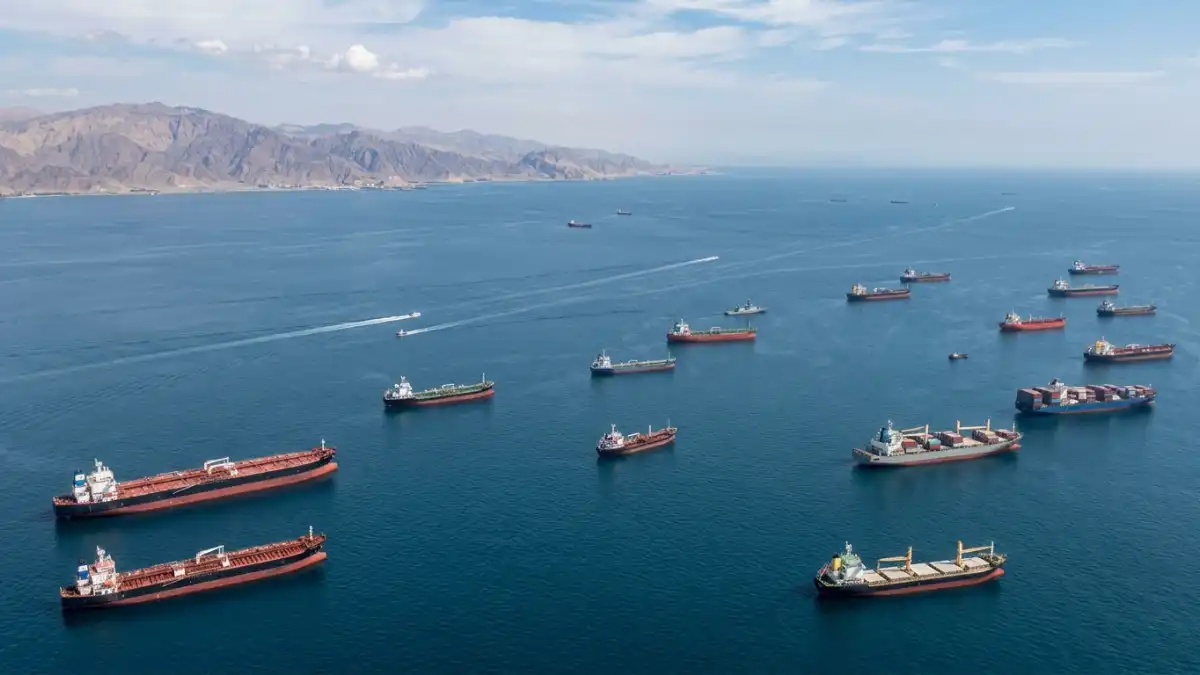
The US will pause escorting commercial ships through the Strait of Hormuz barely a day after it began doing so, US President Donald Trump said Tuesday, citing a desire to reach a peace deal with Iran.
Despite an uptick in military activity in recent days, Trump said “great progress has been made” toward a deal with Tehran and that the ship-guiding operation “will be paused for a short period of time to see whether or not the Agreement can be finalized and signed.”
The announcement came hours after Secretary of State Marco Rubio said the United States had completed its offensive operations against Iran, while withholding the right to unleash a “devastating” response to any new attacks on shipping in the narrow shipping lanes.
Rubio Warns US Can Restart Operations Amid Gulf Tensions
Rubio echoed Washington’s top military officer who earlier in the day said that US forces were ready to resume combat operations if ordered.
And Trump added that the blockade of Iranian ports “will remain in full force and effect.”
As these announcements were made in Washington, Iranian media reported that Foreign Minister Abbas Araghchi arrived in Beijing, where he will on Wednesday meet his Chinese counterpart, Wang Yi.
The US military escorts over the last day and a half — dubbed “Project Freedom” by Trump — drew Iranian attacks, threatening an already fragile ceasefire.
Gulf Regions Still Remain Under Several Threats
Iran’s Revolutionary Guards navy warned of a “firm response” if ships deviated from its approved route through the strait, as the country’s chief negotiator said Tehran “had not even started yet,” following a spate of attacks in the crucial trade route.
The United Arab Emirates announced it was intercepting a barrage of missiles and drones from Iran for a second day — a claim Tehran “categorically” denied.
“The armed forces…did not launch any missile or drone operation,” Iran’s Khatam al-Anbiya command said.
Iran fired missiles and drones at US forces on Monday, while Washington said it struck six Iranian boats it accused of threatening commercial shipping, in the sharpest escalation since a month-long truce.
US Central Command remains “ready to resume major combat operations…if ordered,” General Dan Caine told reporters.
“No adversary should mistake our current restraint with a lack of resolve.”
Trump earlier Tuesday urged Iran to “do the smart thing” and make a deal, saying he did not want to kill more Iranians even as the ceasefire teetered.
Pentagon chief Pete Hegseth had said the United States was “not looking for a fight” but warned attacks would face “overwhelming and devastating” force.
Malign Presence
Iran’s parliament speaker Mohammad Bagher Ghalibaf said the status quo was “intolerable,” warning the US “malign presence will diminish” as Tehran vowed to retain control of Hormuz.
Monday’s exchange of fire came as the rivals enforced dueling maritime blockades following Trump’s plan to guide ships out of the Gulf.
The war, sparked more than two months ago by US-Israeli strikes, has battered the global economy despite a weeks-long ceasefire.
Israel’s air force chief Omer Tischler said the military was ready to “deploy the entire air force eastward if required.”
Military chief Eyal Zamir added that Israel’s army remained on “high alert” and ready to respond to threats in the Gulf.
Iran denied any naval losses but accused Washington of killing civilians
Despite tensions, Danish freight giant Maersk said one of its ships had transited Hormuz under US escort.
The UAE called the attacks “a dangerous escalation,” while Saudi Arabia urged efforts toward a political solution.
Rubio accused Iran of “holding the world’s economy hostage” through threats to shipping and the laying of sea mines, and said Washington and Gulf allies had drafted a UN Security Council resolution demanding Tehran halt attacks and disclose the location of mines.
The proposed measure would also require Iran to end efforts to charge tolls in the strait and support a humanitarian corridor, with a vote expected in the coming days, Rubio said.
European and US stocks advanced Tuesday while fears that the ceasefire could fall apart weighed on Asian equities.
Talks remain deadlocked, with only one round of direct negotiations so far.
Iran Open to Talks but Rejects US ‘Maximum Pressure’
Iran’s President Masoud Pezeshkian said Tehran remained open to dialogue, but rejected US “maximum pressure” demands as “impossible.”
Elevated energy costs are adding to economic strain and creating a political headache for Trump ahead of midterm elections.
European allies warned prolonged disruption would hit their economies.
“These attacks are unacceptable,” EU chief Ursula von der Leyen said on X, warning that Gulf security has “direct consequences for Europe.”
German Chancellor Friedrich Merz urged Iran to return to talks, echoing calls from the leaders of France and Britain.
Related Stories