
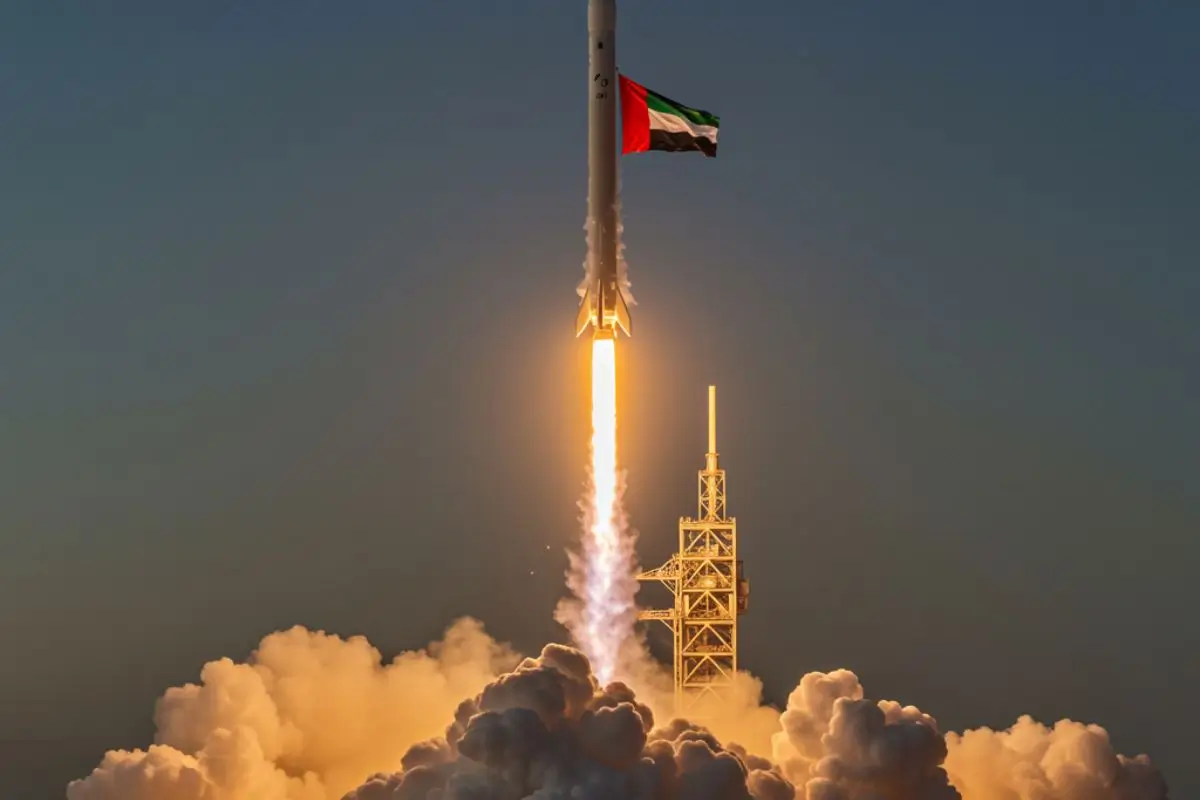
Early on, challenges appeared without warning. Although setbacks occurred, movement continued forward. Supplier problems affected the beginning stages; however, telemetry changes came during later steps. Without stopping, engineers made needed revisions. This effort ended with a launch that showed clear progress. Momentum builds for the country’s journey into space orbits. A subtle change takes place. Missions ahead seem nearer today.
Project Vision and Team Formation
A leap forward in national engineering emerged through the launch of a domestically developed UAE homegrown rocket, marking progress shaped across twenty-six months of rigorous design cycles, trials, and unified subsystem deployment. Spearheaded by the Technology Innovation Institute (TII), execution unfolded under guidance from its Propulsion and Space Research Centre as part of the broader UAE homegrown rocket initiative.
As noted by lead scientist Dr Elias Tsoutsanis, early phases followed a structured approach — merging seasoned overseas experts with rising Emirati engineers to strengthen internal expertise without compromising internationally recognized benchmarks for the UAE homegrown rocket programmed. Direction for the endeavor centered on producing an entirely operational launch vehicle within the Emirates, relying chiefly on regional production networks; such an objective demanded inventive problem solving alongside adjustments among material providers supporting the UAE homegrown rocket effort.
Manufacturing Challenges and Local Supply Chain Development
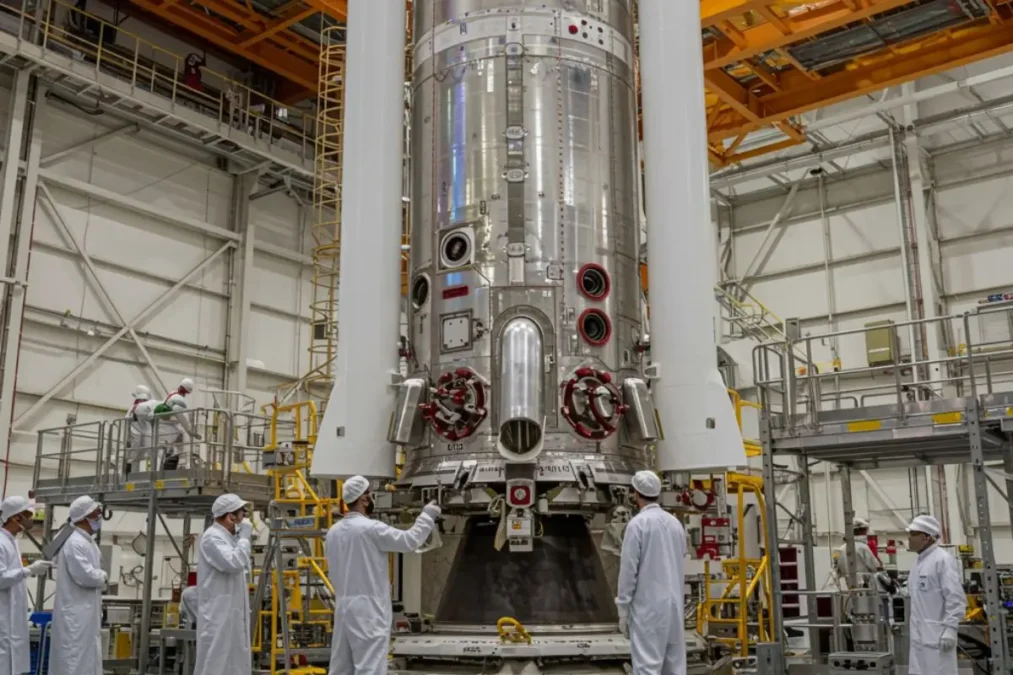
It began with uncertainty — could factories within the country produce pieces precise enough for a homemade space launch vehicle like the UAE homegrown rocket? Not built for volume, each supplier faced unfamiliar tasks, adapting designs again and again under tight scrutiny to meet the standards required for the UAE homegrown rocket components. Close coordination between builders and designers sharpened accuracy, especially where lightweight yet strong materials mattered most for the UAE homegrown rocket structure.
Carbon fiber took center stage, its balance of resilience and minimal mass demanding careful handling. Through repeated testing, knowledge grew quietly, step by step, improving production quality for the UAE homegrown rocket. In time, every piece met standards once thought out of reach. The result stood ready: a rocket shaped entirely by national effort, marking quiet progress beneath the surface of the UAE homegrown rocket journey.
Extensive Testing and Iterative Design
Throughout the programme, testing formed a central role when engineers ran simulations alongside ground-based engine trials and full-scale launchpad evaluations for each part of the UAE homegrown rocket. With the vehicle fixed to the launch assembly, repeated ignition attempts took place so actual working environments could be mirrored for the systems. As stated by Dr Tsoutsanis, combining systems gradually turned into an independent effort because connections among physical, electronic, and code elements often behaved differently than models suggested, particularly in a complex platform. Through these repeating phases, confidence grew that the UAE homegrown rocket would function consistently once airborne.

Multidisciplinary Engineering Collaboration
A group of around fifteen individuals handled the engineering work behind the UAE homegrown rocket, covering fields such as propulsion, aerospace, mechanics, electronics, programming, and computing sciences. Among them, multiple engineers from the Emirates took central positions — focusing on data transmission design, regulation mechanisms, liftoff site procedures, and code for monitoring devices supporting the mission. With each part operating in alignment, internal elements exchanged information without interruption when controlled at a distance, thanks to their involvement. The success of the domestically developed launch vehicle relied heavily on this integrated performance across the team.
Final Steps Before Launch Amid Rising Tension
With launch day nearing in Sharjah, tension grew steadily around final preparations for the UAE homegrown rocket. Late adjustments emerged frequently among engineering teams, revealing how fluid experimental aerospace efforts can be when working on a first-of-its-kind UAE homegrown rocket. Not until ignition had to align precisely did timing become critical — within mere seconds of accuracy. Telemetry, called the core intelligence, relied on uninterrupted signals linking vehicle electronics to earth stations. Only moments prior to liftoff, software updates continued, illustrating conditions where small delays carried major weight for the UAE homegrown rocket readiness. Just before departure, rewrites persisted, showing how fragile readiness truly was.
Liftoff and Recovery Success
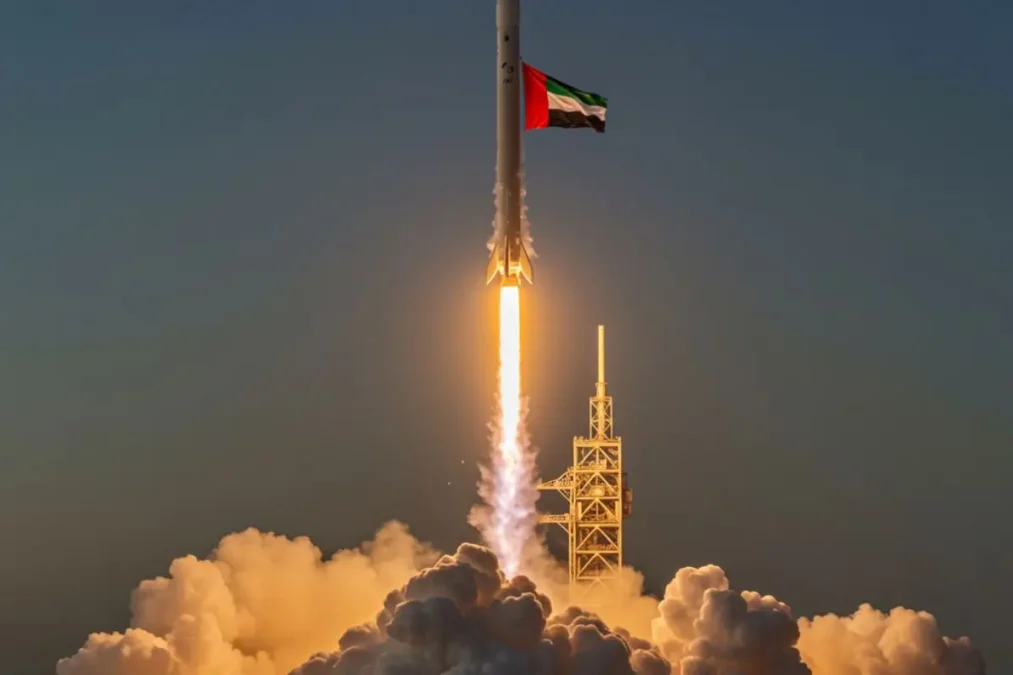
It began smoothly as the UAE homegrown rocket ascended, reaching its target height while sending back consistent telemetry signals. Yet everything balanced on what happened at peak altitude — there, it split cleanly into two parts held together only by a chute mechanism. Video from internal cameras showed both pieces drifting down without incident, bringing quiet reassurance to those who had built the UAE homegrown rocket. Landing intact mattered greatly; recovering the craft meant engineers could access stored flight records, assess how components performed, and see whether operations matched predictions for the UAE homegrown rocket.
Emotional Impact on the Engineering Team
Before liftoff, focus tightened like a coiled spring among the UAE homegrown rocket team; each breath weighed heavily. Silence ruled those final seconds — Dr Tsoutsanis noted how minds retreated inward, replaying calculations built across countless days preparing the UAE homegrown rocket. Relief arrived not through words but data: telemetry signals aligned as expected, revealing steady flight. Then came images — the descent captured whole pieces where fragmentation could have been, confirming success for the mission. Tension dissolved mid-air, replaced by quiet smiles spreading without announcement.
Two Years from Idea to First Flight
Beginning with a single idea, the national rocket initiative behind the UAE homegrown rocket reached liftoff in slightly more than twenty-four months. During that span, goals were sharpened, partners selected, facilities built, alongside multiple rounds of technical validation supporting the timeline. Such speed revealed how tightly aligned efforts across labs, builders, and designers can accelerate progress when working in step. Though brief, the schedule did not sacrifice depth — each phase unfolded with precision throughout the UAE homegrown rocket development cycle.
Future Goals and Growth Plans
Considered merely an initial phase, this effort aligns with wider national objectives linked to the UAE homegrown rocket roadmap. Flight information collected from the domestically built UAE homegrown rocket will guide engineering work on more powerful models, able to ascend further while transporting increased mass. Often, these types of suborbital platforms later support advancement of propulsion modules, possibly enabling orbital deployment of compact satellites down the line. Success may gradually establish the country as a key player in local access to orbit and next generation launch infrastructure within the United Arab Emirates, with the UAE homegrown rocket serving as the technological foundation.
Also Read: Dubai’s Sky and Streets to Ignite with Spectacular Ramadan Night Pop-Ups and Displays