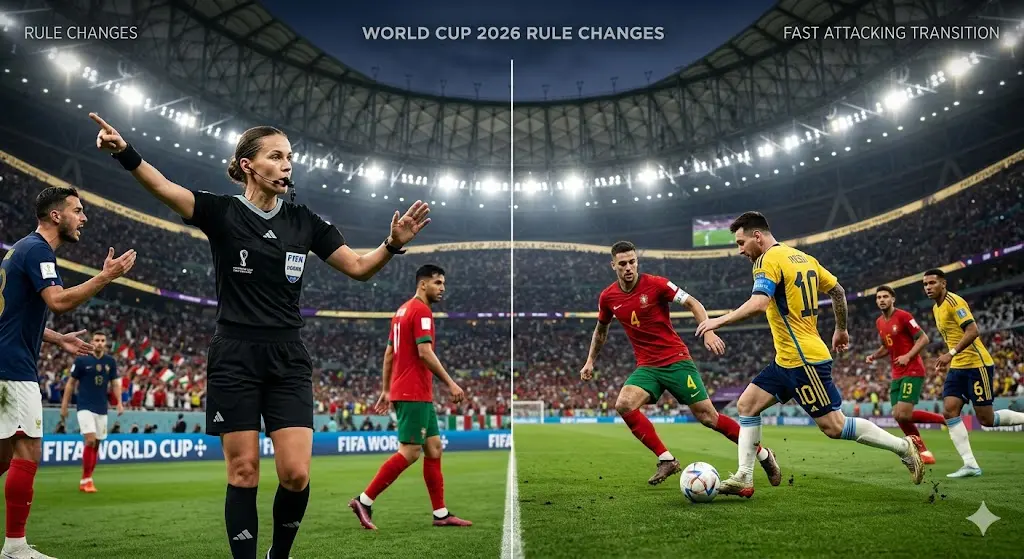
World Cup 2026 Rule Changes — More Than Just Tweaks
The World Cup 2026 rule changes aren’t being talked about as major reforms yet. But when you look closely, they’re not exactly small either.
It’s not one big rule. It’s a collection of adjustments — around time, behaviour, officiating — all pointing in the same direction. More control. And that’s where things get interesting.
Related Stories

Why Now? The Game Has Changed
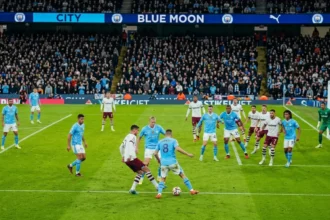
Football today isn’t slow. If anything, it’s too fast in bursts and too broken in between. There are more stoppages than before. Players take longer on restarts. Referees are under constant pressure with every decision being replayed and analyzed.
So these World Cup 2026 rule changes feel like a response to that. Not to change football completely — but to tighten it. Still, tightening the game always affects how it’s played.
Flow Might Look Different — Subtly, Not Dramatically
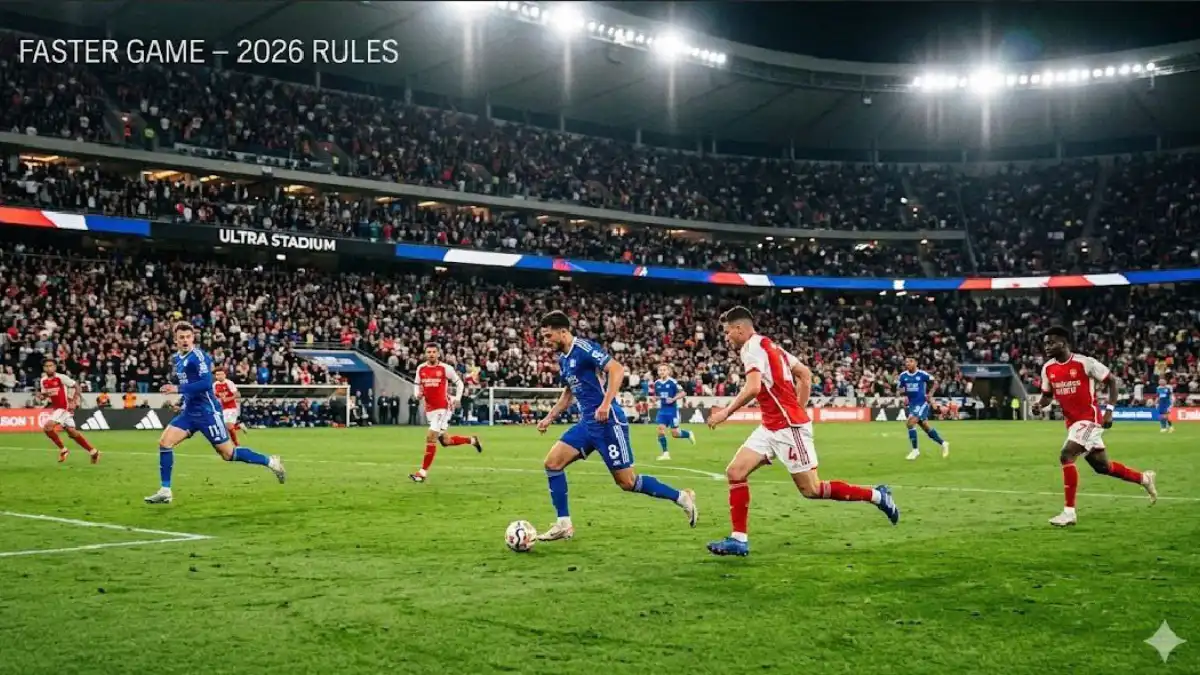
You probably won’t watch a match and immediately think, “this is a different sport now. “But over 90 minutes, it could feel different. If time-wasting is controlled more strictly and restarts happen quicker, games won’t drift as much. There will be fewer pauses where teams reset mentally. That matters.
Because some teams rely on those pauses. Especially in knockout games, slowing things down is part of the plan. If that disappears, even slightly, the balance shifts. Not massively — but enough.
Players Will Feel It First
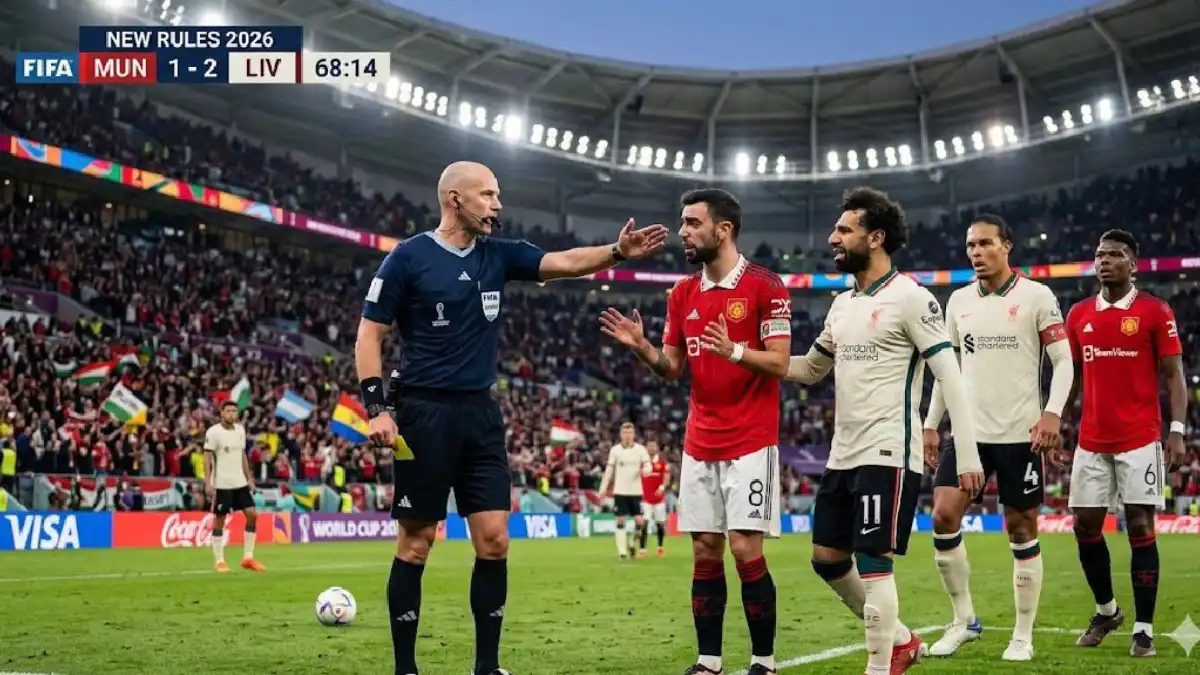
The first real impact of the World Cup 2026 rule changes won’t be tactical. It’ll be behavioral. Players who talk too much, delay restarts, or react emotionally will get punished faster. Maybe not dramatically, but more consistently.
And consistency changes habits. Over time, players adjust. They become quicker, calmer, more careful. That might sound small, but in high-pressure games, those margins matter.
The Bigger Shift Might Happen Outside the World Cup
What happens at the World Cup rarely stays there. If these World Cup 2026 rule changes work — even moderately — leagues will pick them up. That’s how football evolves now.
So the real question isn’t just how teams adapt in the tournament. It’s how clubs adapt after it. Because once rules change at the top level, they slowly become the norm everywhere else.
So… Does This Actually Improve Football?
That depends on what you think football should be. If you want cleaner, faster games with less interruption, these changes make sense.
If you think the messiness — the delays, the emotions, the small bits of chaos — are part of the game, then maybe not. The World Cup 2026 rule changes are trying to find a middle ground. But that balance is hard to get right.
Conclusion
Individually, none of these changes feel huge. Together, they point somewhere. The World Cup 2026 rule changes suggest a version of football that is slightly quicker, slightly stricter, and a bit more controlled than before. Not a different game. But not exactly the same one either.
Also Read: UAE Investment in Kazakhstan Expands with New Energy Deals