

The property market in Dubai has done something that defies the logic. In the first quarter, a war broke out. Iranian missiles struck near the Dubai International Airport and Al Maktoum International Airport, while others hit infrastructure in Abu Dhabi and Ras Al Khaimah. The Strait of Hormuz closed for the first time in recorded history. Yet, Dubai’s real estate posted one of strongest performances in history. The presented numbers are not just projections but confirmed transaction data that tells the story about a market that usually bends under pressure but refuses to break.
People working inside the market tell a story that almost mirrors the data exactly. Saleha Sohail, a real estate administrator who has been in Dubai’s real estate for eight months, described January as a strong month when off-plan purchases drove the bulk of activity. But by March, she highlighted, the dynamic had shifted significantly. “Sales were no longer in the hands of the agents,” she explained. “It was in the hands of the buyers. If they found a good deal, they would close it immediately.”
A property consultant, Arsalan Khalid, observed the same shift. “March felt more cautious compared to January. There was a strong momentum and quicker decision making from the buyers earlier. By March, I noticed more hesitation.” He added,”deals weren’t necessarily cancelled but many were delayed as the clients took extra time to assess the market conditions.”
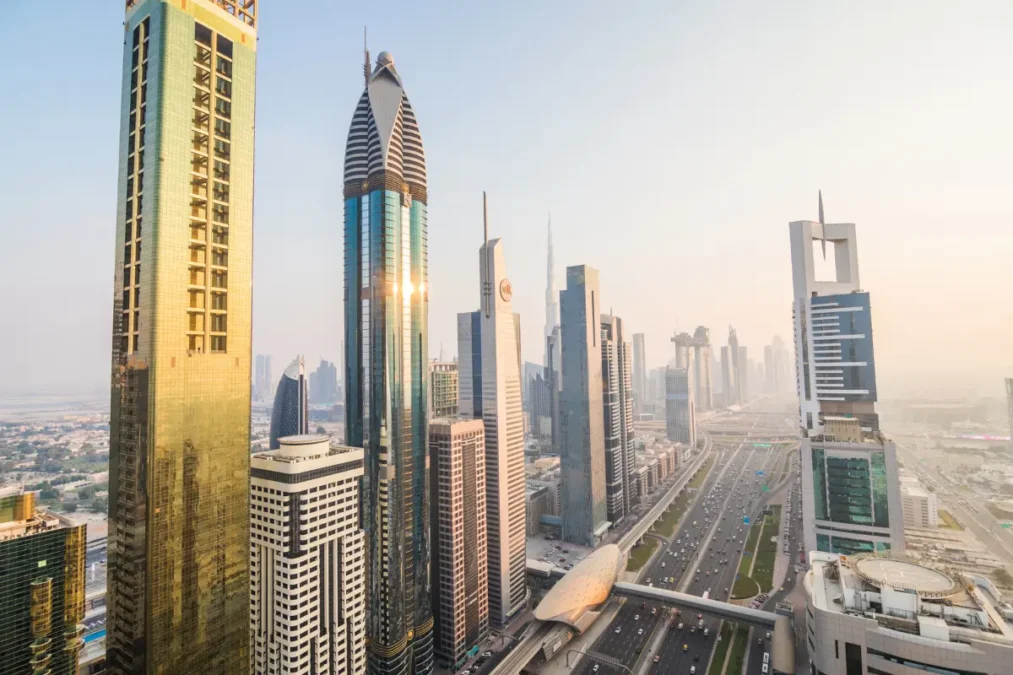
Dubai’s Real Estate In Numbers
In Q1 of 2026, total sales reached Dh176.7 billion across nearly 48,000 transactions. This reflects the continued investor appetite and subtle price growth. January alone recorded Dh72.4 billion marking the highest single month in the history of Dubai’s real estate.

Transaction value jumped 23.4 percent from last year while volumes increased 5.5 percent indicating that rising prices are fueling the market growth, not more sales. The average price per square foot increased by 12.5 percent, reaching up to Dh1,759. The median resale prices for villas reached Dh 4.3 million and off-plan properties made up 70 percent of the total transactional volume.
At the peak of the conflict, investor activity slowed down in March. The real estate stocks tumbled with DFM Real Estate Index shedding 20 percent over five days. However, the industry voices are consistently describing the slowdown as psychological rather than structural. On-ground brokers reported cancelled site visits and delay in signings, but the transactions were postponed rather than outright cancelled.

Who Is Buying?
The character of buyer is more defining in Dubai’s real estate market right now. Khalid described the current picture as a mixed composition where the investors hold a slight edge. “End-users are present, especially those planning to relocate, but the investors remain active due to Dubai’s strong returns,” he said. “Since the war started, there has been a little shift. Some investors are more risk aware, some see Dubai as a safe haven. This has balanced the activity rather than reducing it,” he added.

An anonymous real estate agent confirmed this, noting that the investors continuously outnumber the end-users. “The off-plan purchases have slowed down since the war began, while resale activity is moving continuously,” he highlighted.
Foreign investment inflows increased by 26 percent with 82 percent buyers being cash purchasers. The buyer profile in Dubai’s real estate market has evolved significantly where end-users now make a growing part of the market. The most active segment being Dh1 to Dh3 million, buyers are actively purchasing for rental yield and personal residence rather than pure speculation.

The Rental Market
A significant part of Dubai’s real estate is the rental market that recorded 139,439 lease agreements in Q1 2026. These value at Dh12.2 billion, with the rental yields holding between 6 to 8 percent. High rental yields give investors less reasons to sell the property when markets get volatile.
That is why the property prices have stayed more resilient than the developer shares imply. The 20 percent drop in DFM index reflected the sentiment around developer stocks, not the housing market itself. The physical property moves slow, the luxury segment saw a limited decline of about 5 to 10 percent while the mid market prices held steady.
Dubai’s Real Estate; What’s Ahead?
The people closest to the markets are cautiously optimistic. “f they are an end-user, it is still a good time. Dubai offers stability, quality of life, and long-term value,” Khalid said. “For investors, the opportunities are still there. But they need to be more selective and strategic. The market is not slowing but becoming more mature. So informed decisions are really important now,” he added.
The anonymous agent was more direct, and said that there are not many distress deals, only one or two here and there. “Now is a good time because the market will bounce back soon,” he emphasised.
The Hormuz is now reopening for commercial traffic after the ceasefire. The analysts say the investor confidence is returning. But they warn if the conflict progresses into late 2026, some projects, specifically the off-plan suburban ones, can face a 10 to 15 percent decline.
The war did not break Dubai’s real estate and property market. It just removed the speculation and hype to confirm what really drives Dubai’s real estate. Bad headlines or not, the city still draws people, investment, and long-term confidence.
Read More: Best Areas to Buy Property in Dubai: Where Luxury Property in Dubai is Heating Up