There is a test that separates genuinely resilient businesses from those that merely looked resilient during good times. For Emaar Properties, that test has now been administered twice. Once during the worst financial crash of the modern era, and once during a regional war that closed the world’s most critical shipping lane, disrupted Dubai’s airport, and rattled business confidence across the Gulf. Both times, Emaar did not just survive. It grew.
In the quarter that included the outbreak of the US-Israel war on Iran on February 28, Emaar’s net profit rose by 35 per cent to around Dh5 billion a year later in Q1 2026. They said their revenue has grown by 23 percent to Dh12.4 billion. The value of property sales increased 16 percent from a year earlier to reach Dh22.4 billion. UAE property sales through Emaar Development specifically crossed $5 billion, jumping 22 percent from last year despite the conflict.

The revenue backlog now stands at Dh163 billion, a 29 percent increase. This provides earnings visibility that most developers anywhere in the world would envy. Mohamed Alabbar, Emaar’s founder, was direct about what the numbers mean. “Recent geopolitical developments in the region have reinforced the importance of operating in markets defined by safety, institutional continuity, and long-term vision,” he said.

Emaar Properties in Numbers
The Q1 2026 results are not a one-line headline. They are a complete picture of a business that has organised itself for profit where they go even when the external environment of the business is disrupted by one of the segments.
Operating leverage and portfolio quality and continued cost discipline in all business lines contributed to the EBITDA increase of 34 per cent to Dh7.2 billion this year. Emaar Development recorded a revenue of Dh6.9 billion, growing 36 per cent. While their net profit before tax rose 46 percent to Dh4 billion. The company launched 10 new projects between January and March. These include ‘The Heights Country Club and Wellness’, a master-planned residential development focused on wellness and green living.
The malls, retail, and commercial leasing portfolio delivered revenue of Dh1.8 billion, up 15 percent, with average occupancy across the portfolio standing at 98 percent as of March 31. Recurring revenue from malls, hospitality, and commercial leasing assets increased 7 percent to Dh2.8 billion, accounting for approximately 30 percent of total EBITDA during the quarter.
Only one segment showed weakness. Hospitality, leisure, and entertainment revenue was broadly flat at Dh1 billion. Emaar directly cites weaker performance in March due to the ongoing regional situation. That is not a structural problem, it is a war month. The rest of the business absorbed it without visible strain.
The company also distributed a dividend of Dh8.9 billion, equivalent to 100 percent of its share capital. This marked the second consecutive year of such a payout. Paying out your entire share capital as dividend in a quarter when a regional war broke out two months in is a statement of confidence that no press release can manufacture.
The 2008 Template
The current performance is more impressive when read against what happened in 2008. Dubai’s property market collapsed more severely than almost any other global real estate market during the financial crisis. The prices fell 50 to 60 percent in some segments between 2008 and 2011. Emaar’s share price shed over 80 percent of its value. The company’s most ambitious projects, including the broader Downtown Dubai masterplan, were mid-construction when liquidity evaporated globally.
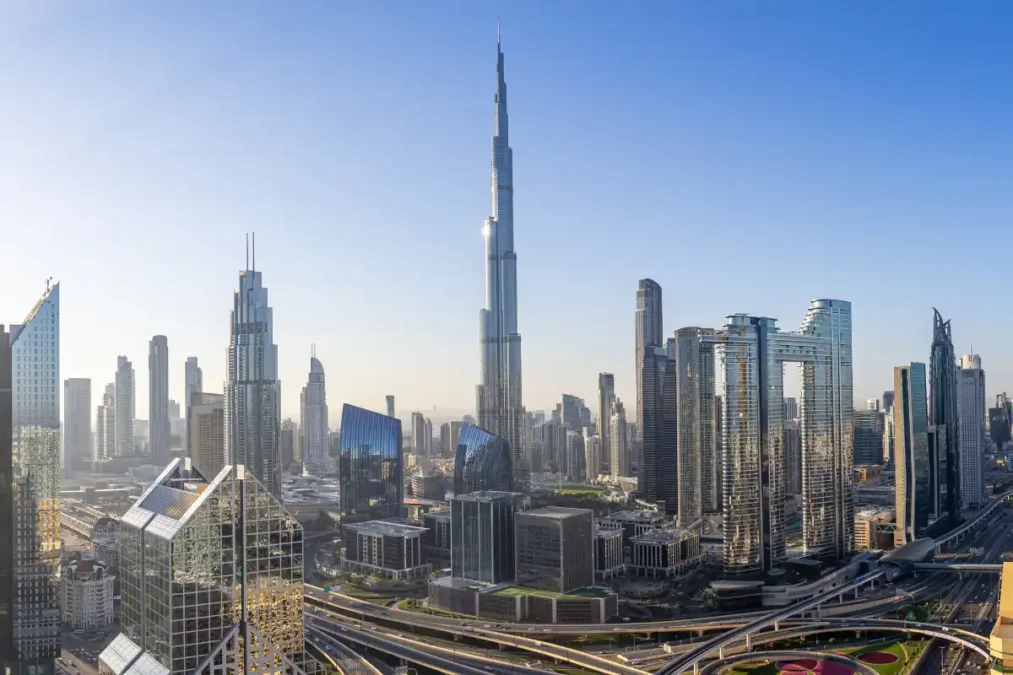
What Emaar did in response defined everything that followed. It did not abandon its projects. It did not walk away from Burj Khalifa. It delivered at the absolute depth of the crisis. In January 2010, the building opened. That decision to complete rather than cancel rebuilt investor trust at the precise moment when the trust was most fragile across Dubai’s property sector. While competitors restructured debt, delayed handovers, and in some cases dissolved entirely, Emaar’s delivery record became its most bankable asset.
The structural lesson Emaar took from 2008 was diversification of revenue streams. The malls, the hospitality portfolio, the retail leasing, these are not just vanity assets. They are a hedge. When off-plan property sales slow because buyers are nervous, mall revenue keeps flowing because people still shop. When hospitality weakens because tourists stop coming, development pipeline revenue keeps converting from backlog to recognised income. The company’s revenue backlog of Dh163.4 billion, approximately $44.5 billion, represents years of future revenue already contracted and being delivered. It is a figure that makes Emaar’s near-term earnings almost impervious to quarter-by-quarter sentiment shifts.
Emaar Properties Landbank
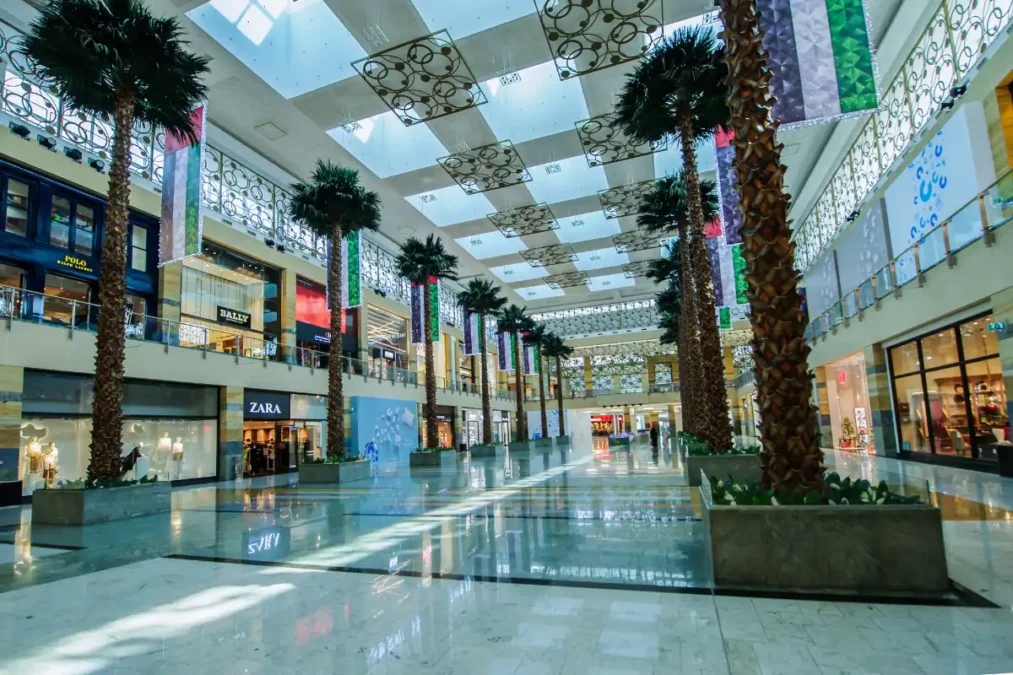
Emaar holds a landbank of 600 million square feet, of which more than half is located in the UAE. That number rarely features in quarterly results coverage but it is arguably the most important long-term data point in the company’s portfolio. Land in Dubai has consistently appreciated over two decades, interrupted only by the 2008-2011 correction and very briefly by the pandemic. A 300 million square foot UAE landbank is not just an asset. It is a pipeline that extends decades into the future, independent of any single market cycle.
The context around the current performance makes it even more striking. While Emaar was posting these results, other property sellers in Dubai were reportedly slashing millions off asking prices to move inventory. Luxury car sales had reached a standstill. Restaurants were shifting to home delivery models. The war’s economic disruption was visible everywhere across the city. Except, apparently, in Emaar’s sales office.
The divergence between Emaar and the broader market in Q1 2026 is not accidental. It reflects the premium that established master-planned communities command during periods of uncertainty. Buyers do not abandon high-quality and branded developments during a crisis, they retreat toward them.
What This Means for Dubai’s Future
Alabbar’s framing, that the geopolitical events reinforce rather than undermine the case for Dubai, is not marketing language. It is a thesis supported by two decades of data. Dubai recorded 60,303 property transactions in Q1 2026, a 6 percent rise. This was part of 718,160 deals during the quarter, even as the war was actively disrupting daily life. The city’s ability to maintain transaction volume during an active regional conflict is precisely the “safety and institutional continuity” argument Alabbar is making.
For investors watching from London, Singapore, or New York, Emaar’s Q1 2026 results are a data point in a larger thesis. That Dubai’s property market has matured into something structurally different from what it was in 2008. Deeper, more institutionally held, more diversified in its buyer base. It is now anchored by developers with balance sheets and landbanks large enough to outlast almost any external shock. Emaar is not just reflecting that maturity. It is the primary reason it exists.
Read More: Trump Slams Iran’s Response as ‘Totally Unacceptable’