
DP World insurance expansion is no longer just about ports, cargo terminals, and logistics corridors. The Dubai-headquartered company, one of the world’s largest port operators, has formally entered the insurance business through a new trade finance and cargo insurance platform. It is the first-of-its-kind cargo war risk insurance solution for Middle East trade routes launched on May 7. The move signals how global shipping companies are increasingly trying to control larger parts of the trade ecosystem rather than only transporting goods.
According to official statements published by DP World, the new cargo war risk insurance product provides end-to-end coverage from ocean or air transit through port storage and inland delivery. All this in a single policy with zero deductible on valid claims. This directly addresses the fragmented, expensive insurance environment that has plagued Middle East trade routes since the outbreak of the US-Israel-Iran war in February.
Related Stories

Global Shipping Giant
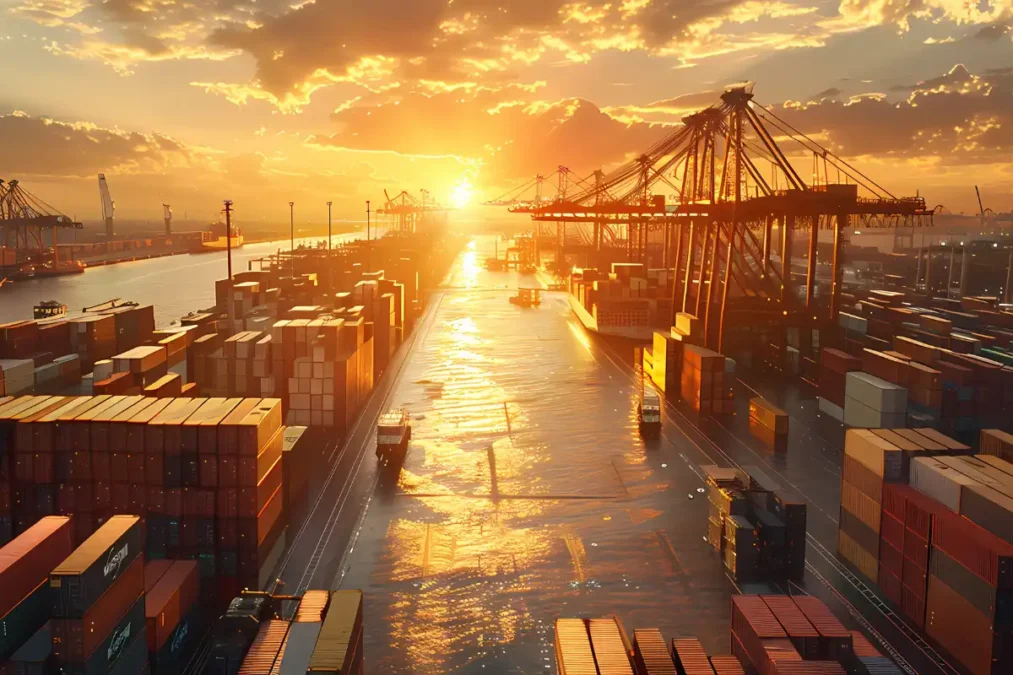
DP World insurance expansion is important because DP World is a huge company. It has over 82 marine and inland terminals in operation around the world, in six continents. DP World Corporate Data estimates that its logistics network processes about 10 percent of the world’s container traffic.
DP World’s latest full-year figures showed revenues of $21.9 billion, an EBITDA of $6.1 billion and container throughput of 96.7 million twenty-foot equivalent units, equivalent to the amount of physical goods that it transports through its network each year. Its flagship port Jebel Ali in Dubai has been handling more than 14.5 million TEU containers per year, and is the largest port in the Middle East and the ninth largest container port in the world linked to over 150 shipping lines that serve over 100 countries.
The DP World insurance expansion is part of an industry-wide shift in the logistics sector that is now taking place. In recent years, following years of disruption from the Covid-19 pandemic, the Red Sea shipping attacks, geopolitical events and the increase in maritime insurance premiums, global trade companies are increasingly looking to have more integrated control of their supply chain.
Related Stories

UNCTAD Maritime Trade Data estimates that global volumes of maritime trade have surpassed 12 billion tonnes a year, before recent disruptions started to alter the shipping economics. As shipping risk escalated along major trade lanes, insurance emerged as a major risk factor.
In the weeks leading up to the outbreak of the US-Israel-Iran conflict in February 2026, war risk premiums jacked up by 100 percent for Gulf routes and as much as 300 percent for those in the vicinity of the Hormuz Strait for some vessel operators. The Strait of Hormuz disruption was estimated to cause a 15 per cent drop in global container volumes in March 2026, with spot freight rates climbing 40 to 80 per cent as shipping firms took on some of the risk of war.

DP World Insurance Expansion: Why It Matters?
DP World’s insurance services are focused on cargo protection and trade financing, two areas that directly affect businesses importing or exporting goods internationally. Smaller businesses especially often struggle to access affordable marine insurance or short-term trade credit during periods of global instability.
According to Lloyd’s Market Association and multiple shipping industry reports, marine insurance premiums surged sharply following attacks and instability across the Red Sea and Gulf shipping routes. War-risk premiums for vessels operating near conflict-sensitive regions rose significantly throughout 2024 and 2025.
The new DP World war risk insurance product offers coverage limits of up to $400 million per shipment on ocean movements and up to $1 million per inland movement. This covers physical loss or damage from conflict, civil unrest, seizure, and derelict weapons, with automatic port storage cover for up to 14 days included at no additional cost. DP World Group CEO Yuvraj Narayan described the strategic logic directly: “Supply chains don’t stop at the port or the shoreline, and neither should insurance. For the first time, cargo owners can access a single policy that protects goods across the entire journey, even in high-risk environments, helping keep trade moving when it matters most.”
Related Stories

DP World’s model attempts to simplify that process by integrating insurance directly into shipping and logistics operations. Businesses moving cargo through DP World systems may now access financing and insurance within the same commercial ecosystem instead of negotiating separately with banks, insurers, freight agents, and shipping providers.
Bigger Impact on Trade
The DP World insurance expansion also aligns with Dubai’s aims to be both a global trade and financial services hub. The UAE is already the hub of major shipping routes between Asia, Europe and Africa. An investment of financial infrastructure in those trade routes strengthens that influence.
The UAE total trade in 2025 was Dh6 trillion, making it the world’s top ten merchandise exporters in 2025 for the first time, according to the World Trade Organization Statistics Database. This is 15 percent higher than the previous year. The non-oil merchandise trade rose 27 percent to Dh3.8 trillion.
One of the biggest structural deficiencies in world trade is the lack of trade finance. According to the Asian Development Bank (ADB) Trade Finance Report the global trade finance gap stands at more than $2.5 trillion, especially for small and medium enterprises.
To put DP World insurance expansion in perspective, it reflects the company’s broader vertical integration strategy. In 2024, the company’s logistics revenue reached 8 percent growth year-on-year due to its expansion into freight forwarding, warehousing, e-commerce fulfillment and cold chain management. This is not just an insurance product – it is the newest aspect of a strategic investment that DP World is making to ensure it becomes a vital part of the supply chain, beyond the terminal gate.
By entering insurance and trade finance directly, DP World is positioning itself beyond being a port operator. It is increasingly becoming a full-spectrum trade infrastructure company.
That shift matters because the future of shipping may no longer belong only to companies moving containers. It may belong to the companies controlling the financial systems behind those containers.

Read More: Israel PM Blames Social Media, Wants Less US Dependence