Dubai Holding Emaar stake have officially increased to 29.73 percent, becoming its largest shareholder. It acquired 22.27 percent shares previously held by Investment Corporation of Dubai (ICD), according to a report by AGBI. The move gives Dubai Holding a larger ownership position than any other entity, consolidating the developer under its portfolio. It now holds the interest through its subsidiary, Emirates Power Investment, based on Dubai Financial Market Data.
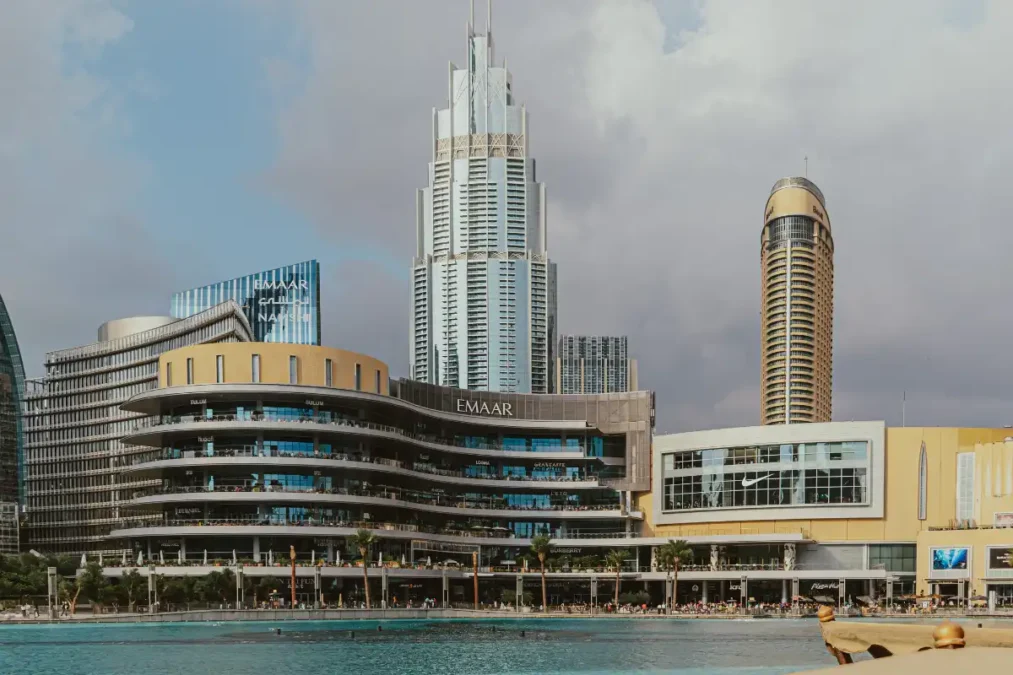
The transaction itself was not publicly valued, but Bloomberg calculations cited by AGBI estimated the acquired 5.5 billion shares at roughly AED 23.9 billion, $6.5 billion, based on Emaar’s market price at the time. The development matters because Emaar is not simply another listed developer in Dubai. It is the developer behind Burj Khalifa, Dubai Mall, Dubai Hills Estate, Dubai Creek Harbour and some of Dubai’s biggest master-planned communities. A bigger share in Dubai Holding Emaar strengthens the government’s influence in one of the most vital real estate firms in the Middle East.
Scale of the Deal
Dubai Holding is already a top investment group in the region. It is owned by His Highness Sheikh Mohammed bin Rashid Al Maktoum, and operates across the real estate, hospitality, media, retail, entertainment and investment sectors in over 30 countries. According to Dubai Holding, its portfolio spans AED 500 billion in assets.
Emaar itself remains one of the UAE’s most influential listed companies. According to the company’s Q1 2026 earnings published by Emaar Properties, revenue rose 31 percent year-on-year to AED 12.4 billion in the first quarter while net profit climbed 24 percent to AED 6.4 billion. UAE property sales jumped 22 percent despite regional geopolitical instability linked to the Iran conflict.
That matters because Emaar is deeply tied to Dubai’s economic engine itself. Overall, Dubai’s real estate market saw AED 917 billion in transactions in 2025, as per data provided by the Dubai Land Department. Emaar is one of the biggest beneficiaries of this growth, with luxury developments as well as tourism related assets and large-scale residential communities.
The deal also comes at a period of an overall round of consolidations within the Dubai ecosystem that has received government backing. As the emirate moves towards another long-term growth cycle associated with the Dubai Economic Agenda D33, government-backed entities have stepped up their offerings in areas such as infrastructure, logistics, utilities and property.
Dubai Holding Emaar Stake Means
The Dubai Holding Emaar stake is not simply about ownership percentages. It reflects where Dubai sees future economic growth coming from. Real estate remains one of the city’s largest capital inflow sectors, particularly as foreign wealth continues entering the emirate amid global instability.
According to consultancy reports published by Knight Frank and CBRE, Dubai recorded some of the world’s strongest luxury property demand growth over the past two years. Ultra-prime home transactions above $10 million consistently ranked among the highest globally.
By increasing its Emaar exposure, Dubai Holding strengthens its position across the full ecosystem of Dubai’s urban economy. Dubai Holding already controls major hospitality brands, residential communities, retail destinations, and free zone operations. Emaar’s exposure to tourism, retail spending, luxury property and long-term population growth is another layer added to the strategic exposure.
The buy-in could also result in better integration between long-term urban planning and extensive private development. The Dubai Urban Master Plan predicts a population of 5.8 million in Dubai by 2040. The provision of housing, infrastructure, malls, hospitality assets and mixed-use development in such size demands government-related entities’ and developers’ joint capital deployment.
Bigger Than Real Estate
The transaction also reflects how Dubai’s economy increasingly operates through interconnected sovereign-backed commercial platforms rather than isolated industries. Emaar is not only a property developer. Dubai Mall alone attracts more than 100 million visitors annually according to Emaar Malls. Hospitality, retail, tourism, financial services, and real estate all overlap inside the company’s business model.
This makes the Dubai Holding Emaar stake strategically significant beyond property sales alone. Dubai continues positioning itself as a global destination for wealth migration, tourism, financial services, and multinational headquarters. The assets controlled by both companies sit directly at the centre of that strategy. The change comes as regional investors remain besieged by geopolitical risks in other parts of the world and see Gulf real estate as a relative safe haven. Dubai real estate prices and dealings have been relatively stable even during turbulent times of war.
For now, the headline is ownership. But the larger story is consolidation. Dubai Holding becoming Emaar’s largest shareholder suggests the emirate is tightening strategic control around its most economically important assets as competition for global capital intensifies.
Read More: Pro-Palestine celebrity treatment criticised at Cannes Film Festival