For centuries, buying gold meant visiting a shop, handing over cash, and taking home something you could hold. In Dubai, that transaction happened most visibly at the Gold Souk in Deira, one of the world’s most famous retail gold markets, where the gold price in Dubai is updated in real time. It is displayed on boards outside every shopfront, and subject to fierce competition that keeps the city among the most affordable places in the world to buy physical bullion. That retail tradition is not disappearing. However, it is now running in parallel with something structurally different, and considerably larger in the form of gold tokenisation.
Digital gold infrastructure has quietly become one of the most sophisticated in the world. By May 2026, tokenised gold had evolved into a regulated, multi-billion dollar pillar of the Dubai Economic Agenda D33, fundamentally changing how physical gold is traded, owned, and transferred. The transformation connects two things that seemed unlikely partners just a few years ago: the ancient weight of physical bullion and the real-time programmability of blockchain technology.
Related Stories

What Is Gold Tokenisation?
The architecture behind gold tokenisation is more concrete than most people realise. It is not an abstraction or a derivative product. It is a digital twin model.
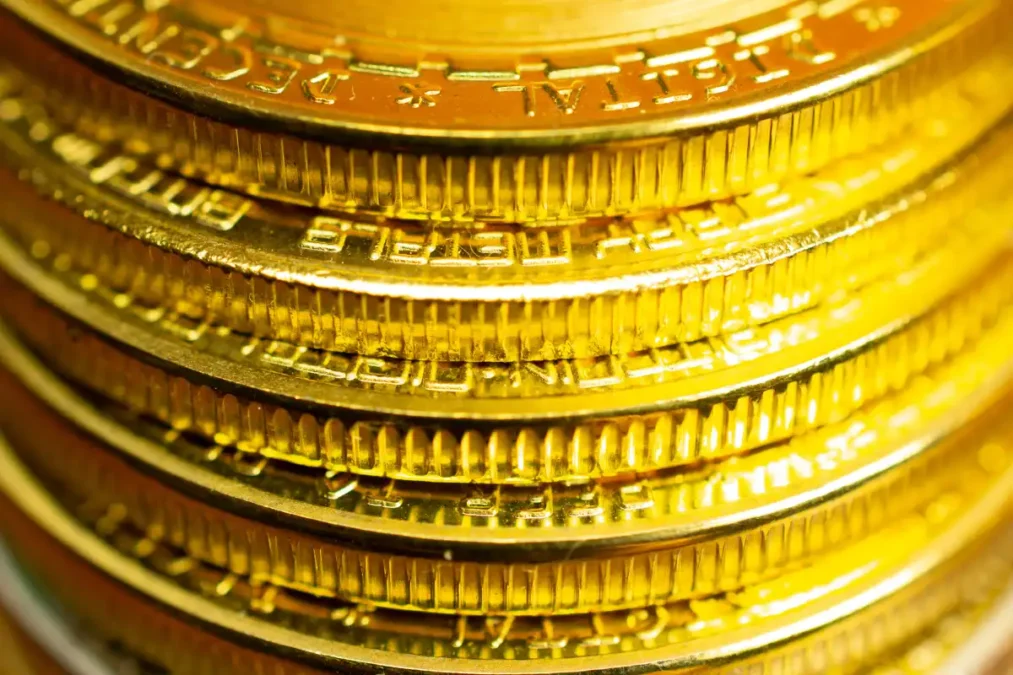
Physical gold bars with 999.9 purity, one kilogram each, sourced from globally renowned refiners, are deposited into high-security, subterranean DMCC-approved vaults. Each bar is registered on DMCC Tradeflow, the official online platform that records ownership of commodities stored in UAE facilities and has been operational since 2012. That registration creates a legally recognised warrant, a digital proof of ownership and reserve that underpins the minting of a Shariah-compliant digital token.
Comtech Gold Tokens, known as CGO, are created on the XinFin Protocol blockchain network, with each token representing exactly one gram of gold. Investors can purchase as little as 0.01 grams at a time. They never need to transport, store, or insure physical metal. The gold remains in the vault. The token moves on the blockchain. The investor holds a legally backed claim to real, allocated bullion. DMCC gold tokenisation eliminates the logistical burden of physical gold ownership without removing the one thing that makes gold valuable: the actual metal backing it.
Related Stories

Each gold bar features unique ID numbers and certificates directly from the refiners, ensuring that the Proof of Reserves backing every token is independently verifiable. Ahmed Bin Sulayem, Executive Chairman and CEO of DMCC, described the rationale directly: “Recent market events have highlighted the need for greater transparency and crypto tokens backed by underlying, real-world assets. Our partnership with Comtech Gold to enable the trade of tokenised gold bullion backed by DMCC Tradeflow warrants addresses this need head-on.”

The Numbers Behind Digital Gold
The scale of digital gold infrastructure in Dubai is now significant enough to register in global commodity trade statistics. DMCC Tradeflow recorded over 296,000 Islamic finance transactions with a total value exceeding AED 1.32 trillion in the past year. The global tokenised gold market capitalisation surpassed $5.8 billion in early 2026. Furthermore, approximately 25 percent of the world’s gold trade now flows through the DMCC ecosystem, positioning Dubai not merely as a retail gold destination but as the central processing node for a significant portion of global physical gold transactions.
Related Stories

The efficiency gains are measurable. Tokenisation platforms in Dubai have reduced transaction costs by 60 to 80 percent compared to traditional physical gold dealers, according to industry analysis. The reduction comes from eliminating transport, insurance, storage, and settlement delays. A tokenised gold trade can settle in seconds. A traditional bullion delivery takes days and incurs significant logistical cost.
For retail investors, gold tokenisation democratises access in a way that the physical market structurally cannot. The Gold Souk is accessible to anyone in Dubai. It is not accessible to someone in Jakarta, Lagos, or São Paulo at 2AM who wants to add 0.5 grams of 999.9 purity gold to a portfolio. The digital platform is.

Gold Price in Dubai & The D33 Agenda
The gold price in Dubai has always reflected the city’s structural advantages as a trading hub: zero VAT on gold purchases, DMCC regulatory oversight, intense retail competition, and direct access to international benchmark pricing. DMCC gold tokenisation adds a digital layer to all of those advantages.
Related Stories

The Dubai Economic Agenda D33 identifies digital assets and financial technology as core pillars of the city’s ambition to double its GDP over the next decade. Gold tokenisation fits directly within that agenda because it converts a traditional commodity into a programmable digital asset while retaining its real-world value backing. It serves multiple D33 objectives simultaneously: financial innovation, increased non-oil trade, digital economy expansion, and positioning Dubai as a global fintech hub.
The connection to the broader UAE digital economy strategy is equally direct. The UAE digital remittance market is growing at 17.9 percent annually, the payments sector is on track for $27.3 billion in revenue by 2028, and the Digital Dirham CBDC is being developed to add a programmable sovereign layer to the financial system. Digital gold products like CGO tokens sit naturally within that infrastructure, offering a Shariah-compliant, physically backed, instantly liquid asset that can move across digital payment rails without the friction of the physical market.

Gold Tokenisation: For Souk and Investors
The gold price in Dubai displayed on boards outside every souk shop remains the reference point for physical retail buyers. That market is not going away. Dubai’s Gold Souk processes over 10 tonnes of gold daily, and the cultural tradition of buying physical jewellery for Eid, weddings, and family occasions is deeply embedded across the city’s South Asian, Arab, and Emirati communities.
However, gold tokenisation creates an entirely separate buyer category: the investor who wants gold exposure without physical gold. This includes retail buyers internationally, institutional portfolios seeking gold allocation without custody cost, and Islamic finance structures requiring Shariah-compliant real asset backing. The two markets are complementary rather than competitive.
For the UAE, the combination of the world’s largest retail gold trading hub and one of its most sophisticated digital gold platforms creates a position that no other financial centre currently replicates. The gold price in Dubai has always represented something real. Gold tokenisation is ensuring it now also represents something digital.

Read More: Director of National Intelligence Tulsi Gabbard Leaves as Trump Cabinet Shake-Up Continues