

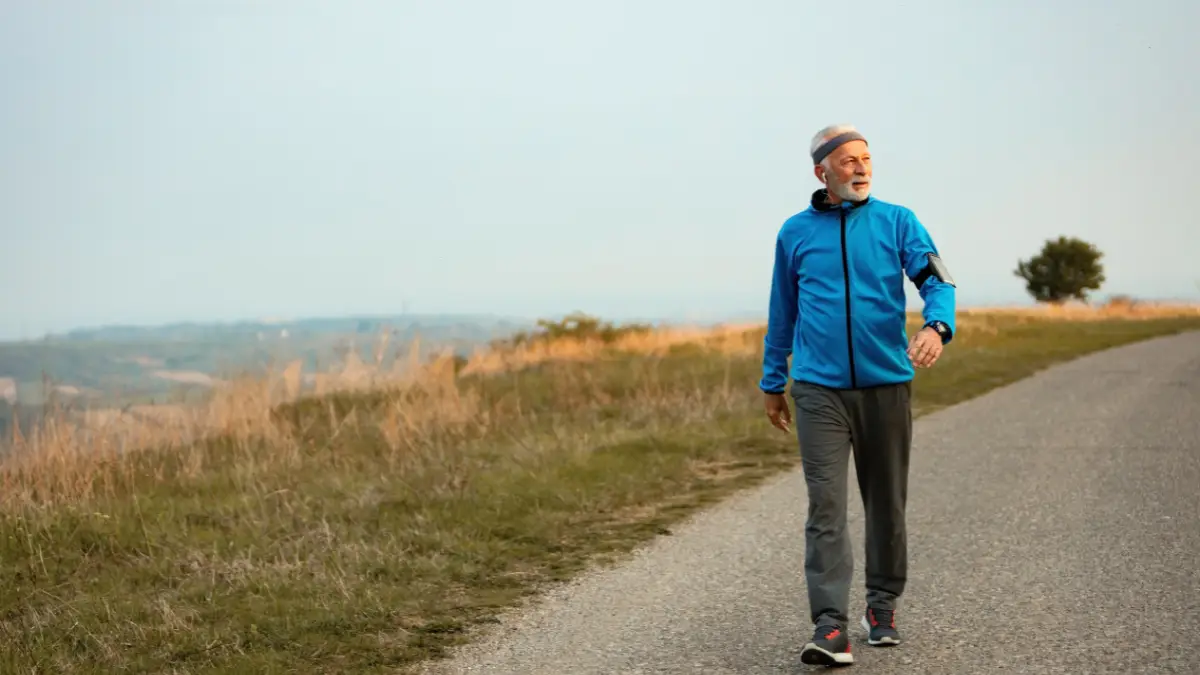
Walking and aging are closely linked, according to a new study that sheds light on why everyday walks can feel more challenging as people grow older. Researchers found that age-related changes in the nervous system and ankle mechanics cause the body to priorities stability and fall prevention over movement efficiency, leading to slower walking speeds, greater fatigue, and increased difficulty maintaining balance.
While it’s easy to blame general aging, scientists now have a specific, and surprising, explanation: it all comes down to a major shift in how our nervous system commands the muscles around our ankles.


A recent study published in the journal Gait & Posture, titled “Ageing alters ankle mechanics and muscle co-contraction patterns across the gait cycle,” reveals that our bodies naturally adopt a “safety-first” mindset as we grow older.
Conducted by researchers at Flinders University and the University of Canberra, the study highlights how our physiology begins prioritising fall prevention over smooth, effortless movement. While this survival tactic keeps us upright, it comes at a cost: it drains our energy and slows us down.
How the nervous system calls a truce
To keep us from taking a spill, the nervous system actively chooses stability over peak performance. According to study co-author Associate Professor Maarten Immink, this “safety-first” pivot fundamentally alters our natural stride.
It is a biological trade-off. We sacrifice speed and fluid movement to drastically lower our chances of wiping out. It’s a smart defensive strategy, but it explains why older adults often feel exhausted after a walk and struggle with longer distances.
“As we get older, the body starts to favour stability over efficiency,” says Dr Lindsay, from the Flinders Caring Futures Institute.
The real-world risk of falling
This shift in ankle mechanics also explains why it becomes much harder for older adults to quickly catch their balance after a sudden slip or trip.
To uncover these insights, researchers conducted a secondary analysis on 107 healthy individuals aged 26 to 86. Participants walked at their own comfortable pace while scientists tracked their movement using 3D motion capture, force platforms, and muscle-activity sensors (electromyography).
Practical steps to stay steady
You can train your body to navigate this shift. The research, spearheaded by Dr. Cody Lindsay of Flinders University, emphasises that targeted movement is key.
“Staying active is one of the most important things people can do, and small, consistent exercises can help you stay confident, mobile, and independent for longer.”
If you want to maintain your mobility, standard strength training isn’t enough. Fitness routines for older adults need to actively incorporate balance drills, coordination practice, and exercises that mimic the natural, synchronised ways our muscles fire with every single step.
Why walking is good for you
It’s no surprise that a doctor’s prescription might include just walking, as it includes a wide range of benefits. As Mathilde Valade, an osteopath at Dubai’s Wellth Clinic, had earlier told us: A daily brisk walk can significantly improve cardiovascular health, lower blood pressure, and reduce the risk of heart disease – helping to ward off chronic illness. Additionally, it supports weight management by burning calories and regulating weight, depending on the intensity and duration of the walk.
It’s a ‘powerful and free’ way to improve your health. Just around 30 minutes a day can reduce heart disease risk by 19 per cent, boost mood, build muscle, and sharpen your mind.
Walking also repairs the body
It improves circulation and oxygenates the muscles, as experts have earlier told us. It’s a low impact exercise that’s gentle on the joints, and every movement helps the blood circulation of the body.
It flushes down the lactic acid that can tend to build up in the joints and cause a lot of soreness. It fires up the cells, and utilises the fat in the body to burn calories. The more you walk, the stronger your muscle memory becomes, and fat begins to burn more efficiently.”
Furthermore, as Valentina Tura, Osteopath and Partner at Osteopathic Perfect Balance Medical Center, Abu Dhabi, explained, walking is even more important for women in the perimenopause or menopausal stage, as walking helps to regulate the hormones and also to stimulate the bones to the move and ultimately grow stronger.
Also Read: Dubai Police Lost and Found Returns AED 103,880 Watch Bag