
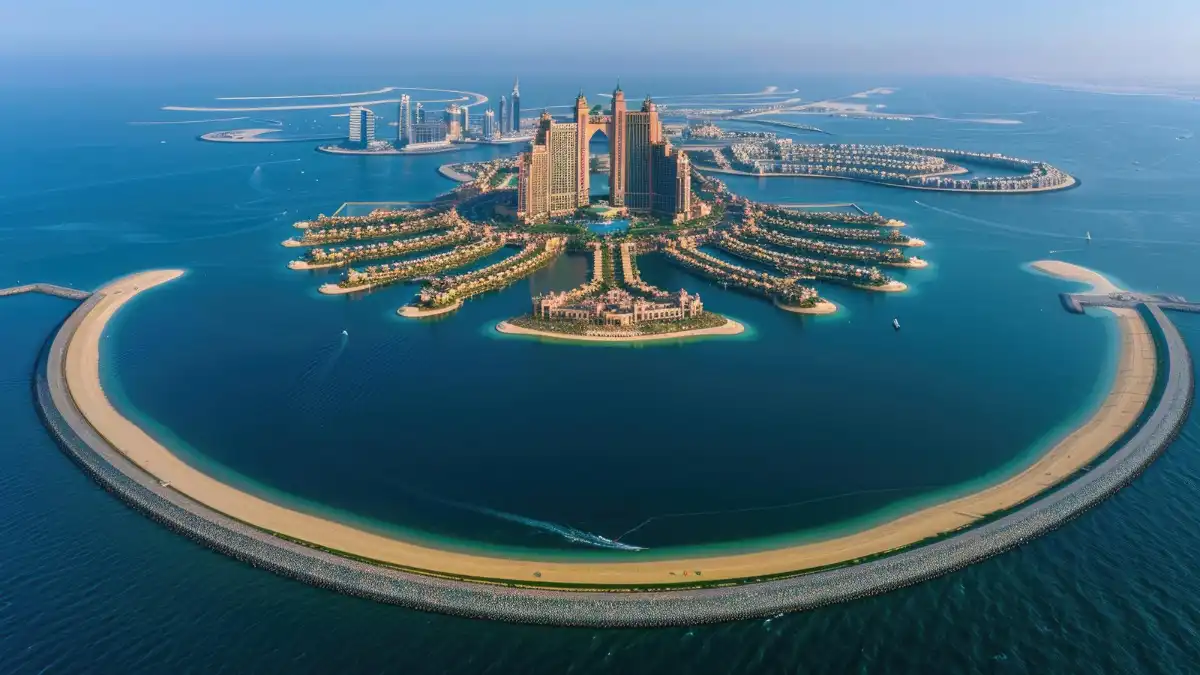
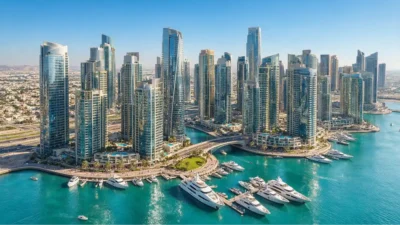
There is a reason why Palm Jumeirah appears in nearly every conversation about Dubai property. Or why Dubai Marina rents hold firm even when other communities experience softening. Or, why an apartment next to a canal in Dubai Creek Harbour has more value than another apartment at the canal, but two streets away. Dubai waterfront properties are not only expensive due to beauty. It’s because they have been tested and retested, largely and sometimes dramatically, in the marketplace. Results show that customers will pay more, keep it longer and fight harder to own it. 2026 observed the same trend. It has rather accelerated.
The Premium Has Never Been Higher
The numbers on this story are striking. Waterfront homes in Dubai commanded a 90 percent premium over inland property in 2021, a figure that rose to 128 percent by Q1 2026. The imbalance between limited supply and increasing demand drove the numbers. That is not a small gap. It is a structural split between two categories of property behaving like two different markets.
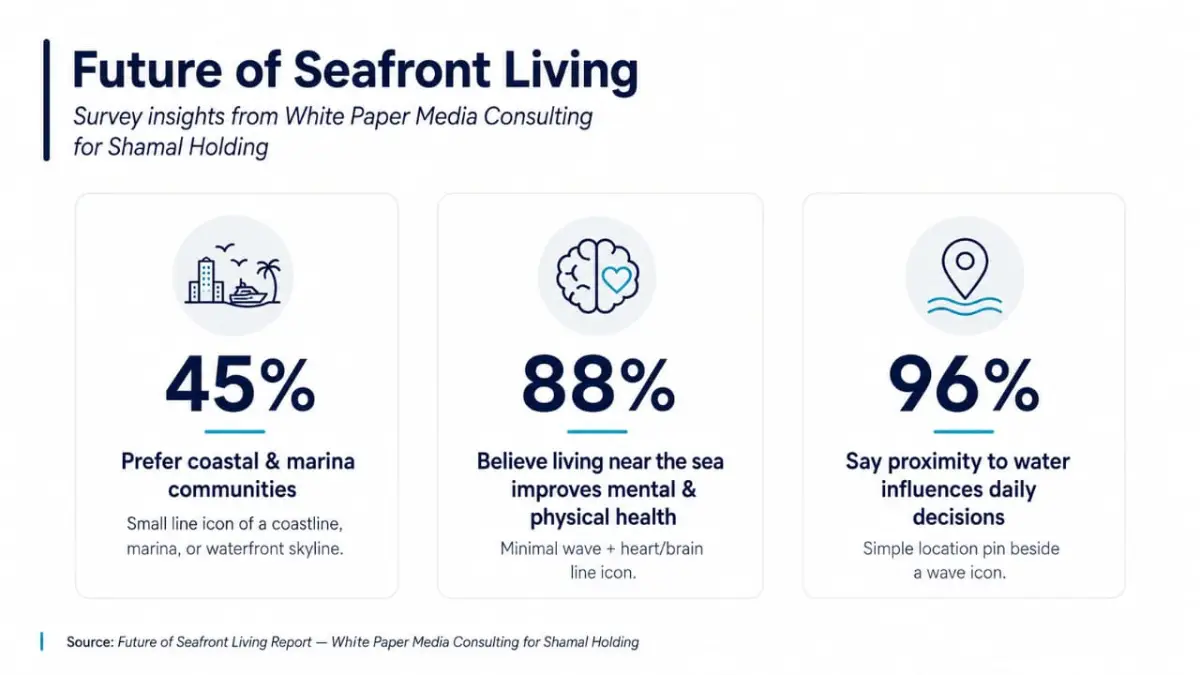
Prime Dubai waterfront properties have appreciated by more than 140 percent over the past five years. They have been significantly outperforming the wider residential market, according to The Future of Seafront Being report produced by White Paper Media Consulting for Shamal Holding.
Furthermore, coastal and marina environments emerged as the preferred residential setting for 45 percent of respondents, ahead of high-density urban communities. While 88 percent believe living near the sea improves both mental and physical wellbeing. Also, 96 percent said proximity to water influences their daily decisions.
These are not investor-only preferences. They are lifestyle preferences that translate directly into sustained buying pressure across multiple buyer profiles.

Why Buyers Choose Dubai Waterfront Properties
The logic driving demand operates on three levels simultaneously: lifestyle, scarcity, and financial performance. Most buyers experience all three, weighted differently depending on their profile.
On lifestyle, buyers want views, privacy and a resort-like lifestyle. In Dubai, genuine beachfront or uninterrupted water views have become the most desirable and defensible asset class, according to Bardia Eshghi of Grand Lux Properties, speaking to Construction Week. This preference does not depend on the wealth bracket alone. It cuts across families seeking walkable promenades and weekend spaces, professionals valuing the mental health benefit of coastal living, and investors targeting properties that appeal to the highest density of potential tenants.
On scarcity, the market does not create an artificial supply constraint. True waterfront land in Dubai is finite. Master developers such as Emaar, Nakheel, and Dubai Holding control it. New launches are selective and strategically phased, protecting long-term value.
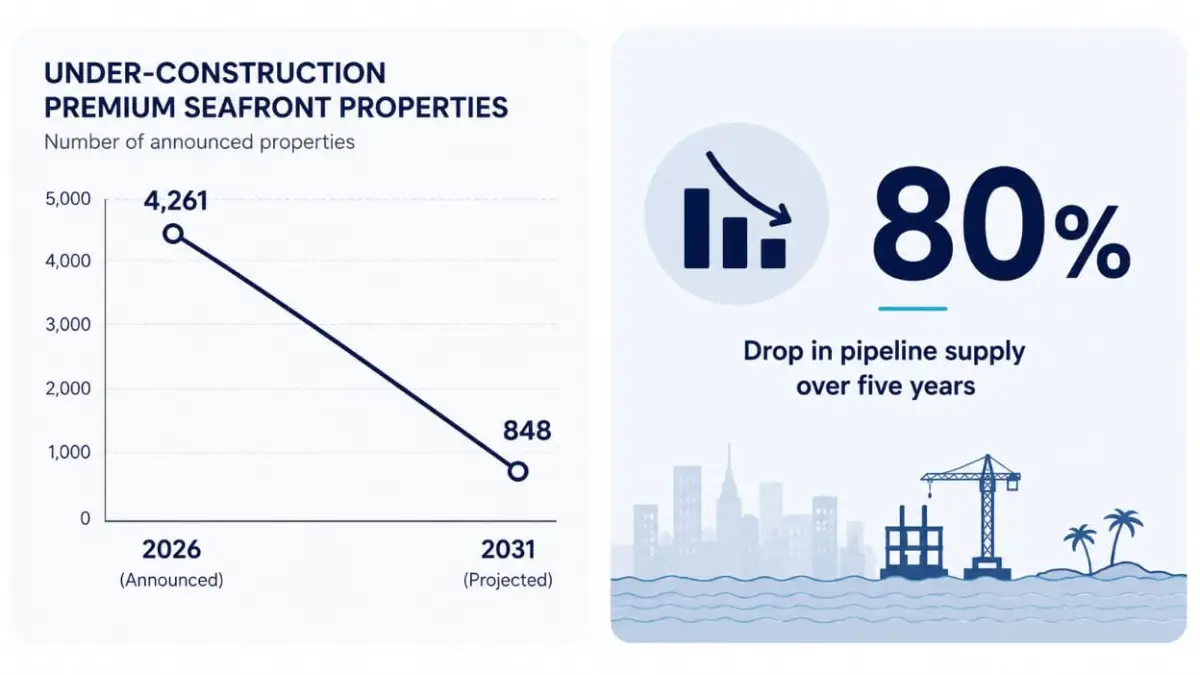
Additionally, the number of under-construction premium seafront properties is expected to decline over the coming years, from an announced 4,261 in 2026 to 848 in 2031. That is a drop of nearly 80 percent in pipeline supply over five years. When available inventory falls that sharply and demand continues to grow, prices do not merely hold. They compound.
On financial performance, Dubai waterfront properties often generate rental yields of 5.5 to 7 percent, with short-term rental strategies in prime zones delivering even higher income due to premium nightly rates. Moreover, during market corrections, investors often shift toward quality assets, and waterfront properties benefit from this flight-to-quality trend, showing greater price resilience and liquidity compared to non-prime inland assets.
Related Stories
Which Are the Strongest Dubai Waterfront Properties?
Not every waterfront address performs equally. Location within the waterfront category matters significantly.
Palm Jumeirah is the most internationally recognised waterfront neighbourhood in Dubai. It is more of a capital preservation and lifestyle asset in 2026 when buyers are looking for prestige and security and less for aggressive yield. The scarcity and global demand for villas along Dubai’s waterfront are pushing annual price growth in Palm Jumeirah to the high end of Dubai’s top-neighbourhoods range of 12-18 percent.
Dubai Marina Interchange provides something else. It continues to be one of the best rent-producing, waterfront markets for apartments and is suitable for those wanting income stability and liquidity over ultra-exclusive positioning. Also, waterfront apartments in established neighborhoods with marina views are appealing to high net-worth individuals and international investors and have more demand than standard residential properties, leading to higher occupancy rates.
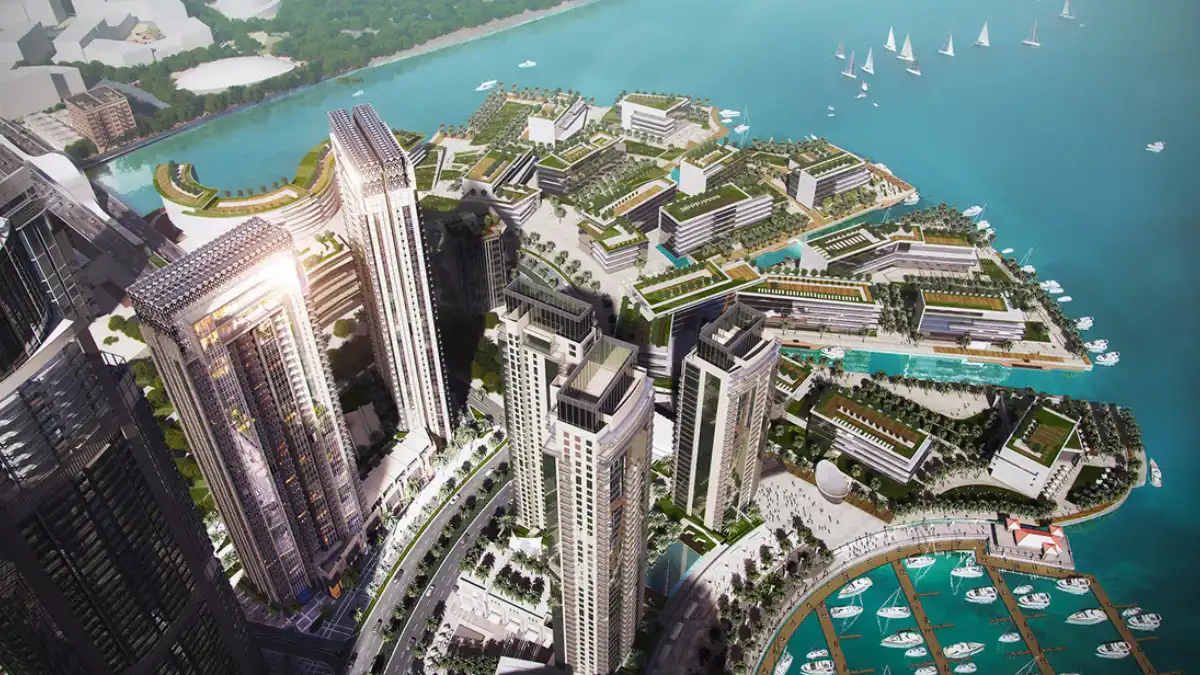
Dubai Creek Harbour is the most progressive waterfront project in Dubai in the present. In addition to Emaar’s backing and the Dubai Creek Tower project, a fully planned waterfront master community anchors the project, a blend of future infrastructure, lifestyle planning and long-term vision, which is ideal for investors looking to invest in a second home rather than yield maximisation.
Looking at 5 year cumulative price growth projections for Dubai Creek Harbour prices, it is estimated that the price growth will be between 30 and 45 percent with a base assumption that the infrastructure and communities are maturing in accordance with their plans.
What Does This Mean For Buyers in 2026?
Shehzad Jamal, Partner for Strategy and Consultancy, Knight Frank MENA, said the demand for coastline property has been growing these days as the people are not just purchasing home by the sea. They are buying into a lifestyle ecosystem.
That framing clarifies why Dubai waterfront properties resist the correction patterns that affect other segments. The buyer is not comparing square footage alone. They are comparing experiences, communities, and long-term living quality.
The market data confirms what the buyers are already acting on. A 128 percent premium over inland property. A 140 percent five-year appreciation. A pipeline of waterfront supply falling from 4,261 to 848 units over the next five years. These are not speculative indicators. They are structural ones.
Dubai waterfront properties are not performing well despite rising prices. They are performing well because of them. The premium exists because the fundamentals that created it have not changed and are not expected to.
Read More: Dubai Real Estate Tokenization Eliminates Price Barriers For New Investors