
Public debates about urban welfare and social relief often land on a simple divide. On one side, critics argue that corporate charity and food drives only mask deeper issues like wage gaps, low pay, and the high cost of living. On the other, civil groups and local authorities run targeted drives to deliver immediate relief where it is needed most.
In Dubai, humanitarian campaigns run offer a clear window into this dynamic. For thousands of low-income workers, a free loaf of bread or a donated meal is not an abstract policy point. It is a real way to stretch a tight budget in a costly city.
The Mohammed bin Rashid Global Centre for Endowment Consultancy launched the Bread for All initiative. They placed smart vending machines at Aswaaq supermarkets across areas like Al Quoz and Al Warqa’a. They dispense free, fresh bread.
A beneficiary waiting at an Aswaaq outlet captured the reality of the situation perfectly when speaking to Khaleej Times: “This will help me to save the money I had set aside to buy bread for dinner.” That simple statement shows why aid programs persist.
Even as broader discussions about wages and worker welfare continue, daily relief helps real people directly.
Why Skeptics Question Charity Drives
Criticism of public relief drives rarely comes from a lack of empathy. Instead, it comes from concern over structural economics. Skeptics point out that relying on food aid can make an economic system look compassionate without fixing the root causes of financial pressure. When humanitarian campaigns manage to supply basic staples, attention can shift away from core labor policies.
The Wage Protection System (WPS) allows many blue-collar workers in the area to earn wages that are legal in terms of the law. While it’s great to receive a set amount every month, there are still monthly costs to consider in the big city. During big food distributions, other topics such as minimum wage, inflation, and housing costs are often overlooked.
But critics say that food parcels deal only a short-term solution to a long-term problem. That is the ability of low-income earners to make a living. From this perspective, charitable initiatives have the potential to become a long-term solution to problems that require a policy-type solution.
The Immediate Value of Practical Relief
While structural policy debates take time, daily bills do not wait. For frontline staff and manual laborers, immediate financial relief changes how they handle their monthly budgets.
The Central Bank of the UAE data shows that personal remittances to the UAE are a key financial obligation for foreign workers. It can sometimes be a large portion of their monthly earnings. All the little savings can add up over time. Extra cash that is not spent on food can be used for paying rent, paying utilities or sending money home to families.
A free meal, or a hot loaf of bread, is not only food, but also a shield against financial hardship. The civil groups know that low income employees can still get a legal paycheck, but may be constrained on how much they can afford for their personal debts, medical requirements, or family dependents.
Dismissing humanitarian campaigns build as surface-level publicity ignores the genuine help they give to families working hard to make ends meet.
Bridging the Gap
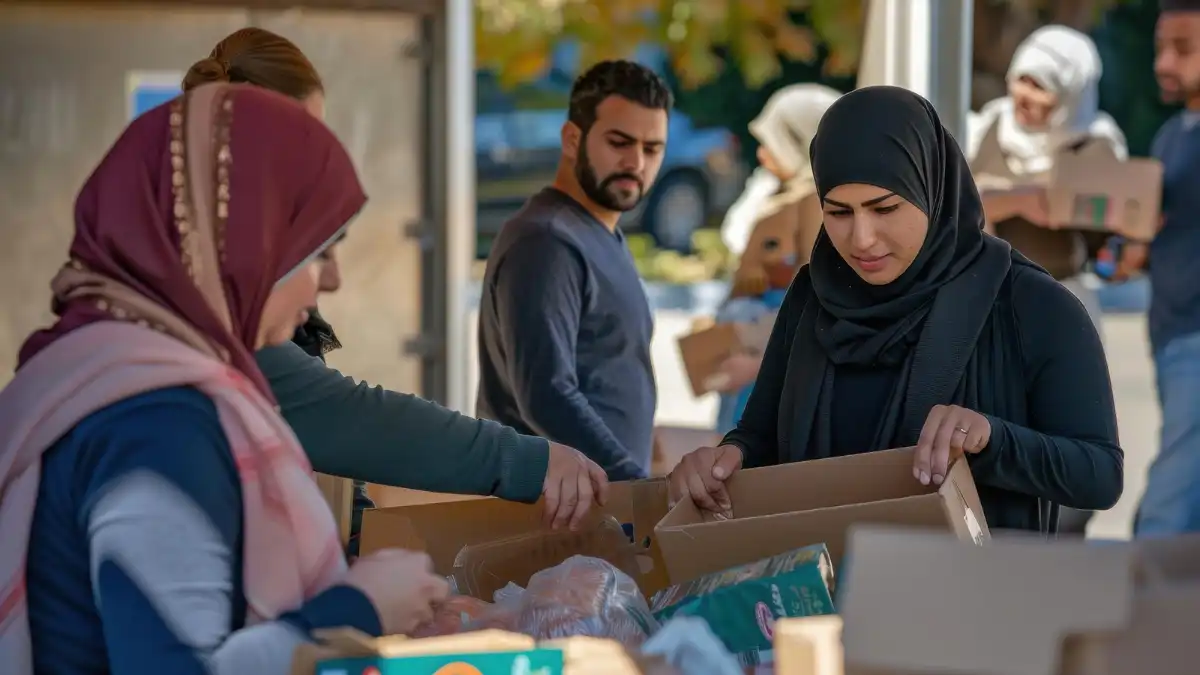
The combination of both these truths provides a better understanding. Programs like 10 Million Meals, the 1 Billion Meals campaign secured more than AED 1 billion in food endowments. Labor welfare initiatives such as Adopt-a-Camp make a positive impact. Meanwhile, regional authorities continue to modernize the regulations governing the labor market, require workers to have workplace insurance, and increase digital monitoring of wages.
The gap here is not between good intentions and bad policies. It is the distance between immediate relief and long-term progress. Strategic humanitarian campaigns deploy handle today’s pressures, while policy updates address tomorrow’s stability. Low-income workers benefit from both approaches working in tandem.
Toward a More Honest Conversation
The spirit, rather than the letter of human aid, is what matters. A just balance acknowledges that not only is it necessary for people now, but it is also necessary for people in the future as well.
Rather than viewing food drives as a mere public relations gesture or as a solution to all income issues, we must look at them as they truly are. They are essential lifelines for real households to get by on a daily basis. Humanitarian campaigns by UAE foundations ensure that vulnerable groups do not get overlooked during changes in the economy.
It is also important to support the low-income worker without compromising their economic dignity or their need for survival. There are people behind all the policies and charity drives whose backs are bent in order to create a future.
It takes understanding what people are going through on a day-to-day basis to start creating a more supportive community.
Read More: Al Freej Fridge Celebrates Dubai Spirit of Giving This Summer