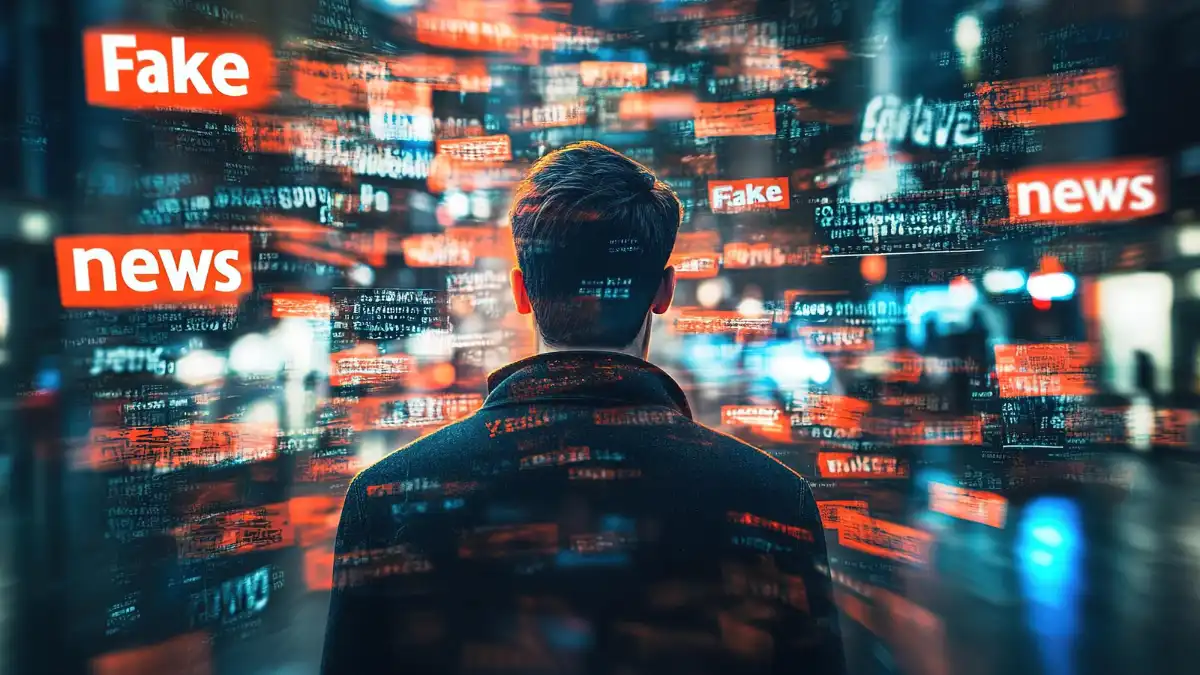
Think about the last time you shared a news story without checking if it was true. Most people have done it. A headline looks alarming,. You forward it. By the time it turns out to be false, it has already reached fifty contacts. In the UAE, that moment now carries legal weight. UAE digital disinformation is not treated here as a vague threat to be managed eventually. It is a defined, regulated, enforced problem.
According to cybersecurity data cited by the UAE government, between 90,000 and 200,000 breach attempts hit UAE systems every single day, with 71.4 percent of those attacks state-sponsored. Deepfakes are being deployed specifically to erode public trust. That is the environment these policies are responding to.
The media content standards in UAE, the arrest powers, the awareness campaigns, and the digital safety awareness programmes all point in the same direction: the UAE has decided that digital disinformation is too serious to leave to individual judgment.
The State’s Case
The government’s argument is grounded in a specific risk calculation. False narratives travel faster than corrections. They can change how people feel about safety, economic stability, or national security. Consequently, the UAE built a legal architecture to address that.
The National Media Authority’s 2026 media content standards set out 20 mandatory rules for all publishers. According to WAM, the media content standards in UAE explicitly prohibit false news, rumors, and content that harms national unity, economic reputation, or social cohesion. Fines range from AED 5,000 to AED 150,000 for violations, with repeat offenses reaching AED 2 million and possible license revocation. These standards apply to broadcasters, influencers, and digital content creators equally.Enforcement has followed.
UAE Attorney General Dr. Hamad Saif Al Shamsi ordered the arrest of 25 individuals in March 2026 for publishing misleading content that harms national defense and glorifies military aggression, describing the use of cyberspace to harm public security as a criminal offense. That order moved UAE digital disinformation from a regulatory concern into a criminal one, quickly and publicly.

UAHR’s Role
The UAE Association for Human Rights has not been silent on this issue. Moreover, its stance is more complex than mere state endorsement.
UAHR said in a statement to the UN Human Rights Council (UNHRC) at its 61st session in March 2026 that the UAE has been a victim of false narratives and coordinated online content designed to sow doubt in the national institutions and harm the country’s reputation. UAHR therefore requested transparency in the sources of disinformation, accountability for those disseminating false narratives and respect for sovereignty.
Digital safety awareness is a good value, this is not an indictment of that. Experts argue that addressing UAE digital disinformation requires pairing with rights-respecting frameworks.
UAHR President Dr. Fatima Khalifa Al Kaabi had earlier, at the 55th session in April 2024, emphasized protecting digital human rights specifically: personal data protection and preventing the illegal exploitation of personal information. The message from UAHR is consistent. The threat of disinformation is real. However, the response should protect individuals as well as institutions.
Building a Culture
The most under reported part of the UAE’s approach to UAE digital disinformation is the investment in building habits, not just enforcing rules.
According to Gulf News, the National Media Authority launched a five-week nationwide campaign in May 2026 under the slogan “Creativity, Inspiration, Integrity,” targeting both citizens and residents across all seven emirates. The campaign’s goal, as stated by NMA Secretary-General Dr. Jamal Mohammed Al Kaabi, is to build digital safety awareness as a deeply rooted societal culture, not just a regulatory requirement.
The campaign aims to reach more than 10,000 downloads of the Media Compass guide, making it a reference tool for content creators. WAM confirms that the media content standards in UAE apply to everyone who creates or shares digital content, with sessions held across Abu Dhabi, Ajman, and other emirates.
Additionally, the Telecommunications and Digital Government Regulatory Authority runs Cyber Ambassador programmes that train students and young people to spread digital safety awareness and safe online behavior through peer-to-peer networks. The state is not only punishing. It is trying to build verification as a reflex.
How This Affects Your Scroll?
This is where the policy becomes personal. In the UAE, digital disinformation is not only a threat to governments. It is a legal responsibility for individuals.
A single share of unverified content on a sensitive topic, security, health, economics, or national affairs, can result in a fine or legal action under the media content standards in UAE. You do not need to be the original creator. Reposting false information is enough for liability to attach. Also, these campaigns are in place for the fact that most people are not aware of this. Digital safety awareness, in this instance, is knowing that your digital actions have legal and social implications and that they have consequences outside of your screen.
The steps to take are evident: double-check information before forwarding it, limit the sharing of information relating to sensitive topics with official sources, and ask questions about content that evokes strong emotions before sharing it. Moreover, recognize that information you share is personal power that others can use through disinformation channels.
Security, Rights, and Trust
We must acknowledge and address the real argumentative edge of this issue. Enforcement visibility prompts concern about arrests for online content. When twenty-five people are arrested, critics fear a chilling effect on legitimate expression. The regional context adds weight to that concern. More broadly, Gulf governments have faced criticism for using security justifications to restrict speech that poses no genuine public harm.
The counter-argument from both the state and UAHR is that UAE digital disinformation causes measurable damage: to individuals who make decisions based on false information, to businesses whose reputations are destroyed by rumors, and to the broader trust that holds a diverse, multinational community together. The real test of this system is not whether it achieves compliance. It is whether it builds genuine trust and digital literacy, or only creates behavior change out of fear. Those are two very different outcomes, and only the first one is sustainable.
What a Responsible Digital Citizen Looks Like in the UAE
In practice, responsible digital behavior in the UAE in 2026 means treating verification as a habit before every share. It means understanding that the media content standards in UAE are not abstract regulations. They apply to the screenshot you forward in a group chat. It means seeing digital safety awareness as a personal interest, not only a legal requirement, because your data, your reputation, and your community are all affected by what circulates online.
UAE digital disinformation is not fought only in courtrooms or policy documents. It is fought in the moment between seeing a headline and deciding what to do with it. That moment belongs to every person with a phone.
Read More: UAE eVisa for GCC Residents: Eligibility, Fees, Requirements and How to Apply