One hundred student projects from Harvard, MIT, Oxford and 70 other universities are coming to Dubai in November.
These projects could shape life in the next decade as part of Dubai Future Solutions Prototypes for Humanity 2026. Most cities talk about the future in press releases. Additionally, Dubai has been building infrastructure for it since before the concept became fashionable.
Related Stories

The difference shows in autonomous transit pods at Bluewaters. Satellites assembled in Abu Dhabi now orbit the Earth.
The Dubai Future Solutions — Prototypes for Humanity summit runs from November 18 to 21 as part of Dubai Future Week. It is one of the clearest expressions of that difference in practice. It does not gather people to discuss what innovation could eventually look like. It gathers people who are already building it and gives them a room, an audience, and a pathway from laboratory to reality.
The Scale Is Worth Understanding
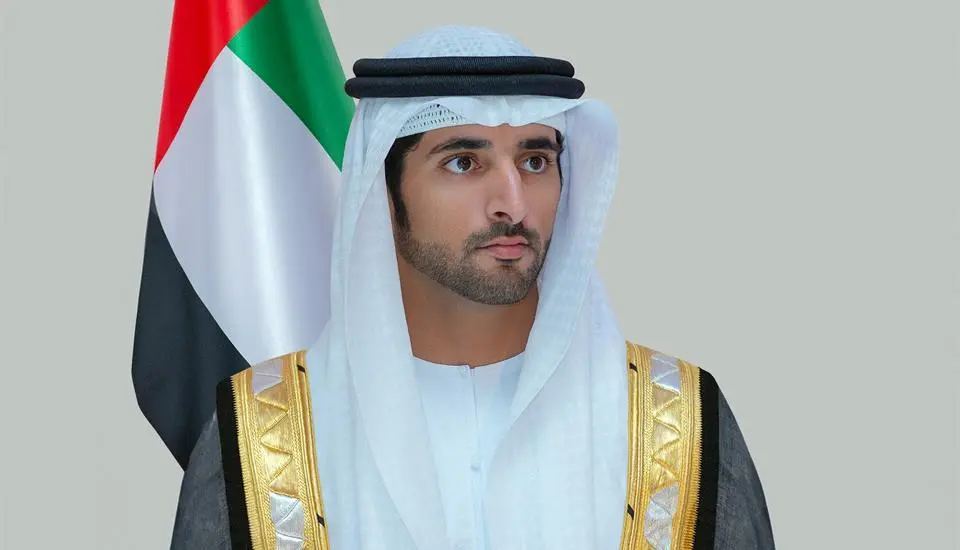
This year’s edition will take place on The Prototype Floor during Dubai Future Week. It is held under the patronage of Sheikh Hamdan bin Mohammed bin Rashid Al Maktoum, Crown Prince of Dubai. The event is at Emirates Towers and the Museum of the Future. Moreover, more than 10,000 participants from around the world are expected, including experts, innovators, investors, policymakers and entrepreneurs.

Dubai Future Solutions Prototypes for Humanity 2026 will be featured in accompanying showcases.
From thousands of applications submitted by researchers representing approximately 1,000 universities across more than 120 countries, 100 projects have been selected for the exhibition this year. They come from teams representing more than 70 universities across 33 nations. Harvard, MIT, Oxford, Cambridge, ETH Zurich, Imperial College London, Cornell, the National University of Singapore and Delft University of Technology all have teams in the room.
Related Stories

So do universities from Ghana, Peru, Morocco and Chile. So do New York University Abu Dhabi, Khalifa University of Science and Technology and the American University of Sharjah.
The breadth of that geography is deliberate and worth examining. Dubai Future Solutions is not a Western innovation showcase with a few international additions. It is genuinely global in its sourcing, which changes both the problems being solved and the solutions being proposed.
What the Projects Are Actually Doing
Prototype Focus for Humanity
Strip away the summit language, and you are left with 100 teams of researchers addressing problems by building physical solutions. In contrast, they are not concepts. Additionally, they are not white papers. Prototypes are objects and systems that work.

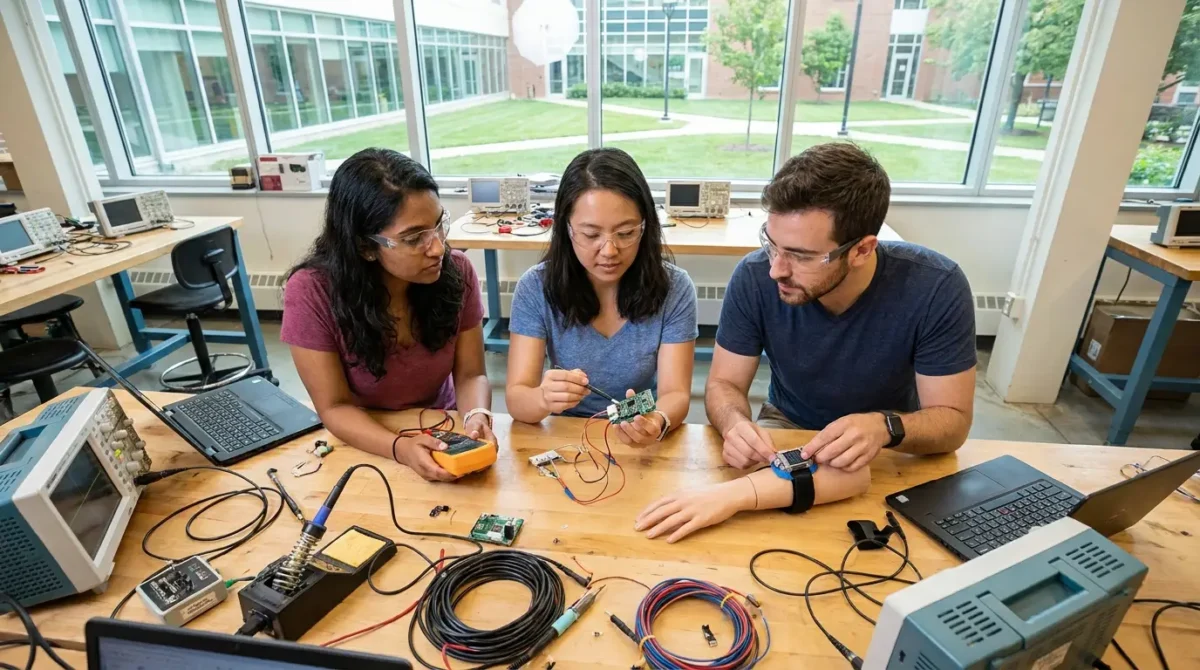
In healthcare, the challenge has shifted from treatment to anticipation. HEURIS helps emergency department clinicians move through the full range of possible diagnoses in real time as test results arrive, reducing the cognitive load on doctors working at speed under pressure. Age Resist uses a wearable device to analyse sweat composition and assess how a patient’s body is likely to respond to the physical stress of surgery before that surgery happens. ChronoVasc estimates the biological age of a person’s arteries through a single blood test — a capability that could change how cardiovascular risk is assessed and communicated to patients decades before a crisis point arrives.
These are not distant possibilities. These are functional devices built by university researchers that will be demonstrated in Dubai in November.
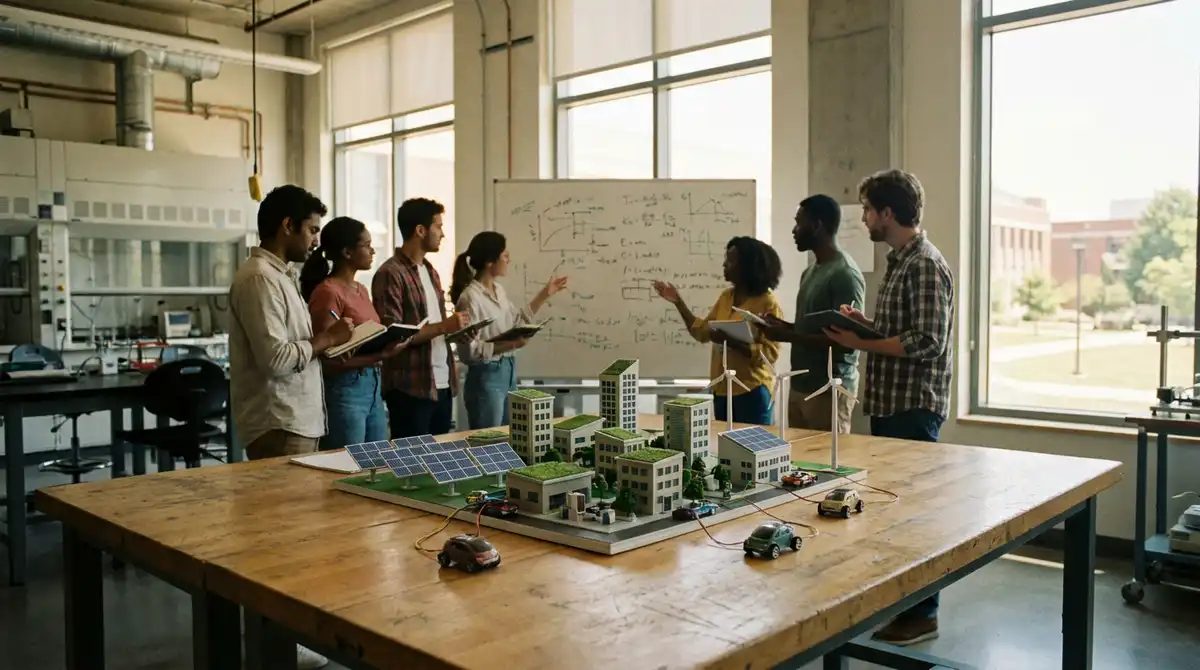
The climate and energy projects operate at a similarly practical level. SolarSkin lets solar panels switch between electricity generation and interior heating, addressing inefficiencies in single-function solar infrastructure. This addresses inefficiencies in single-function solar infrastructure. Furthermore, MetCycle dissolves materials from used batteries in under 15 minutes at room temperature.
Consequently, this marks a significant advance in battery recycling as EV adoption rises. AlgaePalm produces an alternative to palm oil using UAE microalgae cultivated in saltwater. The Emirates’ origins give it resonance amid ecological destruction from palm oil. Dubai Future Solutions Prototypes for Humanity 2026 informs the initiative.
The AI and urban intelligence projects are perhaps the most immediately recognisable in their implications. Greenery Scanner attaches cameras to vehicles moving through city streets to monitor the health of street trees and map their condition across entire urban grids. Coco: Heat Minimizer helps pedestrians identify cooler walking routes during heatwaves, a tool whose relevance to a city like Dubai needs no elaboration. Litmus independently evaluates whether companies are actually honouring their stated commitments to protecting user privacy — a function that the current regulatory environment across most jurisdictions has not yet found a reliable way to perform.
What Dubai Gets From Hosting This
The obvious answer is visibility and positioning. A city that hosts 100 of the world’s most promising academic innovation projects annually, alongside the teams from Harvard and MIT who built them, is a city that international research talent and investment capital begin to associate with serious work rather than simply spectacular events.
But the more interesting answer involves what the programme does after the exhibition closes.
Dubai Future Solutions includes a dedicated venture-building programme that provides funding, business expertise and direct industry collaboration opportunities to participating teams. The pathway it offers is not finish the exhibition, collect the recognition and return to campus. It is test the technology in a real environment, establish a company, build the business and expand operations. Dubai becomes not just the showcase but the launchpad.
Khalfan Juma Belhoul, CEO of Dubai Future Foundation, described the initiative’s ambition clearly. “It has become a global platform that brings together leading researchers and innovators from universities and academic institutions worldwide, enabling them to showcase their ideas and transform their research into practical projects that make a positive difference to communities.”
Hussain Sajwani, Founder of DAMAC Group and one of the initiative’s partners through the Hussain Sajwani — DAMAC Foundation, framed the philosophy behind the city’s approach to innovation with a directness worth quoting at length. “Shaping the future is not about waiting for it to unfold, but about anticipating it and taking proactive steps to plan for it.”
That sentence contains the operating principle that distinguishes Dubai from the many cities that talk about innovation hubs without building the infrastructure that makes the label meaningful.
The Human of the Future Is a Theme With Real Weight
Dubai Future Week’s theme, For the Human of the Future, lands differently when it is placed alongside a project that uses sweat analysis to predict surgical outcomes, or one that helps an elderly city-dweller find a cooler path through a heatwave, or one that tells a patient the biological age of their arteries before they develop symptoms.
These are not abstract statements about the direction of progress. They are specific responses to the questions that will define quality of life for the next generation of humans navigating climate pressure, an ageing global population, resource constraints and an AI-mediated information environment.
Dubai is hosting those responses in November. One hundred of them. Under one roof. With pathways to funding, mentorship and real-world deployment built into the programme structure.
The city does not wait for the future to arrive. It sends an invitation.