Editor’s note: This day-one report follows our August 31 pre-event preview. It focuses on the exhibition as it opened and on the workforce, grid and procurement implications for Dubai.
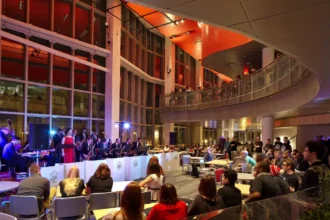
Today, September 1, the answer to that question is walking the floors of Dubai World Trade Centre. The 50th edition of Middle East Energy, the region’s longest-running power and energy exhibition, opened this morning and runs through September 3.
Related Stories

It brings together 1,528 confirmed exhibitors from across the global energy industry, over 30,000 pre-registered attendees from 178 countries, and a purchasing power among buyers that has reached a record USD 98 billion in live energy projects.
According to the official Middle East Energy announcement, this is not just an exhibition. It is the largest gathering of energy decision-makers the Middle East has ever hosted, and it is happening at a moment when the region’s energy future has never been more consequential.
The Three Pillars
Middle East Energy covers the full power value chain. The exhibition floor is organised around five sectors: backup generators and critical power, transmission and distribution, renewable and clean energy, energy consumption and management, and smart solutions. Together, these five areas represent every stage of how electricity is produced, moved, stored, managed, and used.
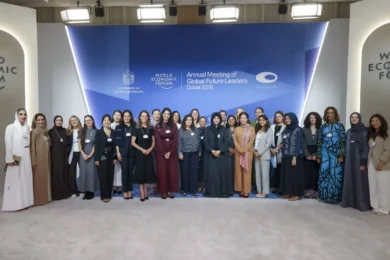
The companies exhibiting include Shell, Ducab, Riello UPS, TBEA, Emirates Transformer, AE Solar, Trina Storage, Jeddah Cables, and TE Connectivity, alongside more than 1,500 other manufacturers. Furthermore, three co-located shows sit alongside the main exhibition: Energy Storage Middle East, The Battery Show, and Intersolar Middle East. All three are accessible on a single Middle East Energy ticket. The integrated format also allows for an engineer to attend the solar panel session in the morning, and the battery session in the afternoon without leaving the building.
This show is organised with the patronage of the Ministry of Energy and Infrastructure of the United Arab Emirates. Dubai Department of Economy and Tourism also backs Middle East Energy as a platform for the global energy sector to innovate, share knowledge and initiate partnerships.
Related Stories

The Workers Nobody Sees
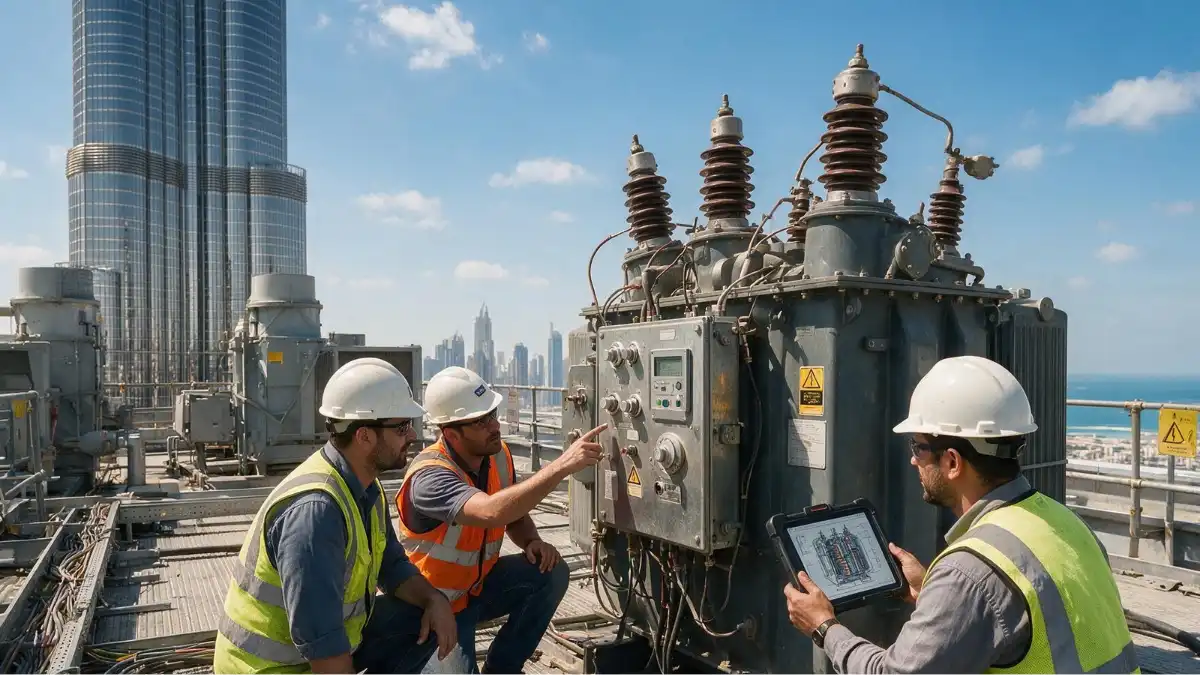
The most visible part of any energy exhibition is the technology. However, every transformer, every solar panel, every battery module on display requires a human being to specify it, install it, maintain it, and manage it. The workforce question runs quietly underneath every product demonstration at Middle East Energy. As Dubai transitions toward clean energy at scale, the jobs attached to that transition are changing in nature.
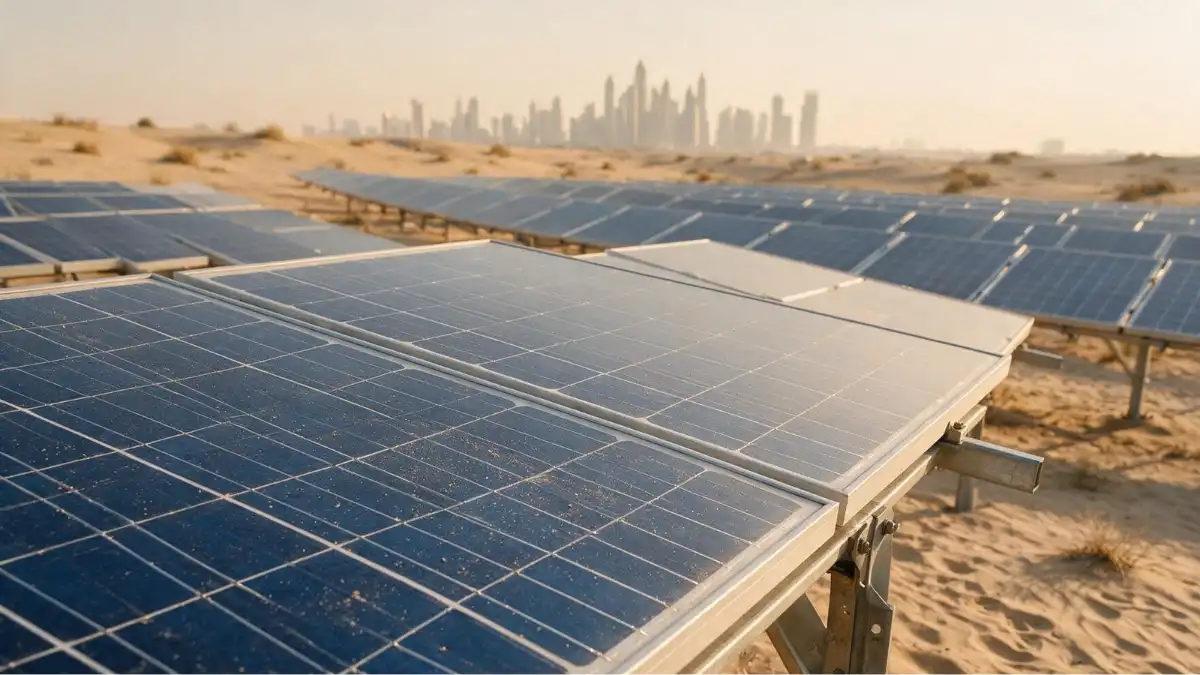
The UAE’s Dubai Clean Energy Strategy aims to achieve 100 per cent clean energy in Dubai by 2050. The transition is already in progress: solar generation, smart grid changes, battery storage and energy efficiency programmes are all underway. Systems that did not even exist ten years ago are required in each of those areas and mean that engineers, electricians, data analysts, project managers and maintenance crews are required who can understand them. The exhibition is as much a workforce signal as it is a technology showcase. The sectors growing on this floor are the sectors hiring.
The Grid Behind Everything
The Dubai electricity system is ubiquitous but unnoticed. The air conditioning is on all year round, May to September. The desalination plants operate 24/7. The grid is shared by all metro lines, hospitals, data centres, high-rises, and hotels. If Dubai’s population of close to 4 million continues to increase, then that grid has to expand to meet the requirements for the city that is expected to be 5.8 million people by the Dubai 2040 Urban Master Plan.
Related Stories

Transmission and distribution infrastructure, the cables, substations, and switching systems that move electricity from generation points to end users, sits at the core of that growth challenge. According to the Middle East Energy official announcement, MEE 2026 features five focused conferences including the Middle East Energy Leadership Summit, the Technical Seminar, and the Global Innovation Forum, all designed to address the operational and policy questions that grid expansion raises.
Smart Systems and What They Change
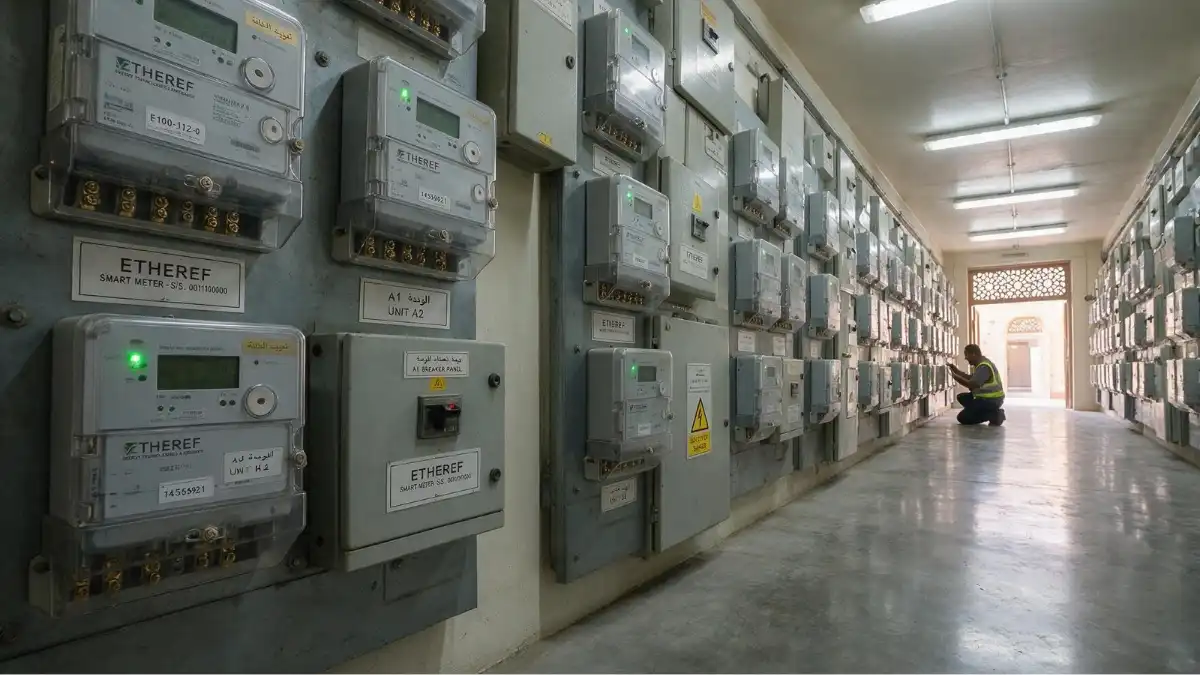
The Smart Solutions sector at this year’s exhibition reflects a shift that is already visible in how Dubai manages energy at the neighbourhood and building level. Smart meters, energy management platforms, real-time demand monitoring, and AI-driven grid optimisation are all present on the floor. These are not futuristic concepts being demonstrated. They are commercially available products being evaluated for purchase by utilities and developers in active procurement processes.
Buyers in the show’s Energy Club collectively hold over USD 98 billion in live projects. That figure is a record across the exhibition’s 50-year history. Consequently, this edition of Middle East Energy carries more real purchasing weight than any previous one. The decisions made in conversations on this floor this week will shape what gets built in the region over the next several years.
What the 50th Edition Represents
Middle East Energy has been running since 1976, when Dubai was a city still finding its own shape. The fact that the exhibition’s 50th edition is happening in Dubai in September 2026 is itself a statement. The emirate that once relied entirely on oil revenues is now hosting the world’s largest energy industry gathering, focused primarily on transmission, storage, renewables, and smart grids. The gap between those two versions of Dubai is the real story of what the exhibition represents. Dubai’s next decade will be powered by decisions made today, by the people walking these floors this week.
Read More: Emirates Dubai 7s 2026: Dates, Tickets, Sports, Family Activities and What to Expect
Sources
- Intersolar Middle East and Informa: 50th-edition exhibitors, programme and attendance announcement
- Middle East Energy: official 2026 event sectors, conferences and attendance information
- Dubai Electricity and Water Authority: Dubai Clean Energy Strategy 2050