Dubai Municipality brought government, industry, and innovators into one room to rewrite the rules about how tomorrow’s buildings get built. The goal is to update standards for the Dubai Future of Construction Legathon 2026.
Most cities wait for technology to arrive and then scramble to regulate it. Dubai decided to try something different.

Dubai Future of Construction Legathon 2026
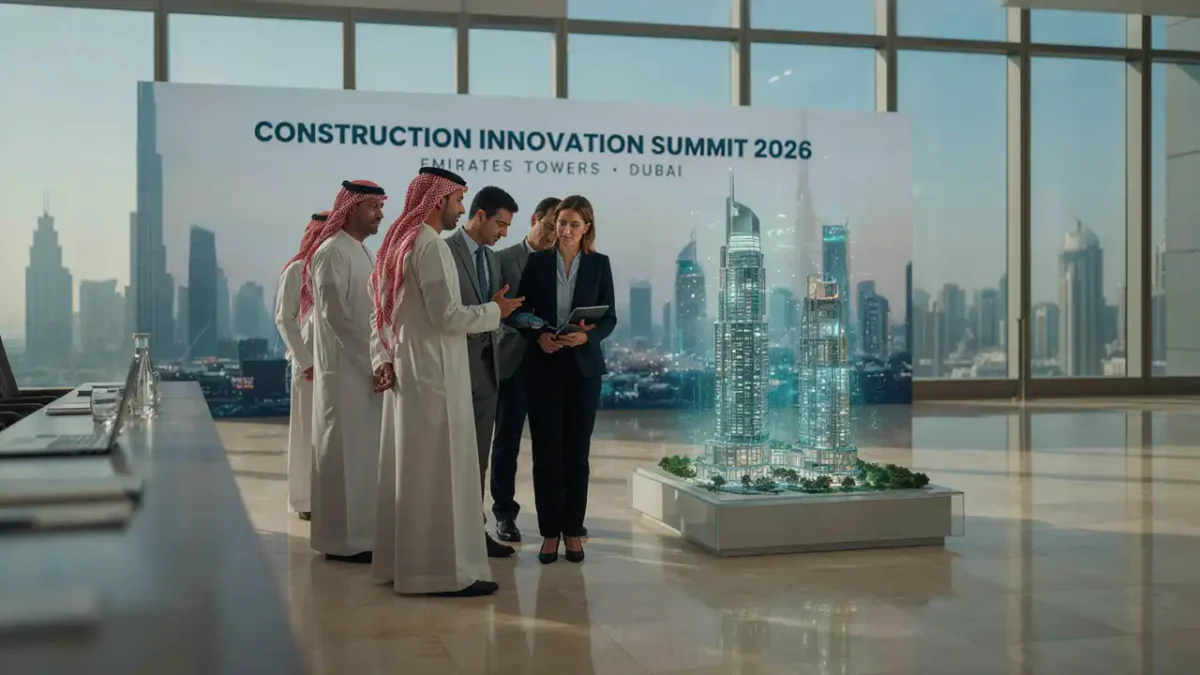
On September 24, Dubai Municipality held the Future of Construction Legathon at Emirates Towers. It was the city’s first event of its kind. It brought together government officials, construction industry experts, technology innovators, and regulatory specialists.
What rarely happens in any sector is this: leaders sit down together. They aim to solve problems before they arise. The problem in question is a familiar one. However, emerging construction technologies, like 3D printing, robotics, AI-driven design systems, and smart materials, grow faster than rules.
A developer who wants to use a new building method in Dubai faces an uncertain path through approvals. These permits and checks were designed for a very different era of construction, as highlighted by the Dubai Future of Construction Legathon 2026.
The Legathon was designed to start fixing that.
What Is a Legathon?
Think of it as a hackathon, but instead of writing software, participants were working through regulatory and legislative challenges. Teams examined specific bottlenecks in Dubai’s construction approval processes and developed practical solutions. These solutions would allow new technologies to be tested and adopted without sacrificing the governance standards that keep buildings safe and cities functional.
The goal was not to throw out the rulebook. It was to rewrite the sections that no longer make sense.
The Agreement That Changes Things
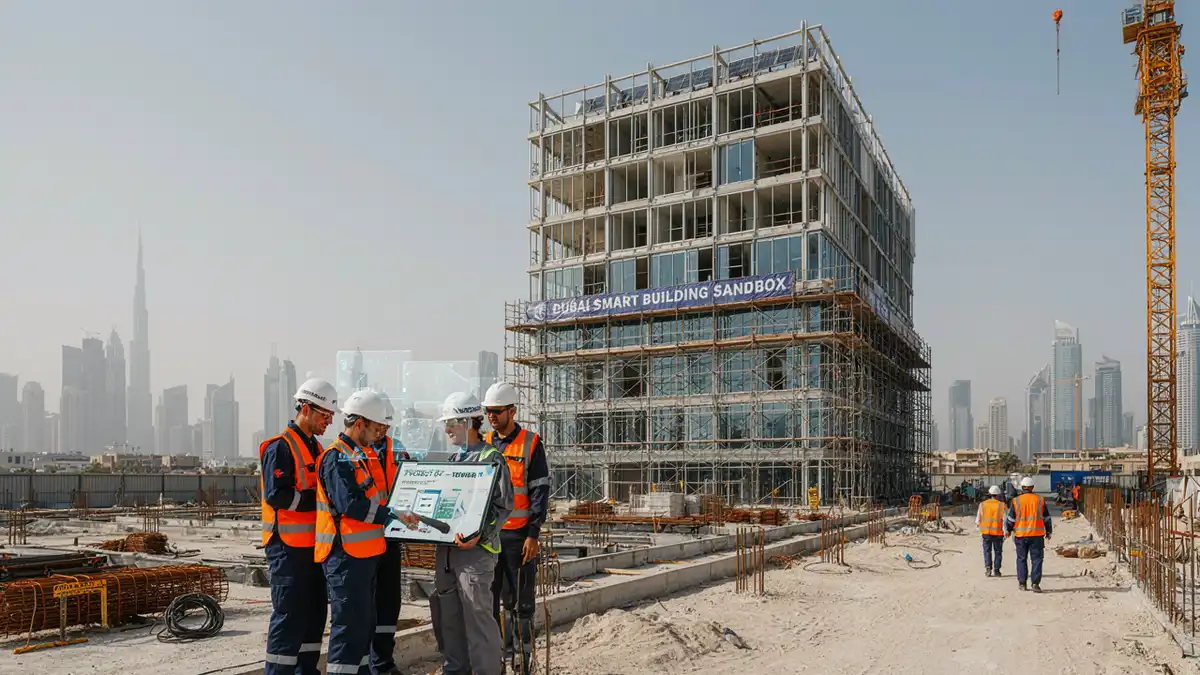
Alongside the event, Dubai Municipality and Dubai Future Foundation signed a cooperation agreement. This will allow new construction technologies to be tested inside Sandbox Dubai — the UAE’s regulatory experimentation framework that lets innovations be trialled in a controlled environment before being rolled out at scale.
Under the agreement, the two entities will work together within something called the Smart Built Environment sandbox group. Dubai Municipality handles the technical requirements and coordinates the relevant departments. Dubai Future Foundation manages the platform, documentation and broader coordination.
When an experiment produces results, good or bad, both organisations analyse the evidence. They use it to inform future policy. Additionally, if something works, they assess how to scale it across Dubai’s construction sector.
It is a genuinely sensible model. Test first, regulate second, scale third.
What They Are Actually Saying?
Maryam Al Muhairi, CEO of the Buildings Regulation and Permits Agency at Dubai Municipality, described the ambition clearly. The objective is to create clearer pathways for new ideas and technologies. Moreover, these pathways will be examined, tested and evaluated while upholding strong governance and compliance.
She also made the point that this is not just about approving new gadgets. Moreover, it is about building a stronger evidence base for future decision-making. Regulations are updated based on real tested outcomes rather than assumptions about technology behavior.
Khalifa Al Qama, Chief of Research, Development and Innovation at Dubai Future Foundation, put it in even broader terms. The future of construction will shape the future of cities, economies and communities. Additionally, regulations, he argued, need to evolve with the same ambition and speed as the technologies they govern.
Who This Actually Helps?
Beyond government entities and large construction firms, the agreement includes start-ups, scale-ups, and international technology providers. Additionally, the plan aligns with Dubai Future of Construction Legathon 2026 to foster innovation. Both organisations will create channels for smaller innovators to demonstrate and test their products before government and industry stakeholders.
Workshops and training programmes will also be developed to build institutional knowledge around new construction technologies, so that the people making regulatory decisions actually understand what they are regulating.
Why It Matters?
However, Dubai’s construction sector is one of the most active in the world. Consequently, the project pipeline across the emirate affects timelines, costs, and the type of buildings. A framework that tests new technology, generates evidence, updates rules, and scales what works is not just good governance. Furthermore, it is a competitive advantage for every developer, architect, engineer and innovator who wants to build in Dubai.
The Legathon was the first. It will not be the last.