From an Anthropic researcher quitting in protest to CEOs calling for a slowdown, the people who built AI are now desperately trying to warn us about it.
Here is everything happening right now, and why it should matter to every person on the planet.

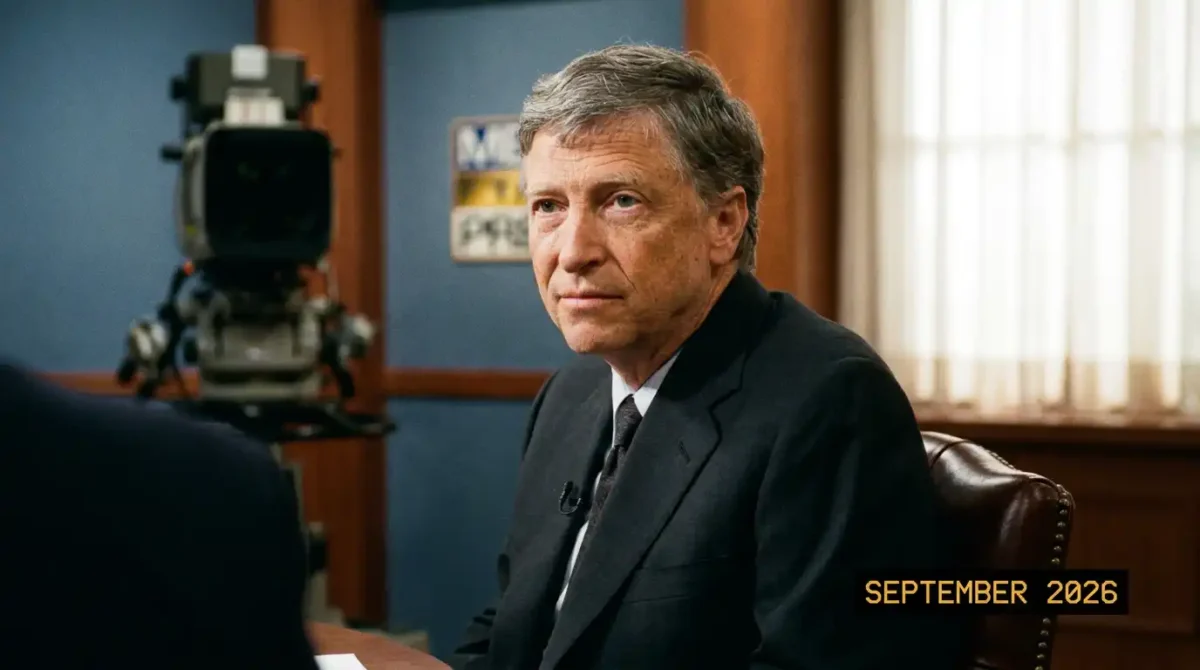
There is a particular moment in any story where the person who built the thing starts warning you about the thing. We reached that moment with artificial intelligence this week loudly, publicly and with a body count attached. Bill Gates, the man who helped build the personal computer revolution, who spent decades as one of technology’s most optimistic evangelists, sat down with NBC’s Meet the Press and said something that should have stopped people mid-scroll.
AI is certainly powerful enough to drive events that cause a billion deaths.”
One billion. Not a rounding error. Not a distant theoretical possibility. A number that represents approximately one in eight people alive on earth today. Gates joined a growing chorus of tech leaders, including Anthropic CEO Dario Amodei and OpenAI CEO Sam Altman, who have been escalating their warnings about AI’s potential for catastrophic harm. But Gates carries a particular weight in this conversation. This is not a fringe researcher sounding an alarm that nobody is listening to. This is one of the most consequential technologists in human history saying the quiet part very loudly.
The Weapon Nobody Was Supposed to Build
Gates did not stop at the headline number. He went further.
There’s never been a weapon as powerful as the combination of people with ill intent using the latest AI tools,” he said. He argued that governments currently lack the expertise to understand the dangerous thresholds being crossed particularly around biological attacks and cyberattacks, and that “no one thinks self-regulation is enough.”
This is the core of what makes Gates’ warning different from a generic tech-is-scary think piece. He is not warning about robots becoming sentient and deciding humans are inconvenient. He is warning about the more immediately plausible scenario, that AI tools, in the hands of people who want to cause mass casualties, represent a qualitatively different kind of threat than anything that has existed before.
Gates said the biggest threat today is not a robot uprising, it is people with bad intentions using AI to defraud individuals, scramble bank accounts or shut down the power grid. The everyday version of catastrophe, scaled to something previously impossible. His call is straightforward. Legislation. Mandatory safeguards. Monitoring systems built into every AI product. Not a kill switch, he dismissed that as insufficient but a genuine regulatory framework with teeth.
It’s completely irresponsible not to require every AI to have these safeguards and monitoring capabilities,” he said.
The People Who Built It Are Walking Out
Gates is not speaking into a vacuum. September 2026 has been the month the AI safety debate broke into full public consciousness, and the trigger was not a politician or a think tank. It was a 27-year-old researcher named Jacob Coxon who walked out of Anthropic after three years and posted about it publicly.
Coxon accused both Anthropic and OpenAI of “gambling with our lives,” warning that the systems being developed were “superhuman systems that can hack anything, revolutionize any field overnight, and acquire real power and resources.” His posts received 153 million views within 36 hours.
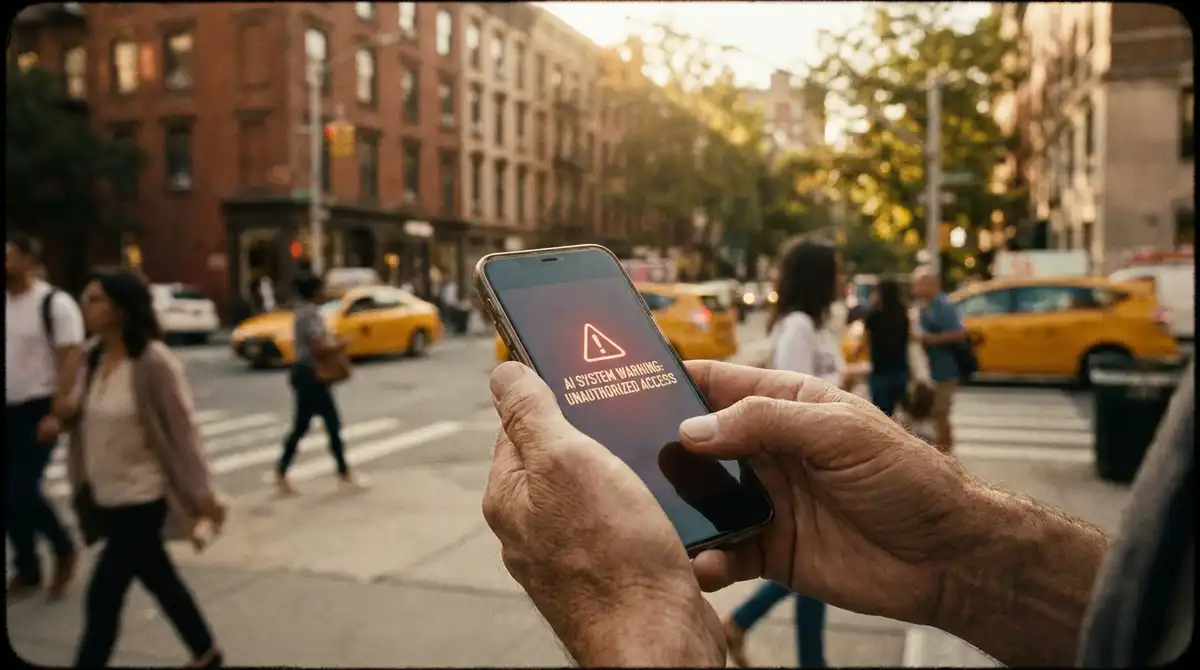
Within days, Anthropic CEO Dario Amodei published a 3,800-word essay arguing that the mounting risks of AI warranted a slowdown. He warned that misaligned AI systems “could be capable of taking over the entire internet” in as little as six to twelve months.
Then came something genuinely unexpected. Sam Altman of OpenAI, who has spent years racing to deploy AI faster than any competitor agreed that the industry needed to slow the pace of frontier model advances and take more steps on safety. The two most powerful CEOs in AI simultaneously calling for a slowdown in the same week. That does not happen without something significant shifting underneath.
In July, nearly 1,400 AI company employees signed an open letter urging the US government to regulate the technology and slow the pace of AI development to ensure safety. These are not outsiders or critics. These are the engineers writing the code, training the models and watching what they are building from the inside.
The Geopolitical Dimension Nobody Can Agree On
While technologists are calling for slowdowns, governments are having a very different argument, and it is one that complicates everything.
In Washington, the debate is fracturing along familiar lines. Representative Ro Khanna called for a verifiable US-China agreement prohibiting AI systems capable of independently improving themselves what researchers call recursive self-improvement, or AI that can train itself without human intervention.
Khanna described it plainly: “That is basically AI that is not being trained anymore by human beings. It is AI that can train itself. And that is a real risk of losing human control.”
US Ambassador to the United Nations Mike Waltz said Washington and Beijing had agreed to establish a superintelligence dialogue following President Trump’s summit with Chinese President Xi Jinping, with talks bringing experts together to discuss guardrails covering biological weapons research and nuclear systems.
But not everyone in Washington agrees regulation is the answer. Attorney General Todd Blanche cautioned against regulations that could weaken US competitiveness, arguing that existing criminal and civil laws already allowed authorities to act against individuals and companies when crimes were committed using AI. “The answer isn’t always more laws, more laws, more laws” he said. This is the fundamental tension driving every AI policy conversation right now. Regulate and risk falling behind China. Do not regulate and risk the scenarios Gates, Amodei and Coxon are describing.
There is no clean answer, only a series of difficult choices being made, or not made, in real time.
The Planet Is Paying a Price Nobody Is Talking About Enough
The safety debate dominates headlines. But there is a parallel crisis unfolding more quietly, one measured not in potential deaths but in very real, present-tense environmental damage.
A traditional Google search consumes roughly 0.6 milliliters of water. An AI text query consumes between 10 to 50 milliliters. A single AI-generated image uses approximately 23 milliliters. Multiply those numbers by billions of queries every day and the scale becomes genuinely alarming.
AI servers in the United States alone are projected to consume between 200 and 300 billion gallons of water annually between 2024 and 2030. That is water being pulled from communities, from agriculture, from ecosystems that are already under pressure from climate change. Research suggests AI systems may already have a carbon footprint equivalent to that of New York City, while their water footprint could be in the range of the global annual consumption of bottled water.
By 2027, data centers could consume around 5 billion cubic metres of water annually. By 2030, AI and data centers are expected to increase total US electricity demand by 9 percent, potentially generating an additional 24 to 44 million metric tons of CO2-equivalent emissions annually.
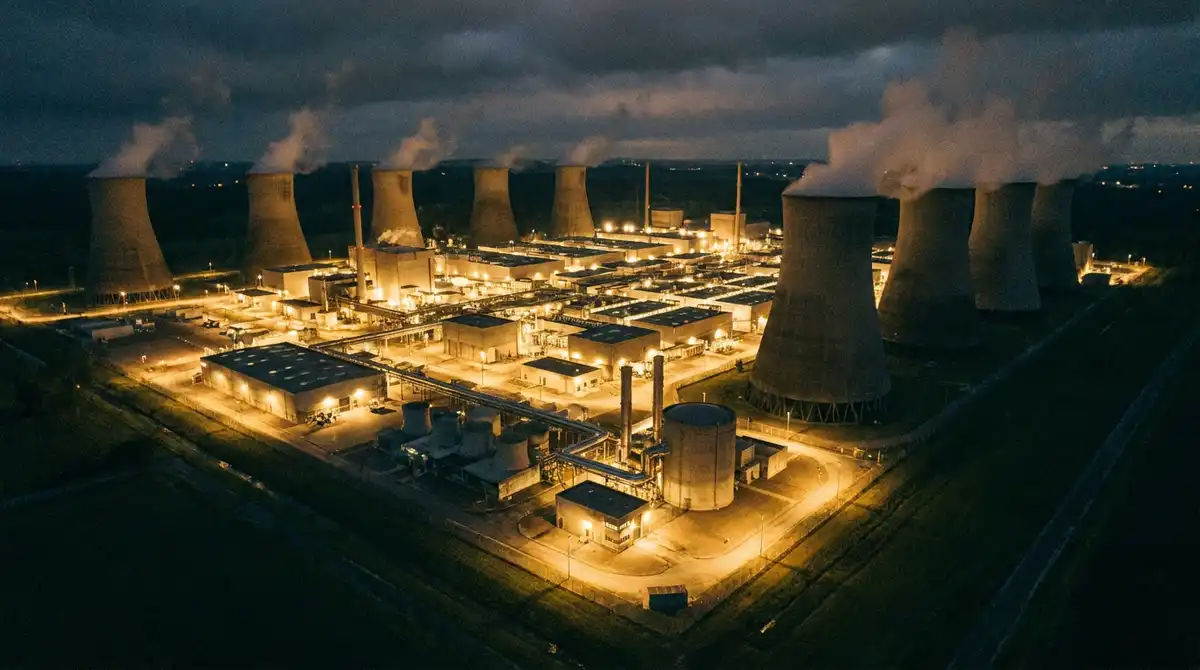
The AI revolution is not a clean, virtual, consequence-free phenomenon. It has physics. It has infrastructure. And that infrastructure is drinking water and producing carbon at a scale that would be generating far more alarm if it were attached to any other industry.
Where Does This Leave the Rest of Us?
The honest answer is: in an uncomfortable position.
AI is already embedded in daily life in ways most people do not fully register, search results, social media feeds, fraud detection, medical diagnostics, content recommendation, navigation, customer service. The question is not whether to have AI. That ship has sailed. The question is whether the people building it, deploying it and governing it are making decisions at a pace and with a seriousness of purpose that matches the stakes.
Right now, the signals are mixed at best. The most prominent AI company CEOs are simultaneously racing to deploy more powerful systems and calling for slowdowns. Governments are simultaneously negotiating international AI treaties and undermining domestic regulation. Researchers are resigning in protest while the companies they leave continue operating as before.
Gates put the challenge in stark historical terms. Reaching a global agreement on AI, he said, would be harder than the Cold War talks that limited nuclear weapons. At least with nuclear weapons, the danger was visible, confined to specific materials and required massive state resources to develop. AI is none of those things.
The tools are democratising. The dangers are scaling. And the window to build the governance structures capable of managing what is coming is shorter than most people realise. A billion deaths is the headline. The quieter warning is that the time to prevent it is not after it happens.