

Hiring managers and recruiters across the United Arab Emirates are being forced to rethink their hiring practices as job seekers are beginning to turn to generative artificial intelligence to help them craft resumes, prepare take-home assignments, and answer interview questions.
Human resources executives are being overwhelmed by the volume of polished applications they are receiving, and many feel as if they are unable to differentiate between work done by humans and machines.

As a result, firms across finance, technology, and marketing are rewriting their hiring policies to include more thorough assessments of a candidate’s abilities.
Widespread Adoption of AI Tools in Job Application Processes
A vast majority of resume-seekers nowadays use advanced AI-powered software to optimize their resumes according to the ATS keyword algorithm, fill out cover letters, and even produce project proposals for their portfolios.
In addition, emerging AI applications enable applicants to receive and respond to real-time verbal prompts during video interviews, thereby simulating an authentic conversation flow about the candidate’s professional experience and qualifications.
However, while career coaches view the application of entry-level algorithms as a necessary innovation, human resources directors point out that such tools hide applicants’ deficiencies, resulting in expensive post-hiring training for promoted candidates.
Transition Toward Live In-Person Auditions and Behavioral Case Studies
And instead of relying on online testing or video interviews, companies in the United Arab Emirates are taking a different route when it comes to new hires.
Related Stories

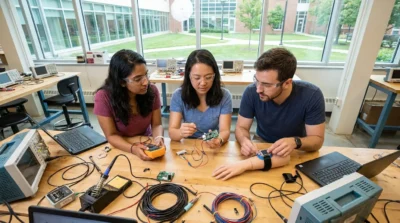
Hiring managers are bringing in applicants to the office for live, hands-on auditions.
Job seekers are being tasked with solving work-related conundrums, laying out plans on whiteboards, and even working through technical challenges, face-to-face and in real time.
The in-person interviews allow recruiters to gauge not only communication skills but also problem-solving skills and actual hands-on abilities in a real-world setting.


Adoption of Verification Technologies and Ethical Standards
In order to ensure the integrity of recruitment, corporate staffing teams across the UAE are beginning to use verification tools and AI fraud detection software. During the hiring process, recruiters are asking candidates whether they have used AI to generate resumes, write computer code, or take tests.
HR leaders stress that while transparency and some level of digital tool use are acceptable, representing fully automated work as one’s own effort is grounds for immediate disqualification and blacklisting.
Long-Term Impact on Workforce Development and Human Skill Valorization
As the UAE transforms into a high-tech knowledge economy, the recruitment shift is changing professionals’ approaches to preparing for job opportunities.
According to recruitment experts, while fundamental AI literacy is becoming a given, the combination of human traits, including emotional intelligence, strategic judgment, adaptability, and execution capability, has become the new differentiator in the workplace.
Recruiters feel that ensuring authentic human capabilities are at the core of team building is required to create highly skilled and motivated workforces fit to drive the emirate’s economic growth in the long term.
Also Read: 8 Medals, One Proud Nation: UAE Jiu-Jitsu Stars Meet the President

