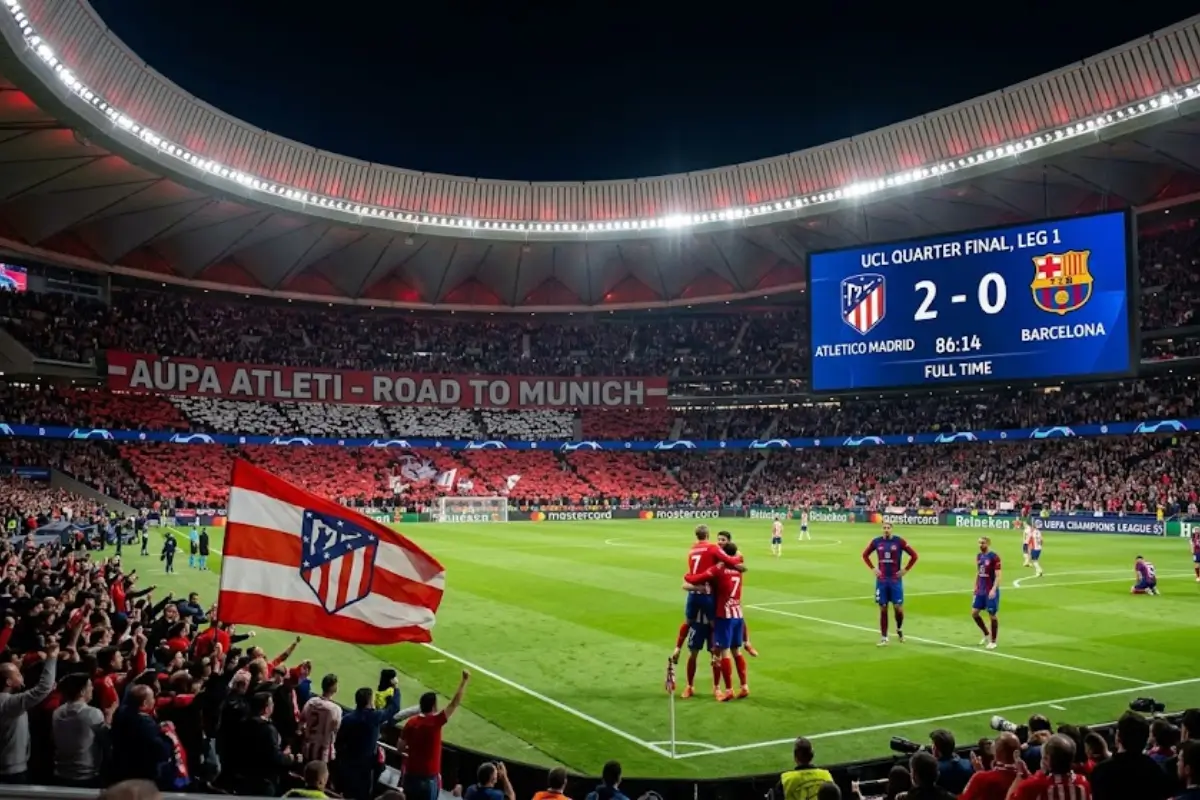
Atletico Madrid secured a crucial 2-0 victory over Barcelona in the UEFA Champions League quarter-final first leg, combining defensive discipline with clinical finishing to take control of the tie.
Barcelona set up in a 4-2-3-1, aiming to dominate possession through a double pivot and attacking midfield rotations, while Atletico Madrid operated in their compact and well-drilled 4-4-2, focusing on defensive structure and transitions.
Barcelona started brightly, asserting control with 55% possession and completing 545 passes at 90% accuracy, compared to Atletico’s 421 passes at 88%. Their structure allowed them to circulate the ball effectively, particularly through midfield, but Atletico’s compact shape limited penetration in central areas.
Compact Atletico block restricts Barcelona’s attacking efficiency
Despite registering 15 shots and 8 on target, Barcelona struggled to convert their control into high-quality chances. Atletico’s disciplined 4-4-2 shape ensured compactness between the lines, forcing Barcelona into wider areas and reducing the effectiveness of their attacking movements.
The midfield line of Atletico remained narrow and organized, cutting passing lanes into advanced zones, while the defensive line stayed compact to protect the penalty area. This approach highlighted a key tactical contrast — Barcelona controlled possession, but Atletico controlled space.
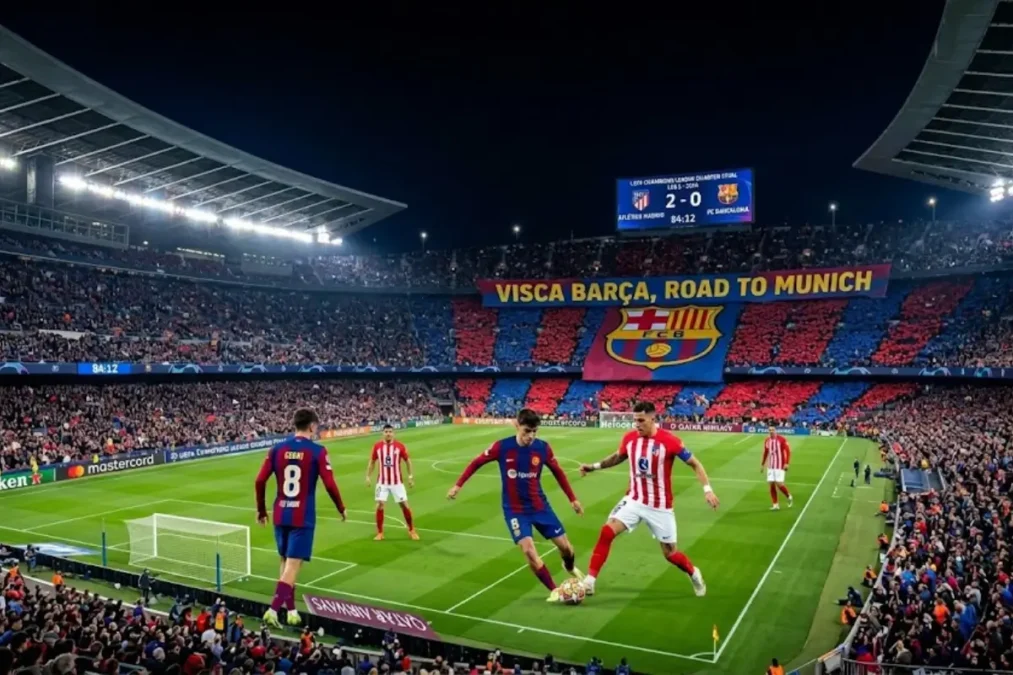
Turning point: Cubarsí red card shifts momentum
The game’s decisive moment came just before half-time when Pau Cubarsí was shown a red card after a VAR review for denying a clear goal-scoring opportunity.
This incident significantly altered the tactical balance. With Barcelona reduced to ten men, Atletico gained greater control of key moments without needing to dominate possession.
Atletico capitalised immediately, with Julián Alvarez scoring from a set-piece in first-half stoppage time to give the visitors a crucial lead.
Game management and clinical finishing
After the break, Barcelona continued to show intent, maintaining possession and attempting to create pressure despite being a man down. However, their attacking structure lacked clarity in the final third, and Atletico’s defensive organisation remained solid.
While Barcelona continued to push forward, Atletico stayed disciplined and waited for opportunities to exploit transitions. Their efficiency proved decisive, as Alexander Sorloth doubled the lead in the 70th minute, converting one of Atletico’s 5 total shots with precision.
The contrast in efficiency was clear — Barcelona created volume, but Atletico delivered impact.

Conclusion
Barcelona’s performance was defined by control without end product. Despite dominating possession and creating multiple attempts, their inability to break down Atletico’s compact defensive structure proved costly, particularly after going a man down.
Atletico Madrid, on the other hand, demonstrated tactical discipline, defensive organisation, and clinical finishing — key traits that allowed them to capitalise on decisive moments.
With a 2-0 advantage, Atletico now hold a strong position heading into the second leg, while Barcelona face a significant challenge to overturn the deficit.
Also Read: IPL 2026: Five-Time Champs Mumbai Indians Face Unbeaten Rajasthan Royals