
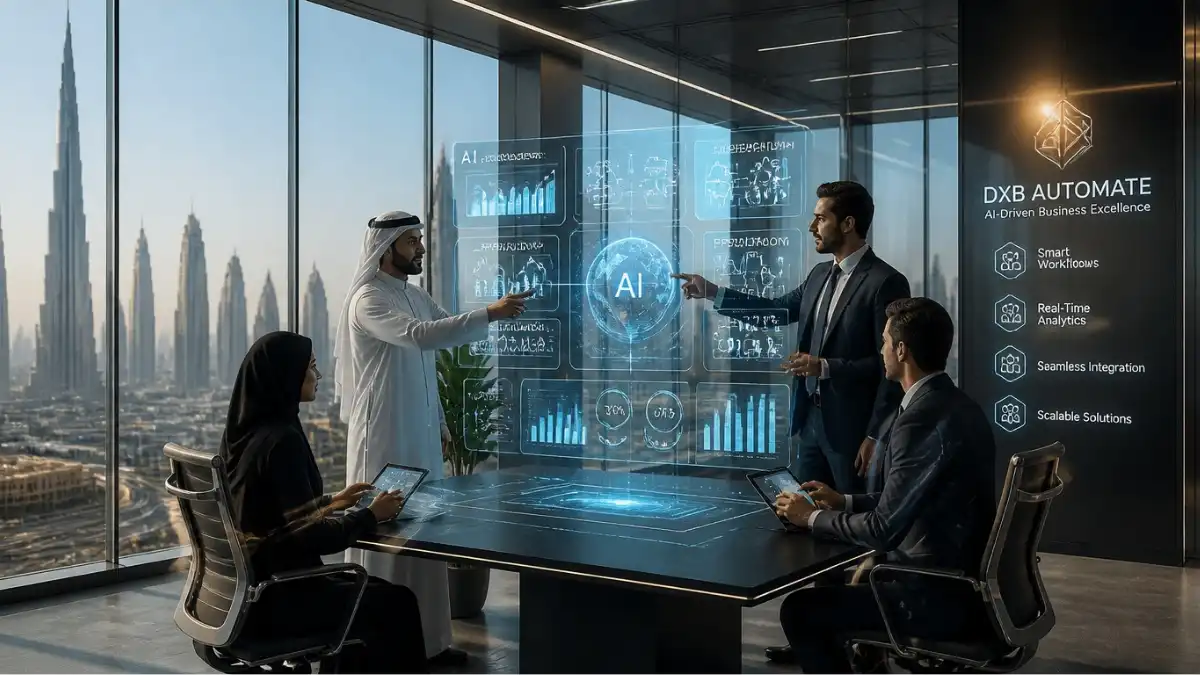
A Dubai café’s manager manages tables, late food deliveries, changes of staff, and supplier bills before noon. A real estate broker goes to work on dozens of buyer leads following a real estate property exhibition over the weekend. A small business determines inventory needs prior to the end of the sales season. Small business owners are always looking for ways to save time and dedicate more resources to their businesses. On 7 September 2026, Dubai Chambers launched a specialised training initiative for over 14,000 private sector companies to enable them to embrace Agentic AI in Dubai.
The programme will be delivered using the new Dubai Chambers Academy e-learning platform, aimed at giving practical tips on how to use autonomous technology in everyday business. The rollout is part of a nationwide campaign that Sheikh Hamdan bin Mohammed bin Rashid Al Maktoum instructed for a shift in commercial businesses’ workflows towards autonomy.
Related Stories

This massive push signals a major economic policy shift. The government is not just encouraging global technology giants to experiment with artificial intelligence. Instead, officials are pushing the entire local private sector toward digital tools. The ultimate success of this initiative will depend on whether small firms can convert online certificates into real workplace value before the next rent payment, stock order, or client deadline arrives.

What Agentic AI Means
Understanding this technological leap requires moving past technical buzzwords and complex coding concepts. Traditional generative artificial intelligence typically writes text, creates images, or summarizes documents when a user provides a direct prompt. In contrast, agentic systems handle complex, multi-step goals with minimal human intervention.
The software gathers information, evaluates available choices, creates a plan, uses approved digital tools, and delivers finished outcomes. These software programs should not be considered magic tools to replace human workers, though, in the eyes of business leaders. They work best as virtual assistants with accurate operational information, strict digital permissions and human oversight.

For example, an agency system might be able to rank incoming property queries, match the client’s budget to available listings, write customized responses, and highlight high dollar buyers for an agent. A small retailer can use a smart software to check weekly sales data, identify low stock, produce a draft purchase order and notify the store manager for final approval.
Dubai Chambers AI training emphasizes the importance of practical software tools that can boost operational efficiency, decision-making processes, and commercial productivity for businesses. Any software that actually provides value is only a worthwhile solution to a problem that a business actually has.
Related Stories

Why 14,000 Companies
The economic logic behind this massive educational rollout stems from Dubai’s ambition to lead the global digital economy. Government leadership wants to build technological capacity across every commercial tier, extending far beyond public agencies and multinational conglomerates. Alongside online courses, the broader program introduces specialized incubators for software developers, knowledge-sharing platforms, and an Executive Committee for Agentic AI in Dubai to accelerate sector-wide adoption. These initiatives aim to position local companies ahead of global technological shifts.
However, achieving a target of 14,000 enrolled businesses introduces noticeable implementation challenges. Completing an e-learning module does not automatically solve deep-seated operational hurdles between basic online training and actual daily value. Many small companies still lack clean corporate databases, unified software architectures, dedicated technology budgets, or clear customer data privacy policies. Therefore, the official training functions best as a broad awareness campaign, while long-term commercial success will depend on what firms build after completing their courses.

Where Small Businesses Benefit
The most immediate practical advantages of implementing Agentic AI in Dubai for small businesses will emerge across core service sectors. Instead of trying to automate the enterprise, smaller businesses can work on reclaiming administrative hours that are being squandered on manual work. Retailers and e-commerce businesses can use software to monitor inventory trends, generate automated reorder alerts, process return requests, and create product listings for their small shops. In the hospitality sector, restaurants can utilize systems for table reservations, food waste monitoring, customer review categorisation, and supplier order scheduling.

Property brokerages can standardize lead qualification, arrange contracts, schedule viewings and arrange market info and data. In the logistics and trade sector, shipping companies can expedite customs clearance, provide up-to-date delivery status, and control continuous SC disruptions. Invoices and reminders for clients’ outstanding bills, industry regulations research, business proposals creation, and meeting summarization are just some of the features that can be automated by professional service providers like consultants and accountants. When adopting AI for small businesses, it’s crucial to set realistic expectations: AI should support tasks like data entry or customer service rather than replacing the need for human oversight in hiring, credit checks, or legal agreements.
The Human Question
The use of autonomous instruments in small workplaces questions experiences and daily work security. Digital assistants are a delight for workers, as they eliminate repetitive data entry, scheduling problems, and customer service drafting. On the other hand, employees might be concerned about job reductions, the pressure on productivity or strict surveillance of their work results. Small business operators may regard autonomous software as a sensible technique to expand the business without increasing the administrative load.
But if not designed properly, software configurations can often turn out to be counterproductive, resulting in the time of the staff being wasted on correcting software mistakes and dealing with impatient customers. Eng. Sultan bin Saeed Al Mansoori, Chairman of Dubai Chambers, highlighted that agentic tools are created to assist businesses in handling intricate tasks, boosting productivity, and opening up fresh avenues for expansion.
The true potential comes in the shift of human resources from repetitive, mundane tasks like data entry to dynamic, engaging activities such as client relationship building, creative problem solving, and strategic negotiation. The significance of the use of technological tools will be judged in terms of its ability to make work more meaningful.

The Operational Risks
Moving too quickly into software automation exposes small companies to significant operational and financial risks. Business owners must establish clear safety protocols before granting autonomous tools access to internal systems and sensitive data. First, customer data privacy remains a critical legal priority. Uploading confidential client information, internal financial records, or supplier contracts into public software models creates major compliance risks.
Second, artificial intelligence models occasionally produce inaccurate or fabricated information. Human staff members must verify important outputs before sending legally binding price quotes or official business communications. Third, connecting autonomous software to operational workflows introduces cybersecurity vulnerabilities and vendor lock-in risks.
Software vendors can alter subscription pricing or service terms with short notice, directly impacting a small company’s monthly budget. The ultimate value of the Dubai Chambers AI training will depend heavily on whether it teaches business owners to adopt technology safely, protecting customer trust alongside operational speed.
Measuring True Commercial Success
This is a lofty target, representing a significant milestone that further strengthens Dubai’s reputation as an innovation leader, with 14,000 companies reached. However, the rate of course completion and digital certificates cannot begin to be a metric of the impact of this. The real commercial success will play out over time and in local retail stores, logistics offices, brokerages and independent restaurants. The true value of the program comes when a small business owner saves precious time, provides clients with an improved experience, and frees up employee time for more value-added human work by using Agentic AI in Dubai.
Read More: DEKA FIT Dubai Is Turning Fitness Into a Competition