

What started as a routine Wednesday morning flight from Dubai to Tel Aviv ended with an emergency landing in Saudi Arabia, a wounded hero and a UAE judicial investigation now examining whether terrorism was involved.
September 30th began like any other morning at Dubai International Airport. Gate staff checked boarding passes. Passengers settled into their seats. At 7:05 in the morning, flydubai flight FZ1073, a Boeing 737 MAX 8 carrying approximately 174 people, lifted off the runway and turned north toward Tel Aviv.

Two hours later, something went catastrophically wrong in the cockpit.
14,000 Feet in 29 Seconds
At 9:21 in the morning, flight tracking data from Flightradar24 captured something that should never happen to a commercial aircraft flying at 34,000 feet over the Saudi-Jordanian border. The plane began losing altitude at a rate that defies routine explanation. Fourteen thousand feet dropped away in twenty-nine seconds.
Simultaneously, the aircraft’s transponder lit up with code 7700, the universal signal for a general emergency. Then came 7500, a code with a single, chilling meaning: unlawful interference. The aircraft turned west, briefly crossing into Jordanian airspace before pivoting back toward Saudi Arabia.
At 9:44, Tabuk’s air traffic controllers received a distress call. At 10:45, the aircraft touched down safely at Prince Sultan bin Abdulaziz International Airport.
What had unfolded inside the cockpit in those eighty-four minutes will be the subject of a formal investigation for months to come. What is confirmed is this: an altercation occurred between the two pilots. The captain was seriously injured. Crew members travelling as passengers on the flight entered the cockpit and secured the aircraft. Two replacement flights were dispatched to Tabuk. By 6:40 that evening, all passengers had departed for Tel Aviv.
The Captain Who Refused to Let Go
Mumbai-born Captain Smit Machchhar had spent over thirteen years building one of the most quietly distinguished careers in commercial aviation. Eleven years at SpiceJet, rising to Senior Commander and Line Training Captain with over 9,500 flying hours logged. He joined flydubai as a Direct Entry Captain in June 2022, adding further hours on the Boeing 737 MAX 8 and 737-800.
According to multiple reports, including statements from Israeli officials, Machchhar was attacked by his Omani co-pilot using the cockpit’s crash axe, an emergency tool present on every commercial aircraft. Stabbed and seriously injured, he fought back and, while lying wounded on the cockpit floor, activated the door release mechanism, the action that allowed passengers and crew to intervene and overpower the attacker. He was taken to hospital in Tabuk, underwent surgery and has since been airlifted to Dubai for further treatment. His condition is reported as stable. Indian diplomatic officials met with his family and confirmed the government’s full support for his recovery.
The incident has drawn reaction from heads of state across three continents. Indian Prime Minister Narendra Modi, Israeli Prime Minister Benjamin Netanyahu, US President Donald Trump and India’s President Droupadi Murmu all publicly praised Machchhar’s courage. The story trended across Indian social media within hours of breaking, drawing responses from journalists, Bollywood figures and cricket personalities alongside diplomats and government officials globally.
The UAE Responds — and the Investigation Begins
The UAE’s response to FZ1073 was swift, structured and deliberately careful in its language.
The General Civil Aviation Authority confirmed a security incident that was brought under control, resulting in crew injuries, and announced that its investigators were examining the operational and security dimensions of what happened.
Then came a more significant development.
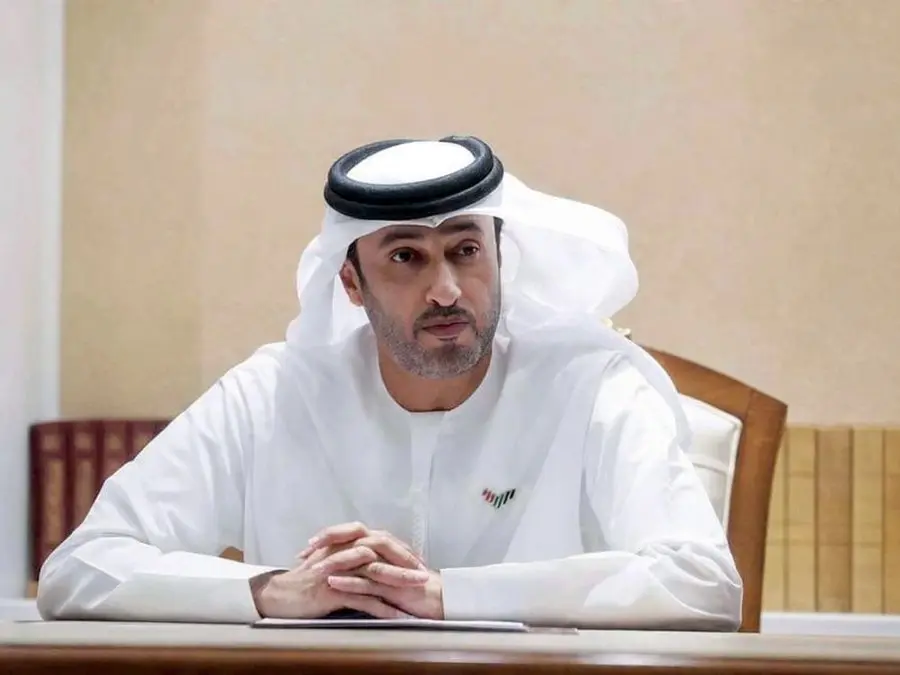
The UAE Ministry of Foreign Affairs confirmed that UAE Attorney General Dr Hamad Al Shamsi had ordered the formation of a specialised Public Prosecution team to formally investigate the incident. The investigation team, working in coordination with the GCAA and relevant UAE authorities, has already begun its work.
The scope of the investigation is notably broad. It is not limited to determining what happened operationally inside the cockpit. The Attorney General directed investigators to examine all circumstances and motives surrounding the incident, including explicitly whether the attack was linked to any form of terrorist activity or intent, and whether it involved prior planning or external direction. That last phrase carries significant weight. Whether or not this was a spontaneous act by a single individual or something more coordinated is now a formal question for UAE prosecutors and investigators to answer.
The UAE has jurisdiction to conduct this investigation because the aircraft is registered in the UAE and flies the UAE flag. Under UAE law, crimes committed aboard UAE-registered aircraft fall within the country’s legal authority regardless of where geographically those crimes occur. The UAE also expressed appreciation to Saudi authorities for their cooperation and handling of the incident on the ground in Tabuk.
Al Shamsi has urged the public to rely only on information issued by official sources and to refrain from speculation until the investigation is complete and findings are formally announced.
The Ripple Effects on UAE-Israel Aviation
The immediate operational consequences of the incident were significant and swift.
flydubai announced a suspension of all flights to and from Israel while the investigation continues. Emirates separately suspended its codeshare operations with flydubai on the Tel Aviv route with immediate effect. Passengers booked on Emirates codeshare flights with flydubai to Tel Aviv were advised not to proceed to their point of origin for travel, while those already en route were given support to complete their journeys.
The Dubai-Tel Aviv route had only come into existence in November 2020, when the UAE-Israel normalisation agreement established direct air links between the two countries for the first time. Emirates launched its own daily service between the two cities in June 2022. That corridor, which carries symbolic as well as commercial significance, is now temporarily suspended as authorities establish exactly what happened aboard FZ1073.

What Remains Unknown
Despite the volume of information that has emerged in the hours since the incident, the most consequential questions remain officially unanswered.
What triggered the co-pilot’s actions? Was there a motive beyond the immediate confrontation? Was there any external planning or direction involved? What caused the aircraft’s dramatic altitude changes in the minutes before the emergency codes were transmitted?
Israeli officials, including Netanyahu, have provided accounts suggesting the co-pilot attempted to deliberately crash the aircraft. Those accounts have not been independently confirmed by UAE authorities, which have confirmed only that an altercation occurred in the flight deck and that crew members secured the aircraft. The distinction matters. Formal investigation findings carry legal and diplomatic weight that social media accounts and foreign government statements cannot. The UAE has been deliberate in its messaging: trust the process, wait for the facts, do not pre-empt the investigation.
Those findings, when they arrive, will determine far more than what happened to one flight. They will shape how aviation security across the region responds to a threat that most of the industry had long considered theoretical.