Carved through mountains, wadis, and industrial corridors, a railway line between the UAE and Oman has crossed an important milestone. The Hafeet Rail Project, is a joint effort between Etihad Rail, Oman Rail, and Mubadala Investment Company. 40 percent completion of the 283-kilometer cross-border rail project was confirmed through an announcement on April 21.
Since the construction began, this is the most tangible process update. The scale of what has been built on the ground is considerable. Earthworks have exceeded over 27 million cubic metres, where over 100,000 cubic metres of concrete works has been completed. The project has reportedly achieved 10 million safe working hours without any serious injury.

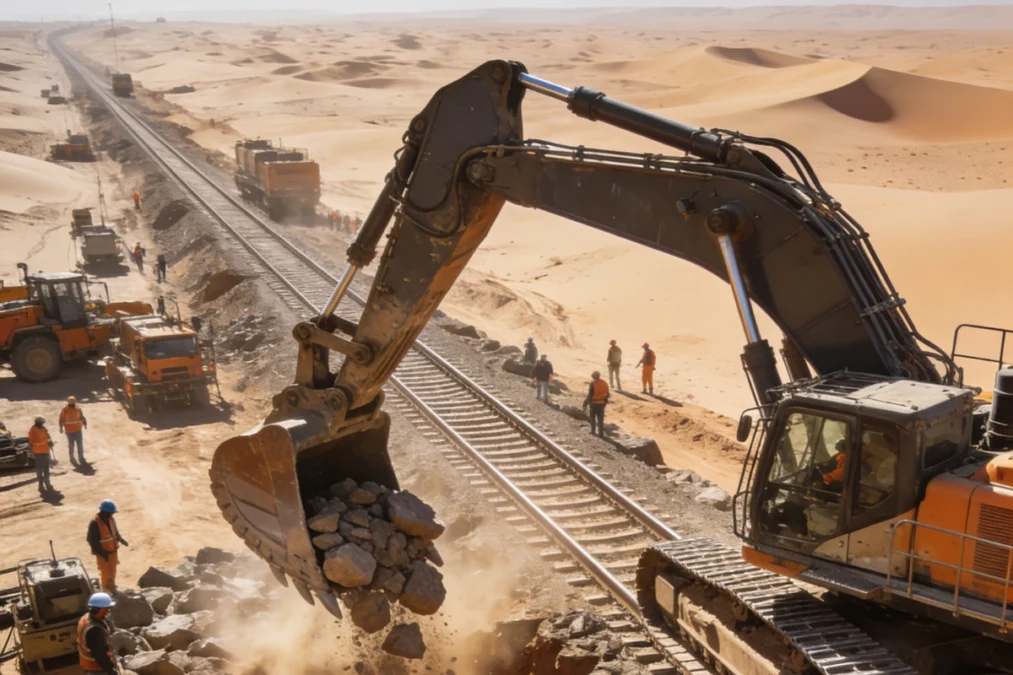
Al Ain in the UAE near the Omani border, Al Buraimi on the Omani side, Sohar on Oman’s northern coast, and Wadi Al Jizzi near Sohar are four key locations, actively under construction. The Hafeet Rail route passes industrial and urban zones, mountainous terrains, and deep valleys. This requires 2.5-kilometre tunnels and 60 bridges, some of which rise up to 34 meters. An integrated flood protection system is also a necessity.
Hafeet Rail: What Does It Connect?
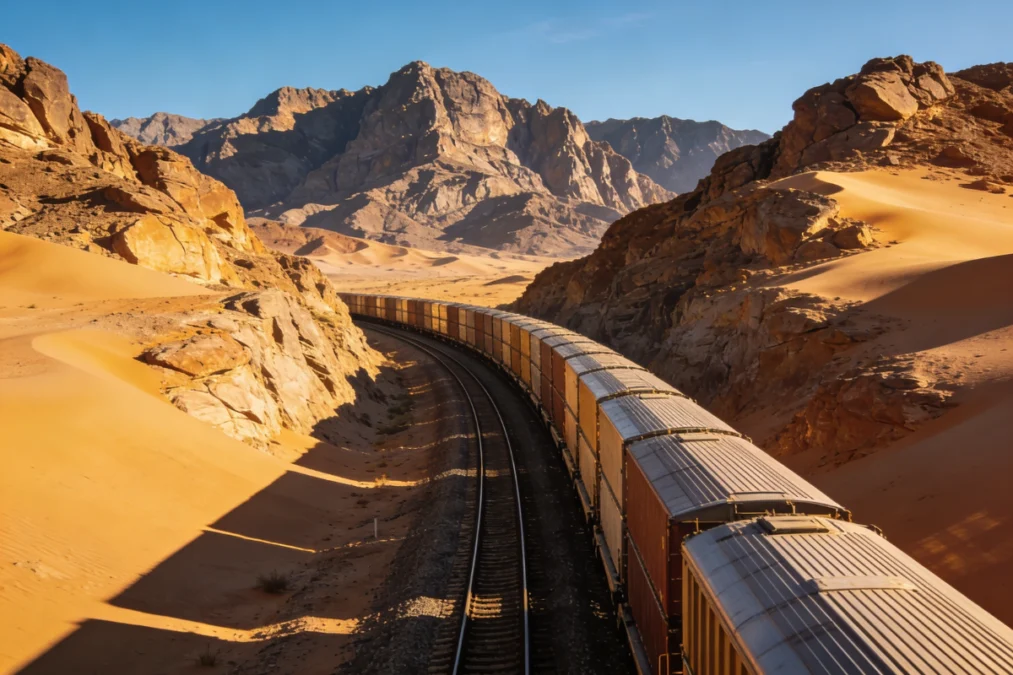
This project is not just a rail line between two neighbours, but a trade artery for the Gulf that will reshape the regional logistics. The rail will connect Sohar port’s free zone in Northern Oman directly to the Emirates national rail network, linking five major ports and several industrial and free zones across both countries.
Sohar is one of the fastest growing industrial cities in the Gulf, handling petrochemicals, aluminium, steel, and general cargo. Directly plugging Hafeet Rail into Etihad Rail gives Sohar a direct track to Khalifa port, Jebel Ali, and Fujairah, making it the first cross border freight corridor.
Related Stories

Each freight train will haul more than 25,000 tonnes of cargo per trip. Compared to road transport, this cuts carbon emission up to ten times. The line promises lower costs, faster delivery, and less supply chain breaks.
Bigger Strategic Picture
Beyond logistics, the Hafeet Rail project is a statement of how deep UAE-Oman relation runs. The countries share over 600-kilometer border and have extensive trade ties, along with the history of quiet yet consistent diplomatic alignment.

Being the first of its kind to connect two Gulf states, a jointly owned and operated railway institutionalizes the relationship in infrastructure that’s here to stay.
CEO of Hafeet Rail, Ahmed Al Masavi Al Hashemi shared that this milestone is a reflection of the project’s strong foundation; the next phase focuses on maintaining momentum. He believes that the project will deliver a long-term value which aligns with the international standards.
The project also sets the foundation for future services that will allow residents of both countries to travel between Abu Dhabi and Sohar by train, cutting down the current travel time of 3 hours significantly. The rail project aims to foster tourism, business travel, and labour mobility between both countries.

Also Read: Why EFL Clubs Said No to a VAR-Style Challenge System