Before a single truck crossed into Gaza, someone in Al Arish made a decision about what to put inside it. No medicines this time. Not flour. New clothes. Clothes with tags still on them. Clothes for children to wear to Eid prayers. That decision, small in the logic of geopolitics but enormous in the logic of human dignity, sits at the heart of the UAE aid to Gaza in the final days before Eid Al Adha.
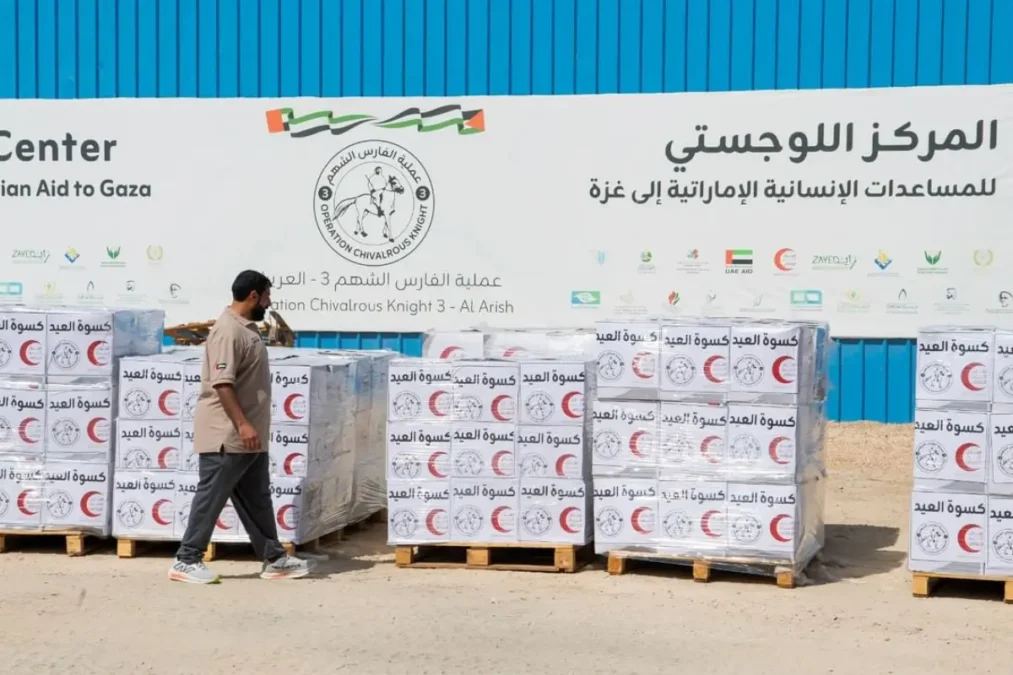
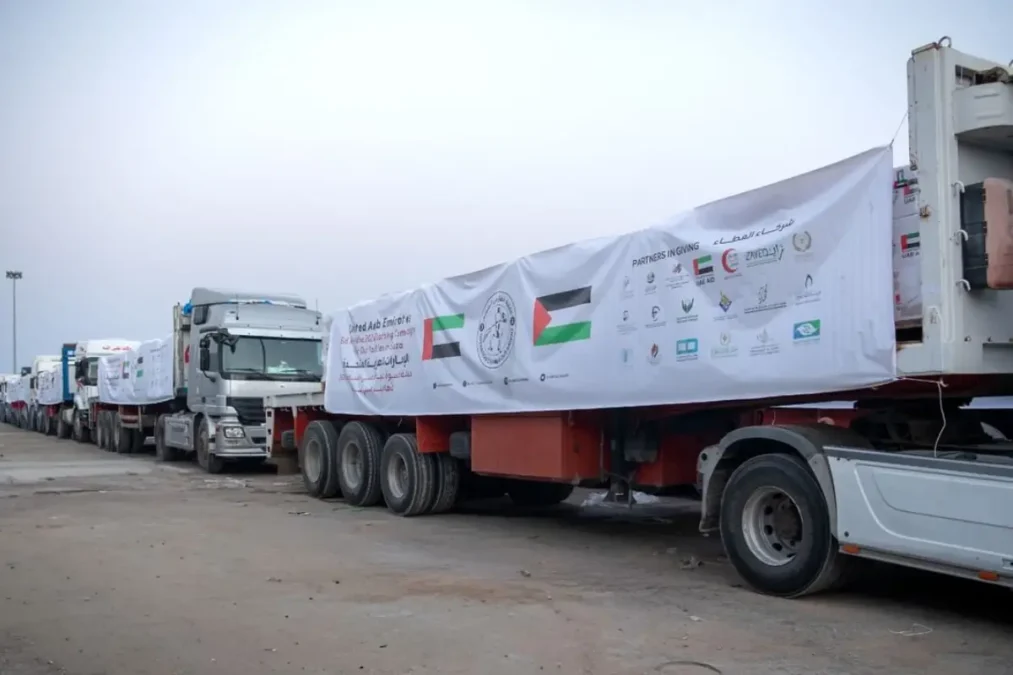
Four UAE humanitarian aid convoys entered the Gaza Strip last week, comprising 60 trucks carrying more than 930 tonnes of various relief supplies including food and Eid Al Adha clothing, according to WAM reporting on May 24. Two of the four convoys were dedicated entirely to clothing. The Emirates Red Crescent provided more than 540 tonnes of new garments for children, men, and women specifically to bring joy to Palestinian families during the blessed occasion, according to Mohammed Al Kaabi, a member of the humanitarian UAE aid to Gaza mission in Al Arish. The remaining 390 tonnes of the delivery consisted of food items. Together, the shipment represents one of the largest single UAE aid dispatches of the 2026 period.
Related Stories

What Was Delivered and How It Got There
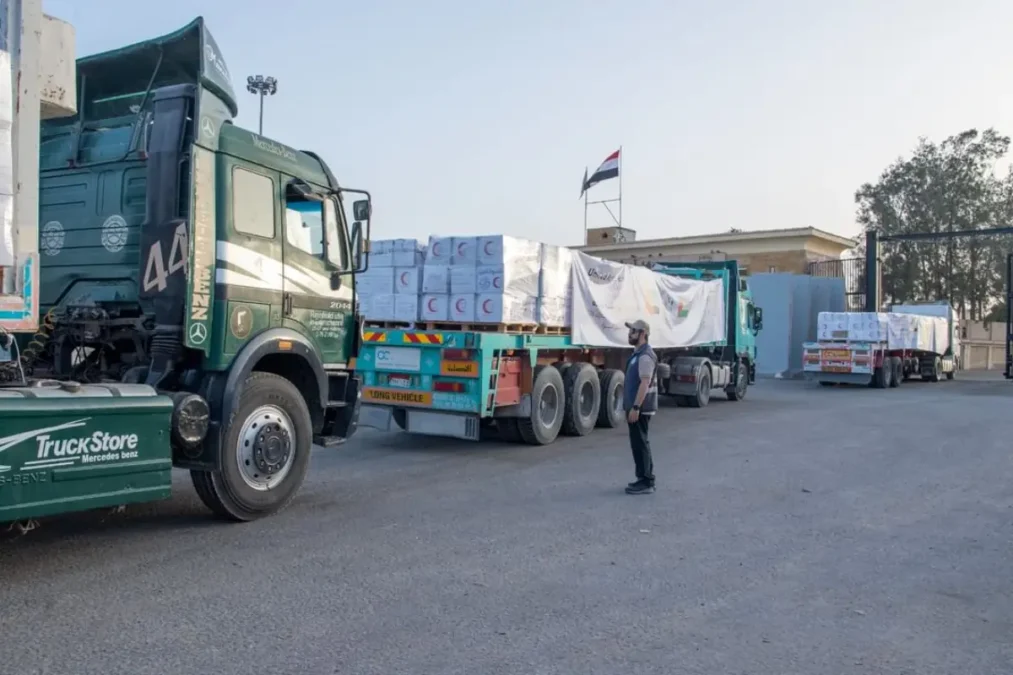
The 600 pallets of Eid clothing were loaded at the UAE’s humanitarian aid logistics hub in Al Arish, Egypt, prepared and coordinated by the UAE humanitarian aid team working in cooperation with Egyptian entities that significantly contributed to facilitating the operation, according to WAM. The Al Arish hub is not a temporary arrangement. It is a specially-prepared operating base that the UAE has created to continue uninterrupted and coordinated assistance to Gaza. All the convoys arriving in the Strip from this hub pass through Egyptian logistics which is a testament to the extensive trade and co-operation between the UAE and Egypt, one of the most logistically challenging aid corridors in the world today.
The UAE aid to Gaza Eid convoys arrived in the Strip last week as part of the country’s large-scale humanitarian operation, Operation Chivalrous Knight, under the leadership of UAE President Sheikh Mohamed bin Zayed Al Nahyan since the beginning of the Israel-Hamas war on October 7, 2023. It has been running for more than two years without a break. This is the third in a line of activity rather than a one-off action.
UAE Aid to Gaza: Why Clothes Before an Eid?
There are a number of rituals associated with Eid Al Adha, one of which is the wearing of new clothes. It is a tradition to wear new clothes to Eid prayer in all the Muslim countries, from Jakarta to Cairo to Dubai. It’s one of the most looked-forward-to events of the day for children. It’s a type of particular and culturally-specific information that sets targeted humanitarian planning apart from general aid delivery.

The Emirates Red Crescent’s commitment to allocating two convoys entirely to Eid clothes is a testament to the organization’s understanding that humanitarian assistance is more than just the calories and medicines. It’s also about the times you feel like you’re not just being fed, but felt. The 40 lorry loads of clothing, weighing 540 tonnes, is an incredible piece of logistics to make available what can only be considered as ‘non-essential’ goods in a crisis. The UAE has obviously assumed that for these families, who are not considered non-essential, this is not the time to be non-essential.
Operation Chivalrous Knight 3: The Broader Picture
In UAE aid to Gaza, this Eid delivery is one part of a larger sustained humanitarian operation that has continued even as the UAE itself was absorbing the consequences of a separate regional war. Operation Chivalrous Knight 3 was launched under the directives of President Sheikh Mohamed bin Zayed Al Nahyan to support Palestinians in Gaza through humanitarian, food, and medical assistance programmes, and has continued despite recent Iranian attacks on UAE infrastructure, according to The National. That last detail deserves attention. A country managing Iranian drone strikes on its own territory simultaneously maintained a sustained humanitarian operation into Gaza. The two facts coexist without contradiction in the UAE’s foreign policy architecture.
Related Stories

The UAE has also established a field hospital inside Gaza and a floating hospital on a repurposed ship in Al Arish, and is also dispatching thousands of patients to the UAE to receive urgent care, reports The National. Additionally, Emirates Red Crescent Gaza operations have been integrated into the UAE’s larger humanitarian aid initiatives that have resulted in billions of dirhams of humanitarian assistance reaching Palestinian civilians since the conflict started in October 2023. The clothes delivered this week are one visible expression of that commitment. They are also among the most human.
UAE Aid to Gaza: Country’s Regional Position After This
In a regional landscape dominated by conflict, proxy positioning, and contested narratives, consistent humanitarian delivery is its own kind of statement. The UAE does not need to announce its position through diplomatic communiqués or military alignments. It announces it through 60 trucks carrying 930 tonnes of food and clothing across a war zone before Eid.
UAE President Sheikh Mohamed bin Zayed Al Nahyan attended a regional multi-party meeting with the leaders of the US, Bahrain, Qatar, Saudi Arabia, Jordan, Egypt, Turkey and Pakistan to discuss regional developments and work towards strengthening efforts to reach diplomatic solutions that contribute to regional security and stability. The UAE is also involved in high-level diplomacy for peace and ground-level coordination for humanitarian delivery. It’s engaging in a long game and a short game simultaneously. For the UAE aid to Gaza convoy and the call to the head of the delegation go hand in hand. They reflect two aspects of the same foreign policy sentiment: “Stability has to be negotiated at the top, and it has to be done with dignity at the bottom.
Related Stories
A child dressed in a new shirt in the morning of Eid Al Adha, in a place in Gaza. It was loaded by someone in Al Arish on a truck. Someone in Abu Dhabi authorised the operation. The chain from decision to delivery is long and logistically complex. But it ends in a very simple place.
Read More: Suite Dreams: How to Live on Sheikh Zayed Road in Dubai without Living on Sheikh Zayed Road in Dubai