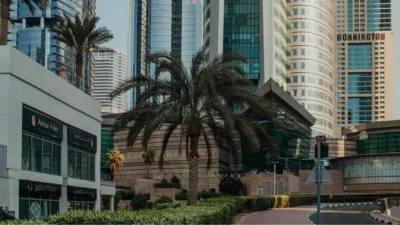
Dubai’s primary public parking operator recently disclosed its operational and financial results for the second quarter of 2026, delivering impressive top-line and bottom-line expansion. According to official performance metrics released by Parkin Company PJSC, total revenue surged 14 percent year-on-year to reach AED 364.1 million.
Simultaneously, net profit rose 12 percent to hit AED 166.2 million, maintaining an exceptional net profit margin of approximately 46 percent. The total number of managed parking bays expanded rapidly by 27 percent to reach 268,300 spaces across the emirate. Meanwhile, total parking transactions reached 34 million throughout the three-month period.
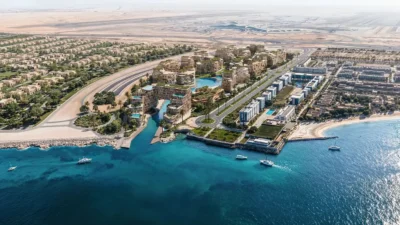
Analyzing Parkin revenue growth in Dubai extends far beyond inspecting standard corporate balance sheets. Instead, these strong financial returns offer a real-time macroeconomic window into the structural health, urban mobility dynamics, and population expansion of the United Arab Emirates. As the city accelerates its economic diversification goals, public mobility assets play a pivotal role in driving national economic momentum.
Population Mobility Indicators
The revenue growth of Parkin in Dubai provides an example of public utility revenue and population growth links.In Dubai, there is a close link between the growth of public utility revenue and population growth, as evidenced by the revenue growth of Parkin. The more people park, the more people are on the move, more tourists, more commerce in the main business districts. With a total of 34 million individual parking transactions logged in one quarter, it is clear that resident and visitor movements are still strong across the emirate. With an expanding local population, there is a growing demand for commuters to travel from one place to another every day, resulting in a significant amount of transactions in public areas, business districts, and places of leisure.
In addition, an increase in the number of physical parking spaces by 27% ensures that development of infrastructure continually mirrors urban growth. New residential areas and business centers drive demand for mobility infrastructure. It should be reliable and integrated into daily economic activities. Higher parking volume confirms that business districts are experiencing high foot traffic and active commercial engagement. Consequently, steady revenue streams from transportation infrastructure confirm that the broader domestic economy continues to experience sustainable urban development.

Public Private Partnership Models
Understanding the structural drivers behind Parkin revenue growth in Dubai emphasizes the success of state-backed privatization and public-private partnerships. Following its successful initial public offering on the Dubai Financial Market, the company demonstrated how converting state utility assets into publicly traded corporations unlocks operational efficiency. High net profit margins of 46 percent demonstrate disciplined cost management, advanced digital collection technologies, and efficient capital deployment.
Moreover, strategic commercial framework agreements with major private developers, including Al-Futtaim Group and Emaar Malls, demonstrate how public operators can scale private sector operations. Managing private parking facilities across shopping destinations and commercial real estate assets creates new high-margin revenue streams. This collaborative framework reduces public capital expenditure while maximizing operational quality across consumer touchpoints. Successfully monetizing municipal infrastructure provides a clear operational template for other regional economies seeking to modernize public sector assets while deepening domestic capital markets.
Digital Mobility Ecosystems
Accelerating technological integration represents a central pillar sustaining Parkin revenue growth in Dubai. To transform urban transportation systems into modern ones, we must move away from traditional data collection. We should embrace fully automated digital mobility ecosystems. Seamless smartphone applications, automatic number plate recognition and integrated digital wallets reduce driving processes’ operational friction. Simplicity in payment processing decreases administration costs for collecting payments and increases compliance of all transactions by parking category.
In addition, smart-city strategies are in line with the strategic technology partnerships, including joint schemes with autonomous transit developers, that align parking infrastructure with the future. Smart parking management can be used to create efficient urban traffic, decrease street congestion and decrease vehicle pollution in dense commercial corridors during transition. Digital infrastructure maximises every square meter for revenue. AI and real-time analytics optimise space utilisation. The automated network of urban mobility helps to increase city productivity and helps the emirate become a leader in intelligent management of the city.

Capital Market Liquidity
Examining the financial implications of the revenue growth reveals significant benefits for regional capital markets and institutional investors. Public utility companies can afford to have appealing dividend distribution policies that generate consistent cash flows, and have high profit margins. Stable dividend yields bring domestic institutional investors, foreign portfolio investors and retail investors into the Dubai Financial Market.
A strong launch of the new utility stocks provides a platform for investors’ trust in the regional financial ecosystem in general. The more effectively public assets can be rendered private and deliver better performance than the market, the deeper, more liquid and more active equity markets become. In addition, reasonable prices on the market allow companies listed in the stock exchange to obtain low-cost financing of future investments in infrastructure. The benefits of investing in building up municipal networks are self-reinforcing, as it generates positive economic feedback for the construction industry, technology procurement and employment in the service sector, in the United Arab Emirates.
Economic Modernization Blueprint
In the end, Dubai’s Parkin revenue growth serves as a clear indicator of the success of the national economic blueprint in Dubai. Operational efficiency and digitisation of its municipal services are yielding revenue of AED 364.1 million per quarter, indicating a maturing and resilient urban economy. The city’s physical infrastructure is extended to 268,300 spaces, so that city expansion is supported by scalable mobility solutions.
The continued population growth will further drive commercial activities and smart transportation infrastructure will continue to be a key element of economic efficiency. This privatized utility model is a strong example of how innovation by cities, cooperation between public and private parties and technological applications contribute to sustainable national development. Dubai’s move to make everyday city travel a source of profit and value makes it a world-class global commercial capital.
Read More: Parkin & Ultra-Fast EV Chargers in Dubai