
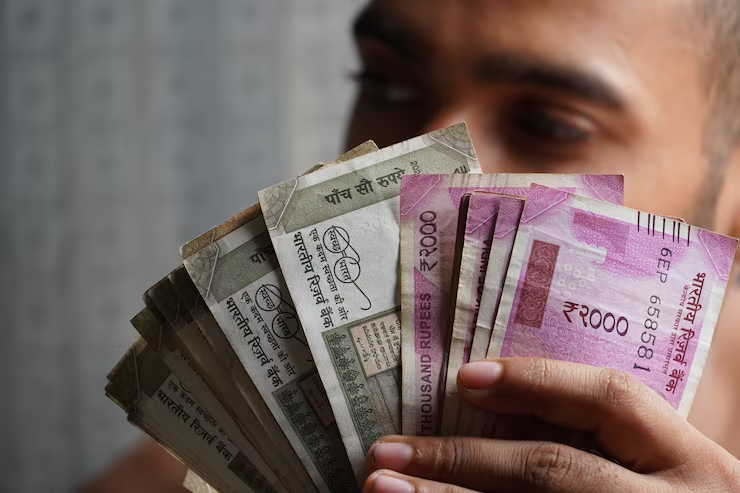
The global market has begun to watch the Indian rupee fall because the currency keeps losing value against important international currencies. The rupee has experienced a significant decline during the past weeks which brought its value close to previous lowest points. The situation leads to public inquiries from both investors and economists about the reasons behind rupee depreciation and its effects on both economic systems and daily activities. The Indian rupee fall results from international economic forces and domestic market dynamics which create downward pressure on the currency value.
The Indian rupee fall affects import costs, export earnings, savings and remittances. The current slide shows that even strong economic figures cannot fully protect the rupee from external pressures. This article discusses what is pushing the Indian currency lower and what factors are most significant in the ongoing decline.
7 Major Drivers of the Indian Rupee Fall
The Indian rupee fall results from multiple market and economic factors which combine to decrease its market value. The currency depreciation results from ongoing market pressures which traders and analysts and financial institutions have identified as the main cause.

1. Foreign Equity Outflows
One of the biggest reasons for the Indian rupee fall is that foreign investors have been selling Indian stocks and taking funds back abroad. This increases demand for dollars and reduces demand for rupees. This flow of capital out weakens the currency.
2. Expectations of Further Decline
As the rupee weakens, traders and businesses expect it to fall further. This expectation pushes companies to buy more dollars now to protect themselves. That behaviour increases dollar demand and adds to the rupee’s downward pressure.
3. Hedging Activity by Corporates
Many Indian companies have increased hedging to protect against future currency losses. These actions often involve buying dollars in advance, which increases immediate demand for foreign currency and pushes the rupee down.
4. Speculative Positioning
Some traders place bets based on expected currency moves. When many choose to bet on a weaker rupee, these positions add to the momentum of the Indian rupee fall and make recovery harder.
5. Gold Imports
India imports a lot of gold, especially during certain seasons. Buying gold requires dollars, not rupees, so this also boosts demand for foreign currency and pressures the rupee.
6. Dollar Strength Globally
When the US dollar becomes stronger in global markets, the rupee and other currencies often weaken in comparison. A stronger dollar means India needs more rupees to buy the same amount of dollars.
7. Central Bank Actions
The Reserve Bank of India (RBI) has chosen to smooth excessive swings rather than defend a fixed exchange rate. The current method has achieved success in reducing extreme market movements but it has not succeeded in stopping the Indian rupee decline which continues throughout time.
The combination of these factors has maintained pressure on the rupee throughout the early months of 2026. The system creates permanent limitations which restrict all possibilities for temporary recovery since most recovery drivers exist as permanent global elements.
Impact of the Indian Rupee Falling
The Indian rupee fall impacts daily activities and business expenses and the overall national economic system. Both individuals and industries must adapt to changes caused by a weaker currency.

Higher Costs for Imports
The weaker rupee results in increased expenses for imported products. India depends on imports to obtain fuel and electronics and machinery and other vital supplies. The falling rupee value causes businesses and consumers to face higher expenses for these imported goods.
More Expensive Travel and Education Abroad
Students studying overseas and travellers must spend more rupees to buy dollars. This makes international education and travel costlier when the Indian rupee fall continues.
Exporters and Benefits
Some exporters may benefit because they earn more rupees for the same amount of dollars sold. The exported goods which need imported materials will result in their profit margins decreasing.
Impact on Inflation
A weaker rupee leads to higher import costs, which creates additional inflationary pressures. The rising prices of essential goods will result in higher costs for all common products.
Remittances and Income Abroad
The Indian rupee drop provides a financial advantage to Indian workers who send remittances from abroad. Workers who send dollar remittances receive additional rupees, which boosts their remittance value.
What Experts Say and the Outlook?
Economists suggest that the Indian rupee fall does not reflect a fundamental economic collapse. India shows strong economic growth while maintaining substantial foreign currency reserves. The short-term cash movements together with worldwide market patterns hold critical importance for foreign exchange trading.
Analysts also point to wider global conditions, like shifts in interest rates, trade tensions and investor confidence. The rupee will maintain its downward trend until the broader economic conditions experience changes. The ongoing trade deficit together with capital flow patterns will determine our future capital market operations.
The Indian government together with the Reserve Bank of India actively tracks all currency value changes. The authorities use liquidity support together with market operations to handle currency market fluctuations. Global events determine currency values which no individual nation can manage.
The Indian rupee decline results from foreign investor actions together with rising dollar demand and import pressure and broader economic conditions. The slide affects all three groups which include consumers and businesses and markets. The upcoming months will determine whether global confidence and trade flow and investor sentiment will sustain a complete economic recovery.
Read More: G Dragon Concert in Dubai Announced, K-Pop Icon to Headline Massive Music Festival