
UAE Space Cooperation Programme: The Beginning
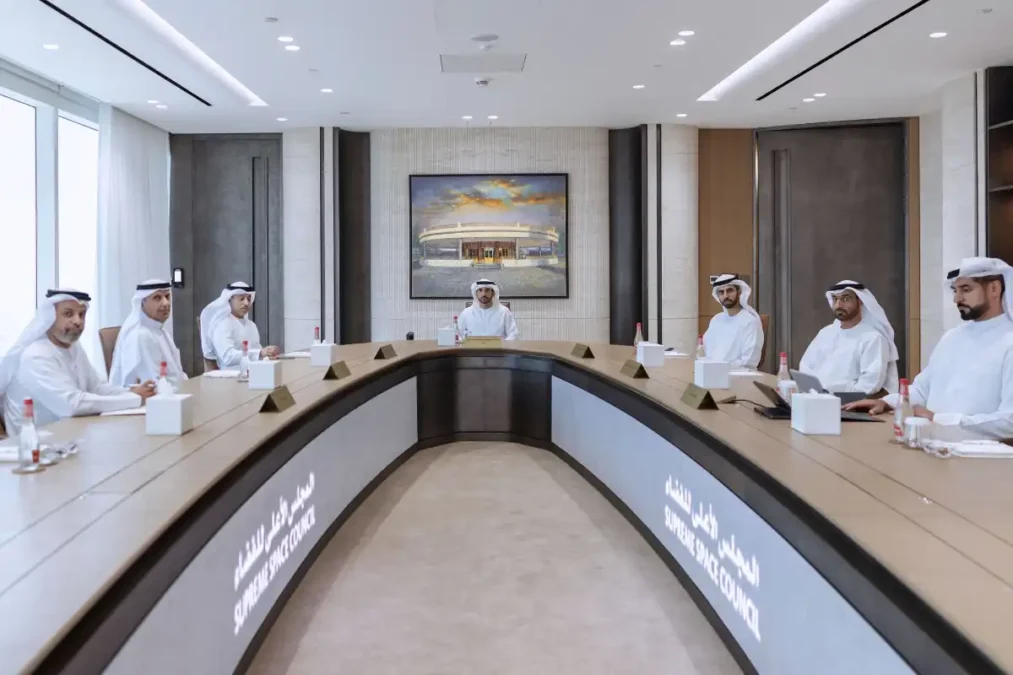
In 12 years, the UAE has had no space agency. It didn’t have a satellite programme, a deep space mission or a seat at any international space governance body. Today 19 May 2026, His Highness Sheikh Hamdan bin Mohammed bin Rashid Al Maktoum, Crown Prince of Dubai and Chairman of the Supreme Space Council, launched the AED 1 billion UAE Space Cooperation Programme. Those two sentences are not only impressive, but they’re pleasantly surprising. This is the whole tale.
The Dubai Media Office has said that the programme provides AED 1 billion to foster international cooperation in space research and development, as well as to localise advanced space technologies, and to enable Emirati talent to shape the future of the industry. Sheikh Hamdan was forthright in his intent. The UAE has a strategy to develop the space sector as we move toward an economy of knowledge and innovation, and further consolidate our place as one of the world’s top countries in this area,” he affirmed.

UAE In The Global Space Race
Before understanding what the UAE space cooperation programme adds, you need to understand where the UAE already is. Most people don’t realize that the answer is pretty far down.
The UAE achieved the fifth Mars orbital insertion in history, with the Hope Probe entering orbit on 9th February 2021, and the space agency established seven years ago in 2014. By 2025, the Hope Probe had produced some 9 terabytes of data, distributed over 16 releases, to over 200 research institutions around the world, which has helped to inform global research on Martian atmospheric dynamics and seasonal climate processes. That is not a token mission. That is peer-reviewed science at a planetary scale.
Beyond Mars, the UAE has been systematically building every layer of a credible space power. In 2025 alone, the country launched six satellites including Thuraya-4 and MBZ-SAT, described as the region’s most advanced satellite delivering high-resolution Earth observation data. In addition, for the first time, Space42 handled the integration and testing of three Satellites for Synthetic Aperture: Foresight-3, 4 and 5, in UAE to deliver 25 centimetre high resolution data for disaster response, climate monitoring, and urban planning.
Related Stories

The UAE presented a proposal to the UN Committee on the Peaceful Uses of Outer Space to create an Expert Group on Space Situational Awareness in June 2025. At its sixty-eighth session, the Committee voted to approve the proposal, which was seconded by the United States, France, the UK, China, Russia, Japan, India, Egypt, Nigeria, and Brazil.
That is not just a country asking to participate in global space governance. That is a country leading a new global initiative that every major space power endorsed.
Related Stories
What Is UAE Space Cooperation Programme Building?
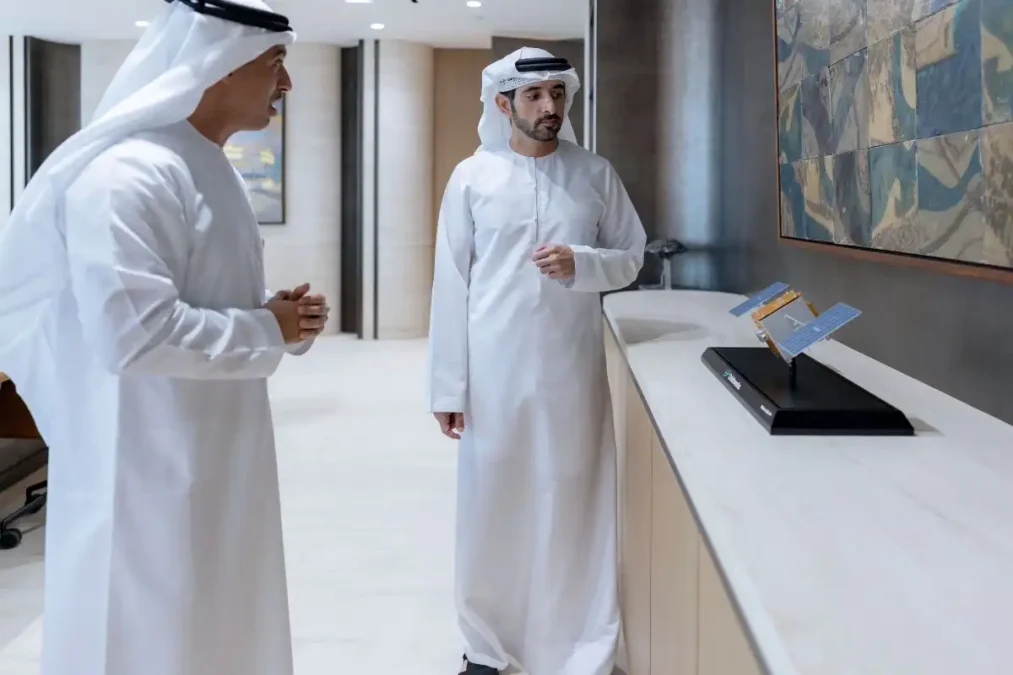
The UAE space cooperation programme announced today is not the only financial commitment behind this sector. Total investments supporting the space sector exceed AED 44 billion, which are expected to help double space economy revenues and increase the sector’s economic added value by 60 percent, according to UAE Space Agency Director-General Salem Al Qubaisi. The AED 1 billion announced on Tuesday is a focused addition within that broader capital commitment, specifically targeting international partnerships and technology localisation.
The National Space Strategy 2031, launched by Sheikh Mohammed bin Rashid Al Maktoum, sets out the operational framework for what the UAE space cooperation programme is contributing to: doubling space economy revenues, increasing the sector’s added value by 60 percent, and placing the UAE among the world’s top 10 space economies. Currently, the UAE sits outside the top 10 but is closing that gap rapidly. The trajectory of the past twelve years — from no agency to Mars in seven years — suggests treating their 2031 target as aspirational would be a mistake.
The Rashid 2 Rover & The Next Frontier
While the UAE space cooperation programme provides the financial infrastructure for what comes next, the next visible milestone is already in preparation. The Rashid 2 Rover has successfully completed environmental and mechanical testing within the UAE and has been cleared for shipment to the United States ahead of its scheduled 2026 lunar launch.

The rover will fly on Firefly Aerospace’s Blue Ghost lander and will land on the Moon’s far side, placing the UAE in an exclusive group of nations that have explored that previously unreached terrain, alongside payloads from NASA, the European Space Agency, and Australia.
Additionally, the Emirates Mission to the Asteroid Belt completed its Critical Design Review and is moving into its assembly, integration, and testing phase — a seven-year deep-space mission to the main asteroid belt between Mars and Jupiter that will be the most ambitious mission the UAE has ever attempted.

The Competition; UAE’s Distinctive Position
The UAE space cooperation programme comes at a time when the space economy is truly competitive in the region. Saudi Arabia built on its capabilities in human spaceflight and satellite production in 2025 and inked a private agreement for a national communications constellation. Oman is building the Etlaq launch site with the aim of establishing it as a regional space transport hub. China is reaching out to Gulf astronauts and trying to exert influence on the region through its Belt and Road space element. The Trump administration has indicated a desire to bring in at least $50 billion in private space investments by 2028.
The UAE’s relative advantage over its neighbours lies just in this. It heads the UN’s Expert Group on Space Situational Awareness, it was one of the initial signatories to the Artemis Accords of 2020, and it has the most comprehensive regional knowledge of deep space exploration, human spaceflight, satellite imagery and communications. Moreover, UAE’s $12 billion space infrastructure investment is aimed at meeting the increasing demand for communications and observation information and to draw in private investment in frontline technologies.
It is not a country discovering interest in space but the one that will be celebrating the launch of the AED 1 billion International Space Cooperation Programme announced today. This is a nation that has already demonstrated its membership of the elite and it is a country where the next step of investment is in ensuring that they remain there.
The UAE space cooperation programme is the new phase in an already one of the most amazing stories in the history of the space industry. In 2014, a nation without a space agency is heading to the far side of the Moon in 2026, and even looking to crack the top ten on the world’s space agency list by 2031. The programme has been designed for this purpose.
Read More: UAE Salary Rule: New 2026 Payroll Mandate