
UAE vaccination law: New changes to infectious disease legislation gain approval through federal council vote. Immunization efforts across the nation now stand strengthened under updated rules. Newborns continue receiving vaccine access at zero cost, as do specific priority populations. Policy adjustments emerge alongside sustained public health commitments. Free coverage remains fixed for those officially designated. Legislative update passes without altering core benefit structure.
Fines Proposed for Failing to Vaccinate Children
Fines up to Dh20,000 can be imposed on parents if children miss out required vaccines, according to a proposed UAE vaccination law now being assessed. Backed lately by the Federal National Council (FNC), the measure looks for firmer legal tools against spreading infections. Though still in draft form, its intent is clear: align health compliance with enforceable consequences.
Related Stories

Fines between Dh5,000 and Dh20,000 could apply to parents for failing to vaccinate their children as required by the national immunization programme under fresh amendment proposals. While refusal counts as grounds for penalty, simple disregard of scheduled vaccinations may also lead to fines, with each case assessed individually within revised legal frameworks.
Federal National Council Approves Amendments
A decision came on Tuesday in Abu Dhabi as the FNC gave approval to changes suggested for the nation’s infectious disease regulations. With an eye toward stronger safeguards for public well-being, the updated measures arrive alongside moves meant to strengthen readiness when facing outbreaks. Meanwhile details emerged gradually, each adjustment aligns with long-term planning focused on resilience across health systems.
The new vaccination policy under discussion in the UAE aims to boost measures against disease spread, with adherence positioned as central to public health operations. Though framed as preventive, the rule integrates important elements expected to shape medical engagement across communities. While officials reflect systemic benefits, aspects of enforcement stay part of broader regulatory planning. Implementation details are still being assessed by relevant authorities before any official rollout of the UAE vaccination law.
Mandatory Vaccinations Under National Programme
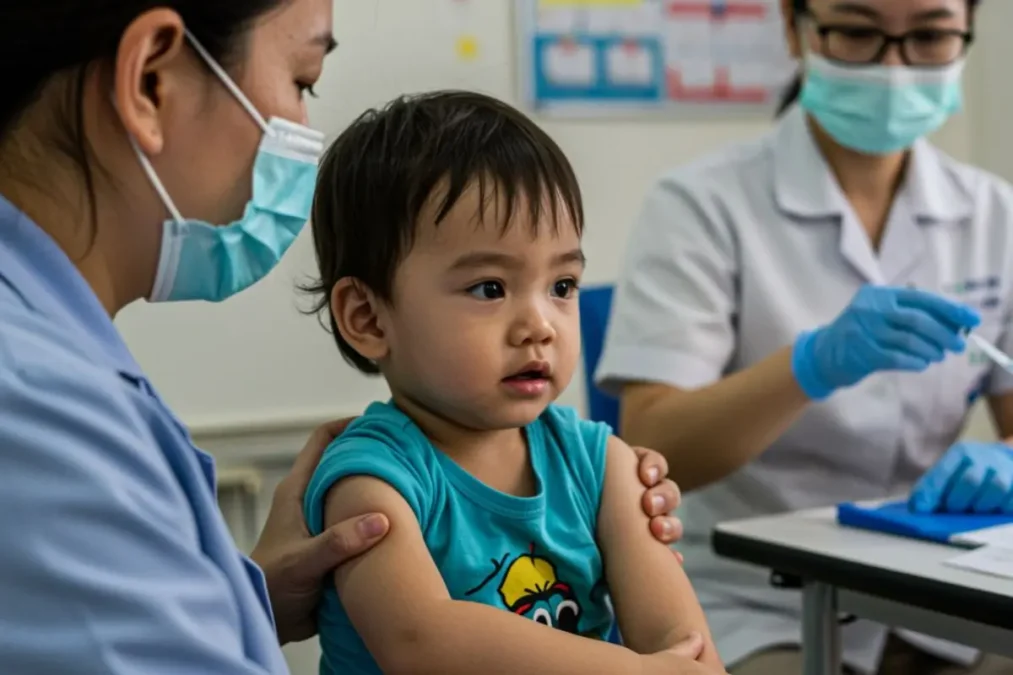
From the birth, vaccination schedules under the UAE’s national immunization programme follow a structured timeline through to Grade 11. At various developmental intervals, specific doses are delivered to guard against multiple contagious illnesses. Protection unfolds gradually, introduced step by step across early life stages. Each phase aligns with health guidelines designed for disease prevention.
With regard to public health, the UAE’s approach to immunization reflects a focus on prevention. Early safeguards form the core of its national programme. Routine doses appear alongside combined formulations within official guidelines. This structure supports long-term wellbeing by design and forms an important foundation for the UAE vaccination law.
Vaccines to Remain Free of Charge
It has been verified by officials that immunizations delivered under the state initiative will remain at zero cost. Included without expense are shots for infants along with specified community segments. The rule keeps vaccine access open for every resident within the public health framework, aligning with objectives set by the UAE vaccination law and the nation’s broader preventive healthcare strategy.
Government Powers in Public Health Emergencies
When needed to slow transmission, officials may require vaccines under the new bill. Authority to enforce immunization emerges in targeted public health scenarios through this legal measure. Where disease risk rises, compulsory vaccination becomes an option by law’s provision under the UAE vaccination law. Public announcement of any choice tied to vaccination is required by UAE law, delivered via authorized information outlets.
Empowering the Legal Framework After Covid-19
A shift in policy aligns with wider revisions to how the UAE manages laws on contagious illnesses. These adjustments pays attention on tighter surveillance systems, supported by more effective protocols when outbreaks happen. Preparedness at the country level gains structure through updated operational guidelines. Future threats meet a system now shaped with clearer procedures.
Throughout the meeting, attention shifted to Ahmed bin Ali Al Sayegh, who noted changes in laws must follow shifts in worldwide public health patterns. His point emerged from recent experiences tied to the coronavirus outbreak, where gaps became visible over time. One factor stood clear: past approaches now require adjustment as conditions transform slowly. Insights drawn from the crisis shaped much of what was said afterward. Regulation, he suggested, cannot stay fixed when realities around it do not.

Focus on National Health Security
It was observed by officials that robust legal structures allow swift action during health emergencies. When laws are clear, responses tend to be more coordinated. Community safety often improves under such conditions. Effectiveness in crisis management frequently follows structured authority. Well-defined rules support both speed and care in decision-making. Public trust sometimes grows where systems appear reliable.
The new UAE immunization policy comes as a part of a broader move toward strengthening public health safeguards throughout the nation. While concentrating on disease prevention, it reflects an ongoing commitment to strong medical infrastructure. From one perspective, it aligns with long-term planning for well-being of population and another angle reveals its role in standardizing care protocols nationwide. As conditions evolve, such measures adapt alongside emerging health priorities. In essence, stability in health governance takes quiet precedence here, reflecting the broader intent behind the UAE vaccination law.
Also Read: UAE Public Holidays 2026: A Detailed Guide to Your Yearly Leave and Long Weekends