On Sunday, the UAE minister of Industry and Technology, Sultan Al Jaber demanded a complete reopening of the Strait of Hormuz, restoring its pre-war status. The waterway faced a recent disruption as the US Navy seized an Iranian-flagged vessel. Al Jaber’s remarks were followed by the closure of the Strait on Saturday, which triggered a surge in oil prices and deepened concerns over the supply chain.
50 Days of Disruption
Al Jaber highlighted that over fifty days of disruption, nearly 600 million barrels of oil were blocked resulting in heavy strain on the global supplies of liquified gas, jet fuels, fertilizers, and other essential goods.
Related Stories

“Behind every missing barrel, the bills go up for ordinary people everywhere,” he wrote on X, highlighting that the consequences are not only faced by energy markets but are also directly by the people. “The global economy cannot afford more uncertainty. The strait cannot operate under threat,” he said.
‘Protection Racket’ Charge
Al Jaber aimed directly at Iran’s reported demands for payment for safe passage through the Strait of Hormuz. He described it as a “protection racket”, stressing that the waterway is not the property of a single nation, it belongs to the world. “It must be returned to the world. Exactly as it was,” he wrote.
His post reinforces what he said on April 9 while condemning the efforts to restrict and weaponize Hormuz, and also at the CERAWeek energy conference in Texas on March 23; he described it as “an act of economic terrorism.”

US-Iran Confrontation Drives Renewed Closure
The latest statement appears at a significantly volatile moment. Iran’s decision to close Hormuz was prompted by the US Navy’s seizure of an Iranian-flagged vessel. The violations by US naval blockade were presented as the justifications for the renewed closure.
Global Trade Lifeline at Risk as Ceasefire Nears End
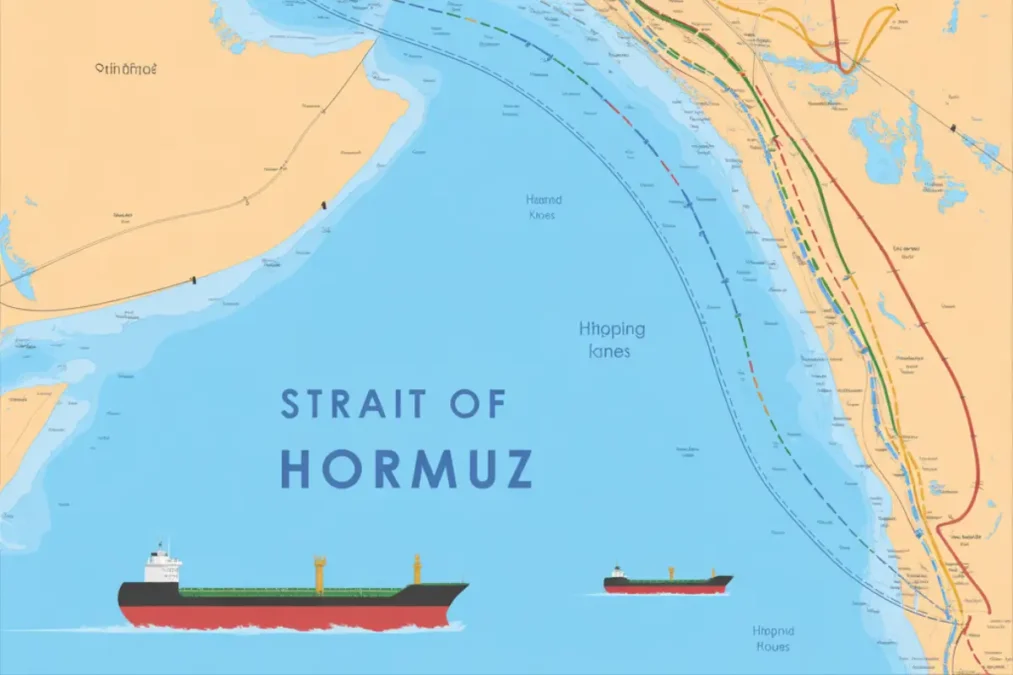
UAE and Oman border the Strait of Hormuz to the South. Before the war began on February 28, nearly 20 percent of it liquified natural gas and approximately 25 percent of the global seaborne oil trade passed through it every day. As the two-week ceasefire between Iran and US nears its expiry, the potential of a resolution to the strait of Hormuz crisis remains uncertain.

Also Read: Gulf Flashpoint: US Destroyer Fires on Iranian Vessel, Takes Control