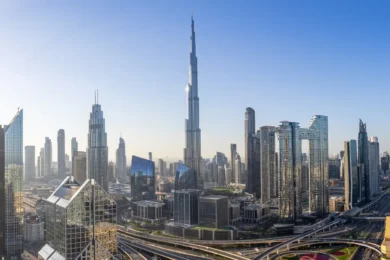
There is a line that captures the UAE’s current position as the hedge fund capital in global finance better than any press release: one emirate courts the capital, the other courts the capitalist. Dubai built the restaurants, the schools, the penthouses, and the nightlife. Abu Dhabi built the regulatory architecture, the sovereign backstop, and the institutional trust.
For the first time in the post-2008 era, both are working, and the world’s most sophisticated money is choosing between them not as alternatives but as complements. The numbers confirm what the industry has been quietly observing for three years.
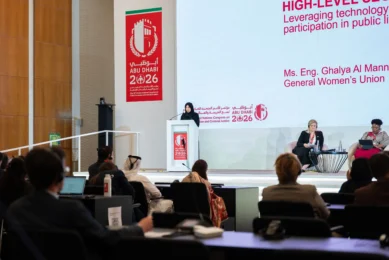
DIFC registered its 100th hedge fund in December 2025, having doubled from 50 managers at the start of 2024, with 81 of those 100 managing more than $1 billion in assets. This places Dubai among the world’s top five hedge fund hubs for the first time. Simultaneously, ADGM reported a 42 percent increase in assets under management in the first half of 2025, surpassing 11,000 active licenses and emerging as the region’s largest international financial cente by the market capitalization of its registered entities.r
Two financial centres, one country, both breaking records in the same year. The UAE hedge fund capital story is no longer about potential. It is about market share.
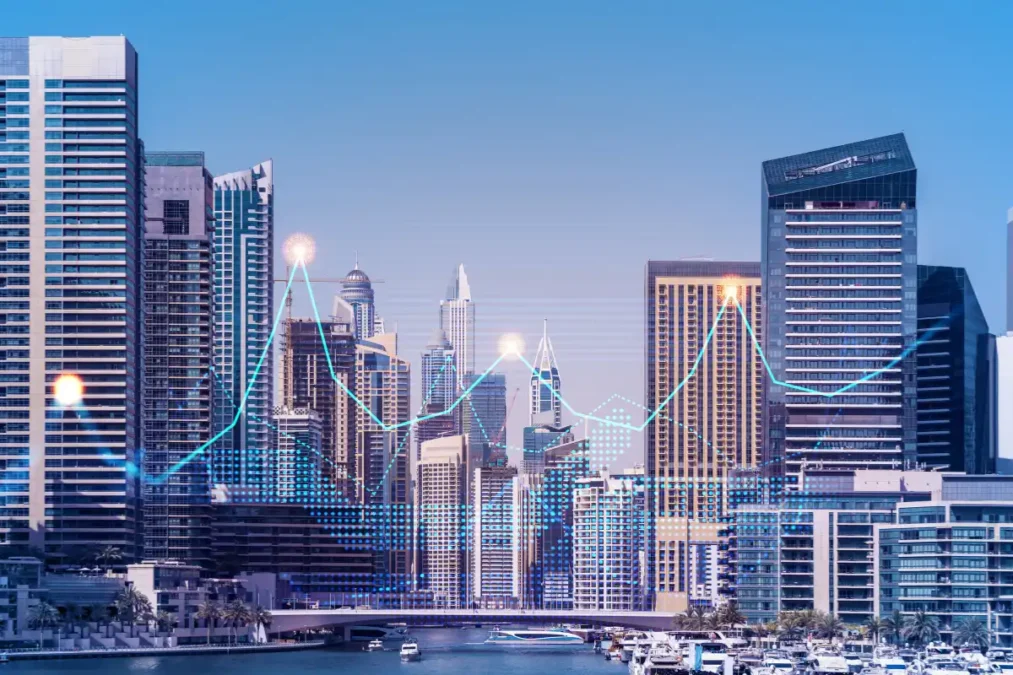
Abu Dhabi’s Sovereign Gravity
Abu Dhabi does not just attract capital. It generates it. ADIA, one of the world’s largest sovereign wealth funds, manages an estimated $1 trillion in assets. Mubadala manages approximately $302 billion. ADQ manages over $200 billion. Together, these three institutions represent the largest concentration of sovereign capital under a single city’s jurisdiction anywhere on earth. When a hedge fund sets up in Abu Dhabi, it is not just accessing a regulatory framework. It is positioning itself physically near the largest check-writers in the world.
Brevan Howard understood this before almost anyone else. The firm opened its ADGM office in 2023. By late 2025, Alan Howard confirmed at Abu Dhabi Finance Week that Brevan Howard now manages more capital and employs more traders in Abu Dhabi than in any other global location. Reportedly, approximately $10 billion is under management in the city, representing nearly a third of the firm’s total $34 billion AUM.
Howard attributed the decision directly to ADGM’s regulatory vision, its time zone, and its approach to digital assets. “It’s too exciting for us to be here with a regulator that has the same vision that we do,” he said, citing tokenisation and the convergence of traditional and digital markets as the strategic rationale.
The Lunate-Brevan Howard deal crystallised the Abu Dhabi model. Abu Dhabi-based Lunate manages over $110 billion and counts ADQ as an anchor client. In August 2025, the firm committed $2 billion to a new investment platform with Brevan Howard. The deal included it acquiring a minority stake in the hedge fund, a transaction Hedgeweek described as a rare example of a hedge fund selling equity to an external partner.
The deal is not simply a capital injection. It is a structural alignment, sovereign money becoming a stakeholder in one of the world’s most sophisticated macro trading operations. Davidson Kempner, the $37 billion New York-based firm, and Marshall Wace have since followed, establishing Abu Dhabi offices to be near the same LP gravity well.
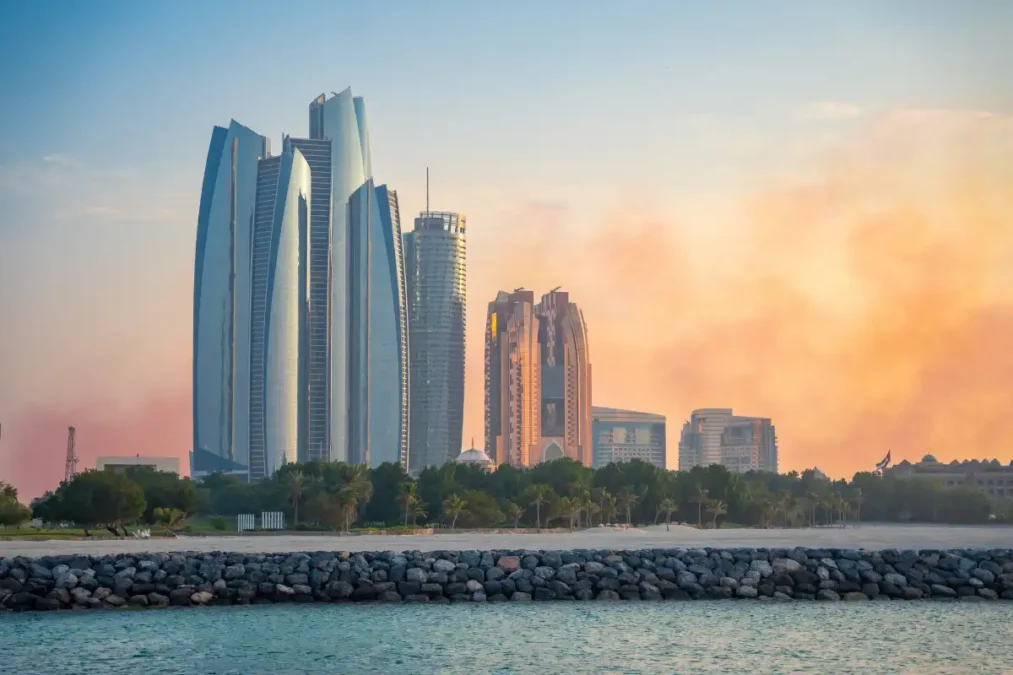
Dubai’s Ecosystem Density
Dubai’s pitch is different and equally compelling. Where Abu Dhabi wins on institutional anchor capital, Dubai wins on operational infrastructure. The dense, daily ecosystem that makes running a fund practical rather than theoretical.
DIFC houses more than 470 wealth and asset management firms and over 1,250 family-related businesses and entities. It also has the full prime brokerage infrastructure of Goldman Sachs, JP Morgan and UBS, plus a legal and advisory community that can close a fund structure, negotiate an ISDA, and place a prime brokerage line. All these are within the same postcode. For a mid-sized multi-strategy fund deploying across Asian, European, and US time zones simultaneously, that operational depth is not a luxury. It is a prerequisite.
The lifestyle arbitrage is real and the industry knows it. Traders who might earn the same bonus in London or Singapore choose Dubai partly because of what that bonus buys here. The school system, the housing market, the tax structure, and the safety record all make senior talent retention significantly easier than in comparable financial centres.
Henley & Partners projected 9,800 millionaires would relocate to the UAE by the end of 2025, reinforcing Dubai’s position as the world’s leading destination for high-net-worth wealth migration. With that migration came the family offices, the private wealth allocators, and the capital networks that make DIFC’s fundraising environment uniquely dense.
Millennium Management, ExodusPoint Capital, Hudson Bay, and Balyasny are all operating in DIFC’s Gate Village ecosystem. The latest trend, noted by Alternative Fund Insight, is multi-strategy firms now running dual presence. They have offices in both Dubai and Abu Dhabi, treating the two hubs as complementary rather than competing.
Balyasny and Hudson Bay are already operating across both centres, a structure that reflects exactly the logic of the two-emirate model. Abu Dhabi for the LP relationships and institutional credibility, Dubai for the operational infrastructure and talent base.
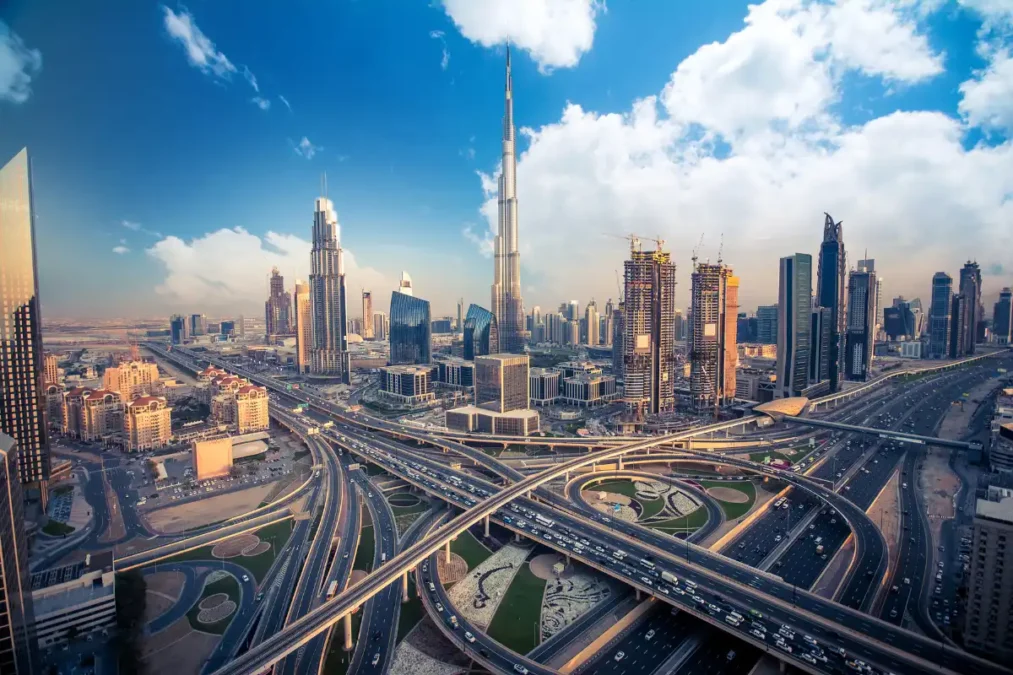
Hedge Fund Capital: The Divide, The Risk
The emerging consensus in the industry is clean if slightly reductive. The serious money goes to ADGM, fast money stays in DIFC. Anchor institutional capital like pension allocations, sovereign mandates, endowment commitments, gravitates toward Abu Dhabi’s regulatory seriousness and sovereign proximity. Crypto funds, VC vehicles, family office capital, and multi-strategy trading operations gravitate toward Dubai’s ecosystem density and deal velocity.
DIFC’s AUM across the wealth and asset management sector surpassed $700 billion in 2025, growing at 48 percent annually, while ADGM’s AUM grew 226 percent in H1 2024 before moderating to 48 percent year-on-year growth in Q3 2025. These are both extraordinary by any global benchmark.
The war has tested this narrative. The Iran conflict has targeted UAE infrastructure, disrupted aviation, and rattled regional business confidence in ways that previous Gulf crises did not. The question being asked in boardrooms in New York, London, and Singapore is whether the UAE’s reputational stability, the “neutral ground” brand, survives a prolonged military conflict on its doorstep. So far, the capital flows suggest the answer is yes.
Foreign investment inflows into UAE capital markets hit $5.1 billion in a single week in May 2026 even as the conflict continued. This suggests that institutional investors are reading the war as a regional event rather than a UAE-specific crisis. And the two hubs’ structural advantages are durable enough to absorb the uncertainty.
For now, there is enough for both. Dubai courts the capitalist. Abu Dhabi buys the balance sheet. And between them, the UAE has built something no single financial centre could have managed alone. They built a full-spectrum capital ecosystem that is simultaneously the world’s most institutionally credible Gulf jurisdiction and its most operationally dense. The only real question is how long before one of them decides it wants the other’s market too.
Read More: DP World Insurance Expansion, New Era for Global Trade