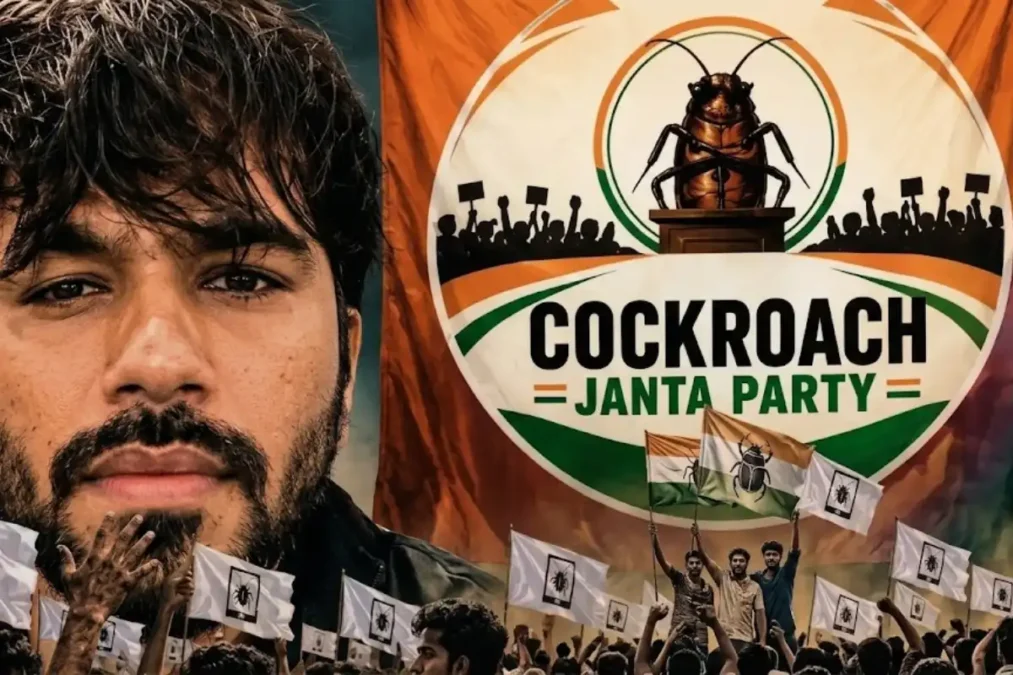
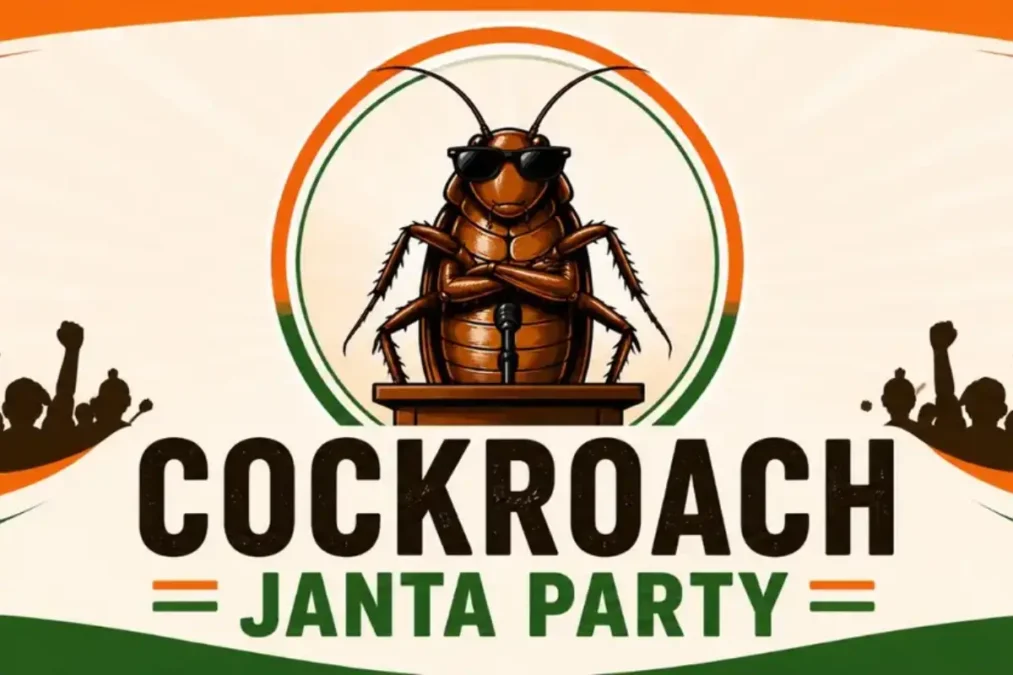
It took nothing more than spite, irony and internet memes to create the latest and most viral political outfit in a nation where the mainstream political lobbies spend billions of rupees in carefully cultivated digital war rooms. In a span of a week, the Cockroach Janta Party (CJP) has turned into a huge border-rolling movement. It started as a short-lived satire campaign but has now become a digital youth rebellion that is forcing the traditional political machine to react in catch-up mode.

Born from an Institutional Insult
The genesis of the CJP is rooted in an institutional controversy that triggered immediate online fury. During a Supreme Court hearing on May 15, 2026, Supreme Court Justice Surya Kant reportedly made remarks comparing sections of unemployed youth activists to “cockroaches” and “parasites of society.” Though the court later clarified that the statement targeted bad actors with fake degrees rather than the general youth, the damage was already done.
The comment lit a fuse across an Indian youth demographic battling with severe structural underemployment. Instead of the typical digital outrage, Abhijeet Dipke, a 30-year-old Boston University public relations graduate and former social media strategist for the Aam Aadmi Party (AAP), flipped the insult into a movement. He formally announced the launch of the Cockroach Janta Party on May 16, 2026, as the “Voice of the Lazy and Unemployed.” The movement launched itself with the witty slogan: Secular, Socialist, Democratic and Lazy as noted on the Cockroach Janta Party Wikipedia Page.

Tapping into Gen Z Despair with Hyper-Irony
The CJP’s rise has been nothing short of meteoric. Within just five days, the party’s official Instagram account rocketed past 20 million followers, eclipsing the digital footprint of India’s ruling Bharatiya Janata Party (BJP), which holds roughly 8.7 million followers on the platform.
Related Stories

The movement’s immediate traction is driven by its satirical, tongue-in-cheek membership rules. To join, applicants must be “unemployed (by force, choice, or principle), lazy, chronically online,” and possess the specific ability to “rant professionally.”
However, beneath the hyper-ironic veneer lies a sharp, 5-point manifesto that addresses genuine socioeconomic pain points. The party utilized its platform to demand a ban on post-retirement Rajya Sabha seats for Chief Justices, 50% reservation for women in Parliament and an end to CBSE rechecking fees, the Times of India reported. In particular, the platform has become known as a loud, aggregating voice of students affected by the ongoing NEET-UG exam paper leak controversies.
Related Stories

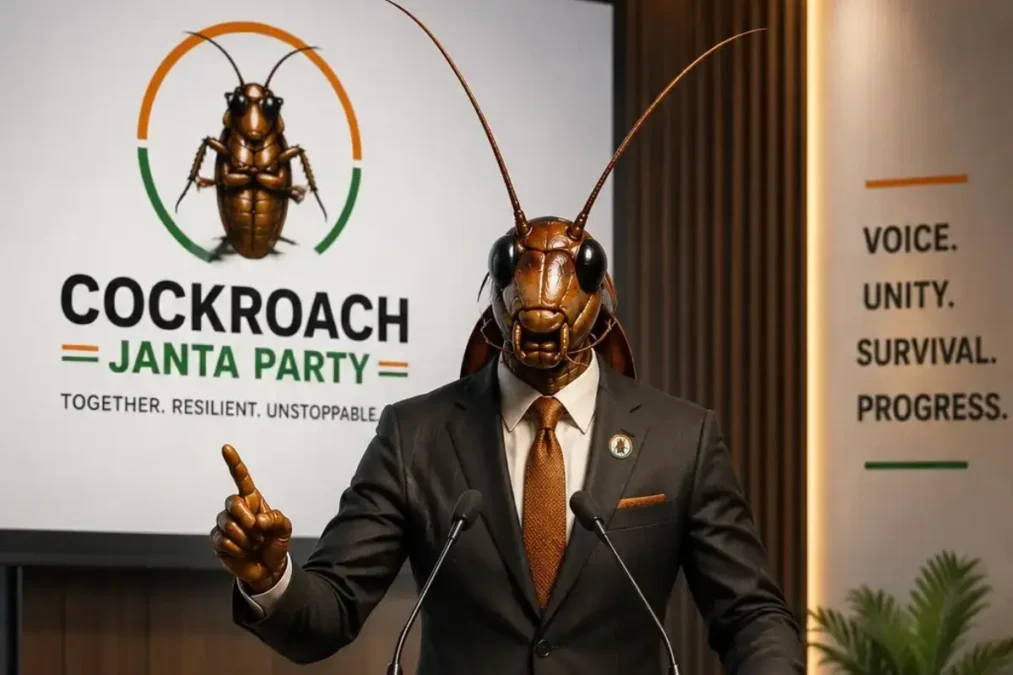
Backlash, Censorship, and Transnational Contagion
The rapid scaling of the digital collective has drawn sharp attention from state authorities. On May 21, 2026, the party’s official account on X (formerly Twitter) was withheld in India after a legal request, and Dipke said there were attempts to hack their Instagram infrastructure. But, in true internet way, digital censorship only supported the trend. The collective was accompanied by high-profile personalities such as leading opposition politicians and movie director Anurag Kashyap, who took memberships beyond the 70,000 registered online users.
The political performance has even spread beyond Indian borders. According to an India Today Report, the phenomenon has crossed the border into Pakistan, spawning sister accounts like the “Cockroach Awami Party” targeting regional political entities.
While critics dismiss the CJP as a highly packaged, opposition-backed digital theater rather than an organic uprising, it serves as a potent case study for the Times of Dubai business and media desk. The CJP proves that when traditional political platforms fail to address youth-centric economic distress, meme culture can weaponize institutional elitism, turning a derogatory insect label into an un-crushable brand of digital resistance.
Read More:Salik VAT on Toll Charges Dubai Begins June 1: What Drivers Need to Know