

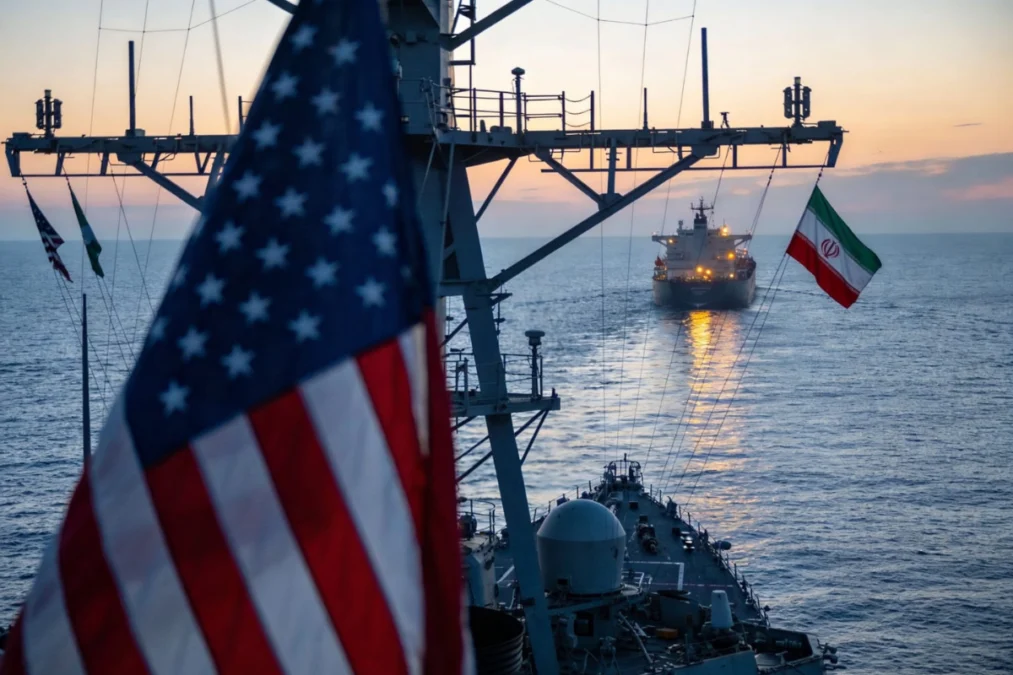
US Naval Blockade on Iran has emerged as a major flashpoint in Middle East tensions, as the United States resumes strict maritime enforcement targeting vessels traveling to and from Iranian ports. The move follows the disabling of an unladen oil tanker that allegedly ignored repeated warnings while heading toward Iran, signaling a significant escalation in Washington’s campaign to curb Tehran’s military and economic activities.
The latest escalation came after US forces disabled an unladen oil tanker that officials said attempted to sail toward an Iranian port despite repeated warnings.
Two other vessels reportedly turned back.
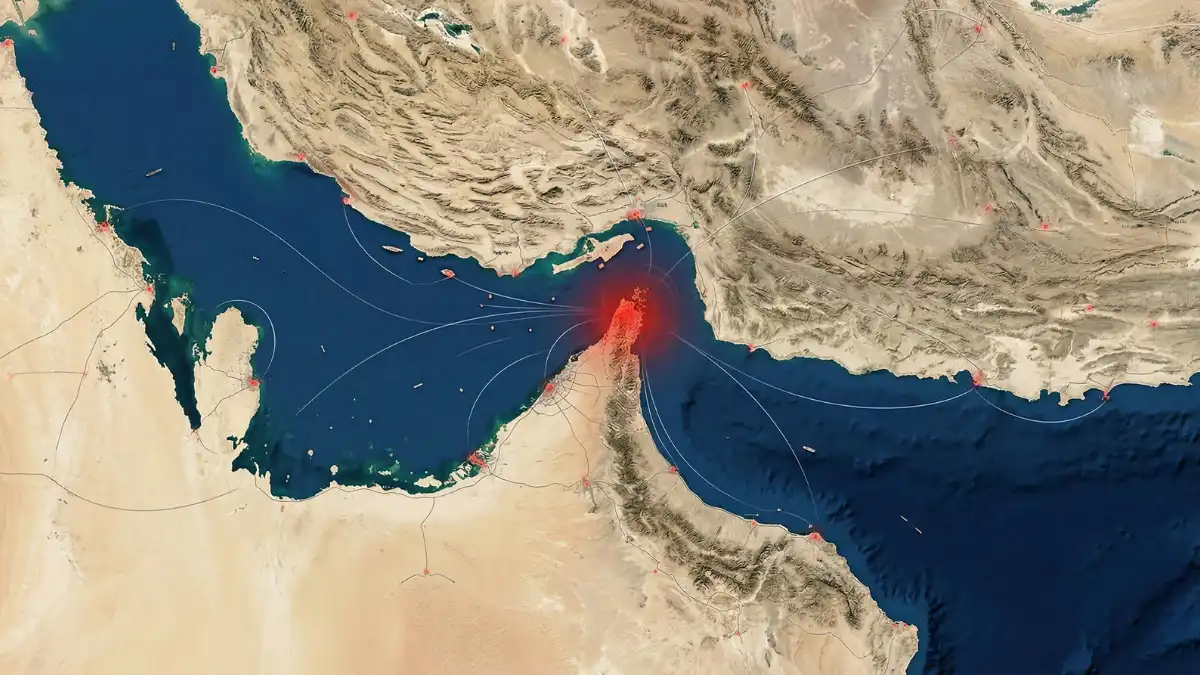
The operation is part of Washington’s broader effort to weaken Iran’s ability to sustain military operations and pressure Tehran to end attacks that have disrupted shipping through the Strait of Hormuz, one of the world’s most important energy chokepoints.
What Is a Naval Blockade?
A naval blockade is a military operation in which a country’s navy prevents ships from entering or leaving another country’s ports.
Related Stories

Unlike a complete closure of an international waterway, the current US operation is focused specifically on vessels bound for or departing from Iranian ports.
Blockades are among the strongest coercive tools available short of a full-scale invasion because they can isolate an economy, cut off exports, restrict imports and reduce military resupply.
Related Stories

Commercial shipping transiting the Strait of Hormuz to other Gulf countries is, in principle, not the target of the blockade, although the conflict has significantly increased risks for all shipping in the area.
How the US Is Enforcing the Blockade
The US blockade on Iran is being executed by dozens of ships, including the USS Abraham Lincoln aircraft carrier, supported by up to 10,000 sailors and airmen.
Why Is the US Doing This?
Washington says the blockade has two objectives:
Related Stories

- Prevent Iran from earning revenue through oil exports.
- Reduce Iran’s ability to threaten international shipping through the Strait of Hormuz.
Over recent days, US forces have struck Iranian radar sites, missile launchers, drone facilities and military positions guarding the strait, while intercepting vessels attempting to reach Iranian ports.
Iran responded by attacking what it said are US military bases in the Gulf and Jordan.
Officials say the campaign is intended to restore freedom of navigation while increasing economic pressure on Tehran.
Why the Blockade Matters
Iran’s economy depends heavily on maritime trade.
Most of its crude oil exports leave through terminals on Kharg Island in the Persian Gulf.
Much of its imports—including industrial equipment, food, chemicals and manufactured goods—also arrive by sea.
If the blockade becomes more effective:
- Oil export revenues could decline sharply.
- Imports could become scarce and more expensive.
- Government finances could deteriorate.
- Inflation inside Iran could worsen.
- Military logistics may become increasingly difficult.
Analysts say sustained pressure could eventually force Tehran to reduce oil production if storage facilities become full and exports remain constrained.
Historical Examples of Naval Blockades
History shows naval blockades have often had profound economic and military consequences.
Among the best-known examples are:
- Britain’s blockade of Germany during World War I, which severely restricted imports and weakened Germany’s war effort.
- The US “quarantine” of Cuba during the 1962 Cuban Missile Crisis, which prevented Soviet military shipments and helped bring the nuclear standoff to a negotiated end.
- The “Tanker War” of the 1980s during the Iran-Iraq War, when attacks on oil tankers in the Gulf prompted US-led naval escort operations to protect commercial shipping.
Unlike those earlier cases, the current campaign combines a blockade with precision airstrikes against military infrastructure supporting Iran’s operations around the Strait of Hormuz.
What Has Happened So Far?
According to US Central Command, American forces recently disabled an unladen tanker attempting to reach an Iranian port after repeated warnings were ignored.
Two additional vessels reportedly reversed course before reaching Iranian waters.
The interdictions came alongside another wave of US strikes targeting Iranian military positions on islands and along the Strait of Hormuz, including radar systems and missile sites used to threaten commercial shipping.
Can Iran Break the Blockade?
Possibly—but not easily.
Iran still possesses:
- Fast attack boats operated by the Islamic Revolutionary Guard Corps.
- Anti-ship missiles.
- Naval mines.
- Armed drones.
- Coastal missile batteries.
- The ability to use AIS “dark mode” or “spoofing” so its oil-laden vessels appear to be sailing from Iraq.
These capabilities allow Tehran to threaten shipping and complicate US naval operations, but they are increasingly being targeted by American airstrikes.
Military analysts say enforcing a blockade over a prolonged period would require continuous surveillance, naval patrols and air support, making it costly for Washington as well.
What Could Happen Next?
1. Economic Pressure Intensifies
If more ships avoid Iranian ports, Tehran’s oil exports and imports could continue to shrink, increasing pressure on the government.
2. Military Escalation
President Donald Trump has publicly discussed broader military options, including strikes on Kharg Island—Iran’s main oil export terminal—and the deeply buried Pickaxe Mountain complex believed to be linked to Iran’s nuclear program.
Such operations would represent a major escalation.
3. Iranian Retaliation
Iran could respond by targeting US forces, Gulf allies or commercial shipping, potentially widening the conflict across the region.
4. Diplomatic Breakthrough
Despite increasingly aggressive rhetoric, US officials continue to say military pressure is intended to bring Iran back to negotiations over its nuclear program and regional security, leaving open the possibility that diplomacy could still interrupt further escalation.
Why the World Is Watching
The Strait of Hormuz carries roughly one-fifth of the world’s oil consumption and a significant share of global liquefied natural gas exports. Any prolonged disruption affects energy prices, insurance costs, shipping routes and inflation worldwide.
While the blockade is aimed at Iran’s ports rather than closing the strait entirely, every new interception or military strike increases the risk that the confrontation could spill into a broader regional conflict with global economic consequences.
Also Read: Trump Threatens Iran: US Warns of Strikes on Power Plants and Bridges if Talks Fail