
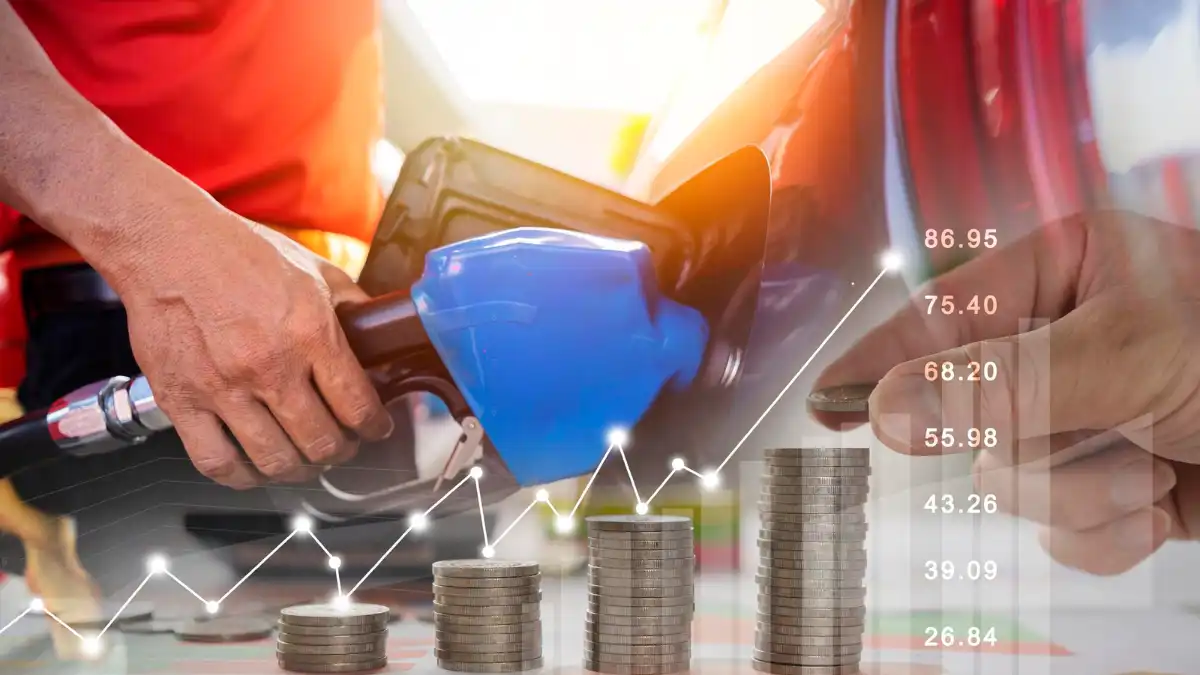
July gave drivers one month of breathing room. August took it back. The UAE Fuel Price Committee announced new UAE fuel prices on July 31, effective from August 1, 2026, with increases across all fuel grades.
However, the relief that arrived in July, the first price drop in five months, lasted exactly 31 days. Now UAE fuel prices are climbing again, and the reasons are directly linked to the same regional conflict that drove them up in the first place.

What You Will Pay at the Pump in August
The numbers are simple. The price of super 98 petrol has risen to AED 3.60 per litre from AED 3.40 in July. The price of Special 95 climbed from AED 3.29 per litre to AED 3.49 per litre. E-Plus 91 moves to AED 3.41 per litre from AED 3.21. Moreover, authorities increased the diesel price to AED 3.80 per litre from AED 3.60.
The rise in percentages for Super 98 is 5.88 percent, Special 95 is 6.08 percent, E-Plus 91 is 6.23 percent and diesel is 5.56 percent. E-Plus 91 has the highest percentage increase. Standard cars, commercial vehicles, and fleets use this grade most frequently. This will therefore be most noticeable to the largest number of drivers, the everyday kind.
Why July Was Different
To understand August, you need July’s context first. Fuel prices in the UAE dipped in July for the first time in five months, after the US and Iran agreed to a ceasefire and crude oil erased all of its wartime gains in the first week of the month. The relief was sharp. The July cuts reduced prices by 14.6 percent for E-Plus 91, 14.1 percent for Special 95, 13.9 percent for Super 98, and 16.9 percent for diesel. For most drivers, that translated to a noticeably lighter fuel bill after months of consecutive increases since the Iran conflict began on February 28.
The UAE ties its fuel prices directly to global oil markets. The UAE Cabinet deregulated petrol and diesel prices in 2015, linking retail fuel tariffs to global markets through a monthly committee review. When global oil moves, UAE pump prices follow next month. July’s relief existed because oil fell. August’s increase exists because oil climbed again.
Why Oil Moved Again
The answer sits in the same regional tensions that drove prices up earlier in the year. The US-Iran conflict flared up again on July 29. Oil prices surged when US President Donald Trump threatened to hit Iran very hard after an Iranian missile attack on July 28 on a US base in Jordan. Markets do not wait for events to be confirmed. They move on probability. The moment those strikes and threats circulated, crude prices repriced higher, and that movement is now visible in August’s petrol prices in the UAE.
The Bigger Picture: Where Prices Stand
Even with July’s drop and August’s partial reversal, UAE fuel prices remain significantly elevated compared to the start of the year. In February 2026, E-Plus 91 was priced at AED 2.26 per litre, Special 95 at AED 2.33, Super 98 at AED 2.45, and diesel at AED 2.52.
Compared with February, July prices were still up 42 percent for E-Plus 91, 41.2 percent for Special 95, 38.8 percent for Super 98, and 42.9 percent for diesel. August’s increases push those year-on-year gaps wider again.
The war-time peak bears testimony to this in a stark way. In June 2026, Super 98 cost AED 3.95 per litre. That’s less than that, but still August 2026 has a tremendous gap from February 2026. The ceasefire gave markets hope. The July 29 missile exchange reminded them the situation is fragile.
What This Means for Residents
Prices for petrol in the UAE are crucial to track because they can significantly affect household finances for most families, which typically require a monthly budget for transportation. Even small price increases can matter over time. The cost of gasoline can bite into your wallet gradually.
August’s increase adds AED 10 per full tank for the average driver filling a 50-litre tank with E-Plus 91. Compared with July, the rise remains AED 10 per tank. Over a month of weekly fills, that is AED 40 more. For households running two cars or commercial operators managing fleets, the difference scales considerably further.
There is no public mechanism to opt out of the monthly adjustment. Moreover, the UAE fuel prices system reflects global markets, and residents move with them. For now, the pump price is tied to what happens next between Washington and Tehran. That is not a comfortable place for a household budget to be.
Read More: Oil Volatility Keeps UAE Fuel Prices on Edge