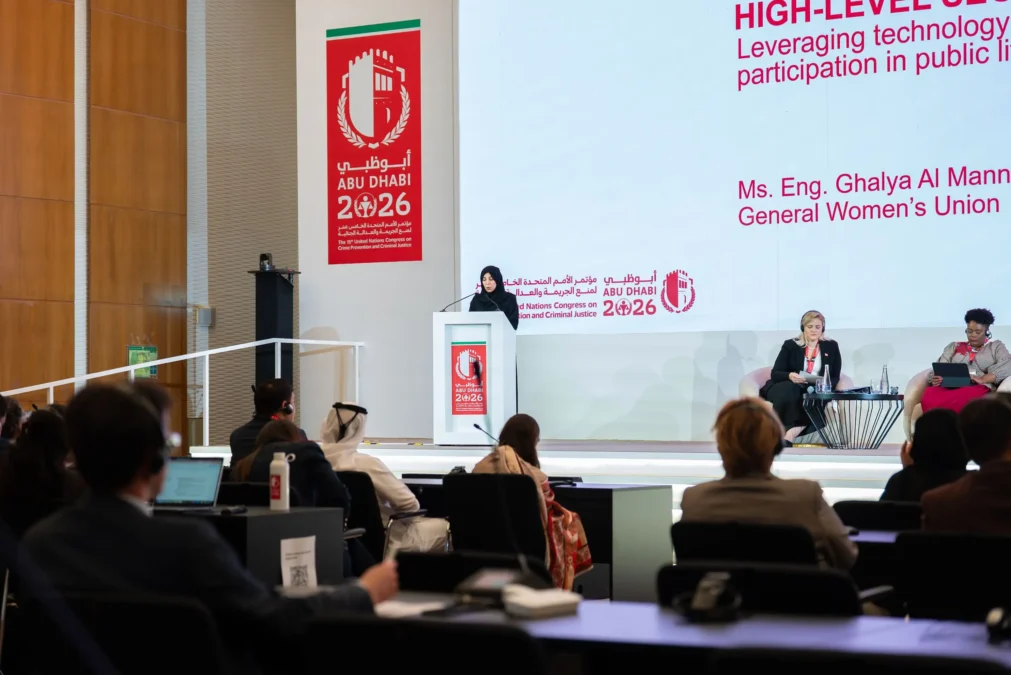
Under the patronage of Sheikha Fatima bint Mubarak, the UAE launched the SAFE-T Initiative at the UN Crime Congress in Abu Dhabi, bringing together legislation, digital literacy and international cooperation in one unified global framework.
Abu Dhabi, September 29, 2026: One number tells the story before the words even begin. Six out of every ten women who use the internet across Arab States have faced some form of digital violence, according to data from the UNDP (United Nations Development Programme). Not occasionally. Not in extreme cases. Routinely.
The abuse arrives as threats in comment sections, blackmail sent through private messages, coordinated defamation campaigns designed to embarrass women into silence and harassment so sustained that the only escape is disappearance, from platforms, from conversations, from visibility itself. Nobody punches a woman through a screen. But the damage lands all the same.
The UAE decided yesterday that treating this as an individual problem requiring individual solutions was no longer an acceptable position. The country launched SAFE-T, a global initiative built to take on technology-driven violence against women at the scale the problem actually demands.
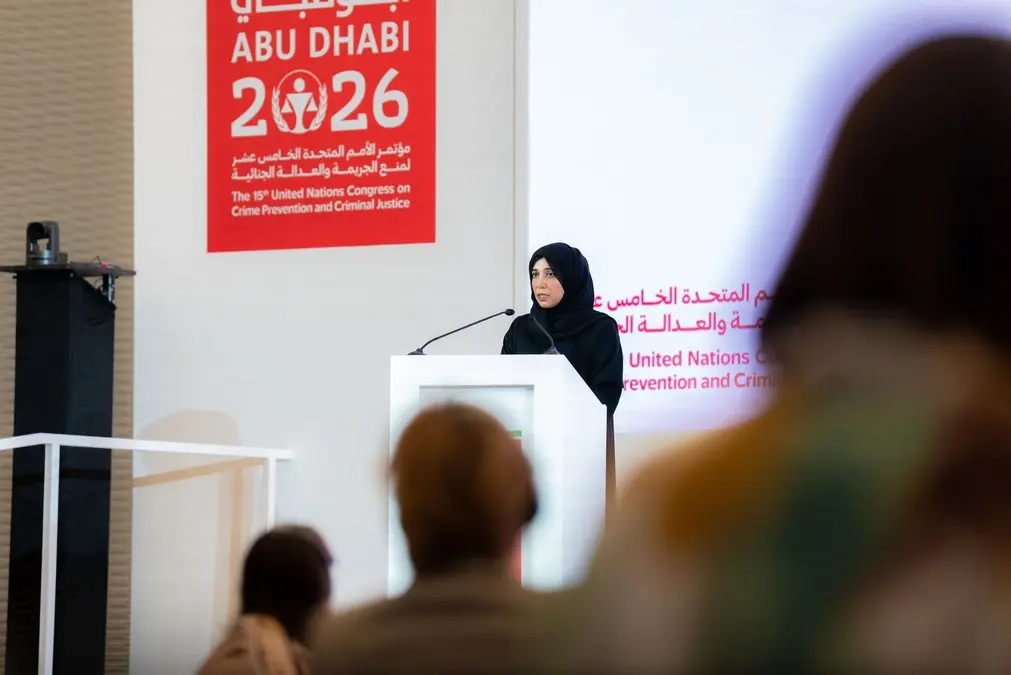
The launch happened in Abu Dhabi during the 15th United Nations Congress on Crime Prevention and Criminal Justice, under the patronage of Her Highness Sheikha Fatima bint Mubarak, Chairwoman of the General Women’s Union and President of the Supreme Council for Motherhood and Childhood. The strategic partnership driving the initiative brings together the General Women’s Union, the UAE Ministry of Justice and the United Nations Office on Drugs and Crime. As of last year, 117 countries had acknowledged this crisis in some form. Most responses remained scattered, underfunded and disconnected from each other. SAFE-T exists to change that architecture entirely.
The Quiet Erasure Nobody Talks About Loudly Enough
What makes digital violence against women particularly insidious is not its intensity on any given day. It is what it does over time.
A woman builds a platform, finds her audience, starts speaking publicly about her work or her expertise. Then the messages start. They are rarely about her ideas. They are almost always about her presence, her appearance, her right to occupy space. Some women fight back. Most do not. The mathematics of it are simple and brutal: speaking costs more than staying quiet.
Sheikha Fatima named this dynamic with unusual directness. She said digital abuse, including threats, blackmail and coordinated defamation, actively prevents women from expressing themselves, from taking professional initiative and from participating fully in public life. The consequences, she argued, stretch well beyond any single woman’s experience. When women pull back from digital spaces, economies lose contributors, communities lose voices and leadership pipelines lose talent that never got the chance to develop.
Framing online safety this way transforms the conversation. It moves it away from discussions about individual hurt feelings and into territory that governments and international institutions understand very clearly: lost productivity, stunted economic participation and measurable social cost.
What SAFE-T Actually Does?
The initiative’s first phase focuses on building foundational infrastructure through three instruments: a digital safety toolkit, a Global Coalition for Digital Safety and the UN Women Strategy on Preventing and Eliminating Technology-Facilitated Violence Against Women and Girls.
At the core of its operational framework is a model called UPSTANDER, built around nine interconnected strategies. These cover bridging the digital divide, building effective cross-sector partnerships, providing support to victims and survivors, holding the technology sector accountable through transparency and oversight, zero tolerance for digital abuse, strengthening law enforcement capacity, building digital literacy, and standardising how data on digital violence is collected and reported globally.
That last point is more significant than it sounds. One of the reasons policy responses to digital violence remain fragmented globally is that countries measure the problem differently, or do not measure it at all. Standardised data collection is the foundation on which evidence-based prevention is built.
The UAE’s Track Record Makes This Credible
It is worth noting that the UAE is not launching this initiative from a position of theory. The Cyber Pulse Initiative for Women and Family, developed by the General Women’s Union in cooperation with the UAE Cyber Security Council, has already demonstrated what a nationally coordinated approach to women’s digital safety looks like in practice. Its success led directly to the creation of the international Cyber Pulse Academy for Women and Family, which has already begun transferring knowledge and expertise beyond the UAE’s borders.
SAFE-T builds on that foundation. It takes a model that worked domestically and scales it through the most significant multilateral frameworks available.
Noura Khalifa Al Suwaidi, Secretary-General of the General Women’s Union, put it directly. The organisation seeks to establish a safe and equitable digital environment in which every woman and girl can contribute effectively and confidently to sustainable development and human progress.
The response from those working at the ground level has been immediate. Natasha Hatherall-Shawe, founder of That Group, a network of online communities for women across the GCC, described the initiative as necessary and essential rather than simply well-intentioned. Having spent years managing online spaces for women, she said she had witnessed first-hand how digital abuse causes women to go quiet, post less and step back from visibility. “We lose her,” she said. “And the community loses her voice.”
Women Must Shape the Digital World, Not Shrink From It
The most significant line from yesterday’s launch was not a policy announcement. It was a reframing.
We do not view women merely as beneficiaries of digital transformation, but as partners in leading it and shaping its future, and as a source of innovation, solutions and the building of societies that are better able to adapt to change.”
That distinction, between women as recipients of technology’s benefits and women as architects of its direction, is the philosophical foundation on which SAFE-T rests. The initiative is not designed to protect women from the digital world. It is designed to make the digital world safe enough for women to lead in it.