
New government limits on salt, sugar and fat in everyday food. A global food security summit in Abu Dhabi. And a country confronting a public health challenge that wealth and ambition alone cannot solve.
Three in every ten adults in the UAE are obese. Not overweight — obese. According to a study conducted by the Ministry of Health and Prevention, the obesity rate among adults reached 27.8 percent nationwide, with 30.6 percent of women and 25.1 percent of men classified as obese. In Dubai specifically, despite the city’s strong wellness culture and thriving fitness industry, adult obesity sits at 22.2 percent.

These are not statistics about a distant or poorly resourced country struggling to feed its population. This is a wealthy, modern nation with world-class hospitals, abundant food supply and a government that spends significantly on public health. The UAE’s obesity challenge is not a problem of access. It is a problem of what people are eating, and increasingly, of what food manufacturers have been allowed to put in it.
That last part changed this week.
The Rule Behind Your Next Snack
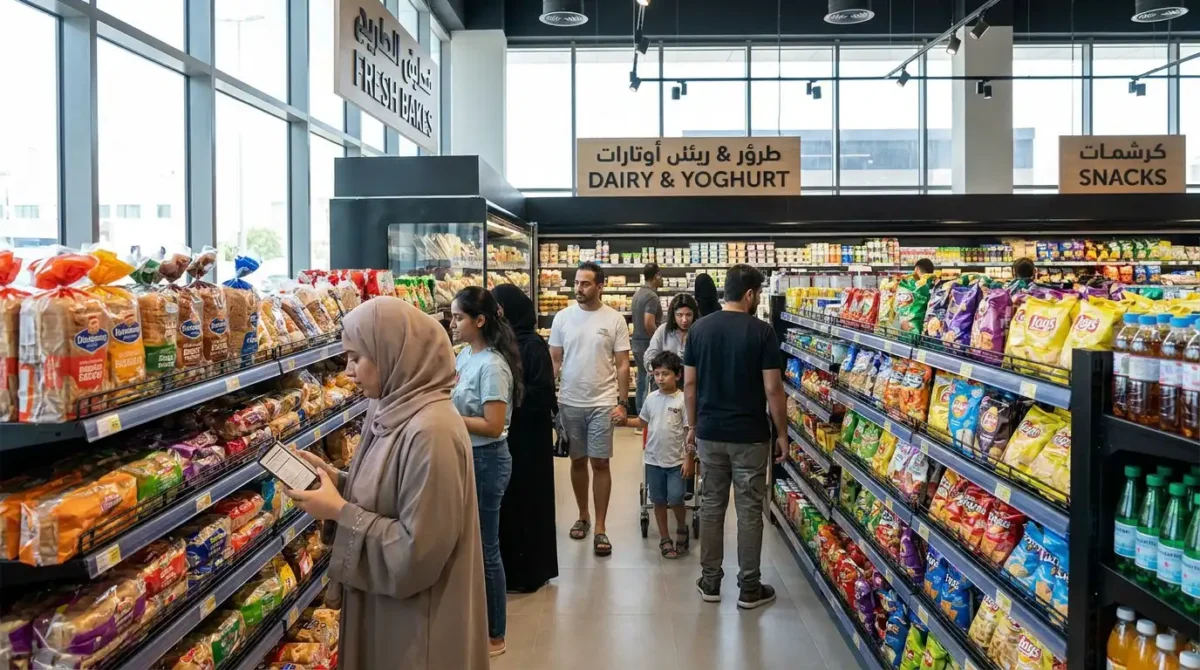
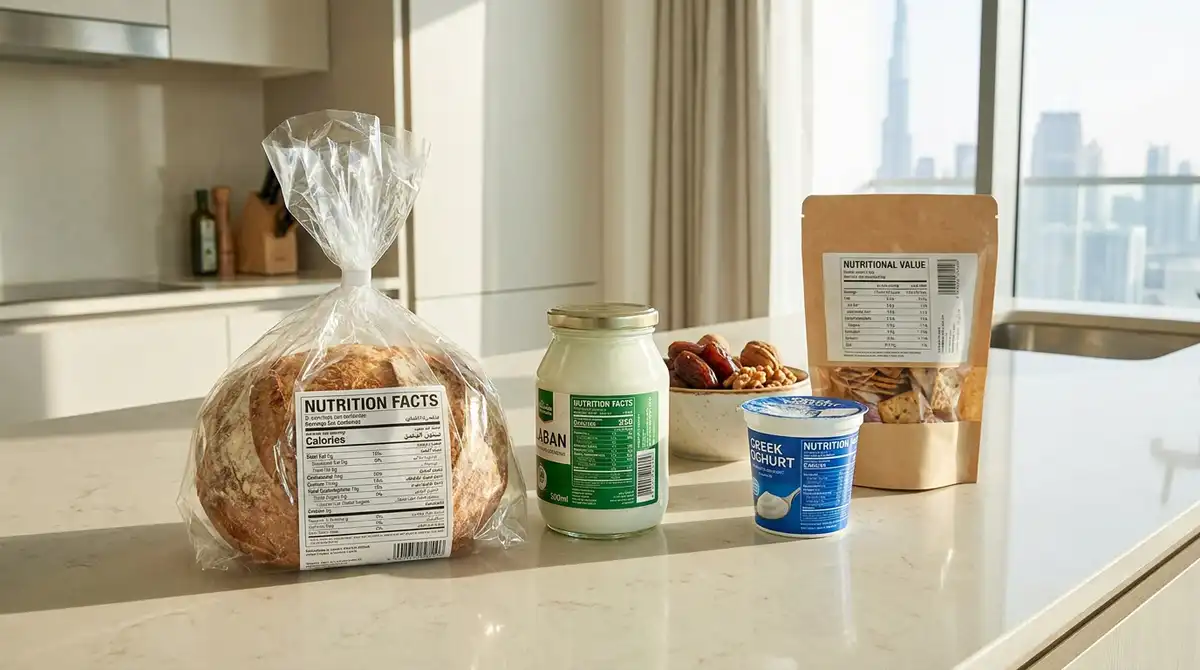
On October 6th, the Ministry of Health and Prevention announced the implementation of a new resolution capping sodium, sugar and fat in selected packaged foods sold across the UAE. The products covered include leavened and flat bread, sweetened milk drinks, flavoured yoghurt and laban, salty snacks, processed cheese and their variants. The rules apply to locally manufactured and imported products alike, including those handled by companies operating in free zones.
The approach is phased, which is the sensible way to do it. Food manufacturers are not being told to reformulate everything overnight. They have been given structured timelines, with first-phase limits that must be met within nine months for most products, and final limits that all targeted products must achieve by December 31st, 2030. To ensure a smooth market transition, products manufactured or imported before the resolution takes effect will be granted a transition period of up to one year, or until their expiration date, to clear store shelves.
The numbers behind those limits are specific and meaningful:
- Leavened Bread: Sodium must drop from a first-phase cap of 444mg per 100g to 370mg in the final phase, total sugar falls from 6g to 5g, and fat reduces from 8.4g to 7g.
- Pretzels: Sodium limits fall from 912mg per 100g to 760mg in the final phase.
- Chips & Extruded Snacks: For potato, vegetable, and grain-based snacks, the sodium cap drops from 564mg per 100g to 470mg.
- Processed Cheese: Reductions are even steeper, with spreadable versions capped at 720mg sodium and other processed variants moving from 1,200mg down to 1,000mg.
Anyone who thinks those numbers are small should consider that most people eat multiple servings of these products every day. A slightly saltier cracker multiplied across three daily snacks, multiplied across 365 days, multiplied across millions of residents adds up to a population consuming meaningfully more sodium than its cardiovascular system can comfortably handle.
Companies that fail to comply face warnings and fines ranging from Dh5,000 to Dh500,000. Establishments can also be closed for up to six months, with licences or commercial approvals cancelled in serious cases. The resolution is not a recommendation. It has penalties with real teeth.
The Bigger Cost of Obesity
A 2026 study commissioned by Lilly in collaboration with the UAE Ministry of Economy and Tourism, conducted by Whiteshield, estimated that accelerated obesity intervention could add $51 billion to the UAE economy by 2031 while saving around $1.5 billion in direct healthcare costs. The research also projected that an aggressive intervention scenario could transition more than 1.2 million adults out of obesity by 2031.
Fadi Fara, CEO of Whiteshield, highlighted the economic reality driving these reforms, noting that effective obesity treatment policies are not only good health policies but also sound economic policies.
Changing the Environment, Not Just the Advice
That framing is important. The UAE government has not been treating obesity purely as a personal responsibility problem for some years now. It has been treating it as a structural one, which means addressing the food environment itself rather than simply telling people to make better choices in a marketplace full of foods engineered to make that difficult.
The Ministry of Health and Prevention has been working with the World Health Organisation on its National Programme to Combat Obesity. It collaborated with the WHO Regional Office for the Eastern Mediterranean on specialised workshops covering health-promoting schools and effective health communication for managing childhood obesity, both falling under the ministry’s Comprehensive School Health project aimed at embedding health education into school life.
Abu Dhabi launched its Healthy Living Strategy in November 2025, providing Emirati adults identified as overweight or obese with personalised health plans combining early screening, behavioural support, clinical interventions and long-term follow-up. Mansoor Ibrahim Al Mansoori, Chairman of the Department of Health, encapsulated the core philosophy behind this approach: “Health begins long before we step into a doctor’s clinic.”
The strategy is built around the understanding that obesity is a complex chronic condition rather than a simple matter of willpower. The sodium and sugar limits announced this week sit within this broader architecture of policy. They work on the supply side of the food equation in the same way that awareness campaigns work on the demand side. Together they form a more complete picture of what a government serious about public health is actually doing about it.
Global Food Week and the Macro Supply Chain
While the domestic food regulation story was unfolding, Abu Dhabi was simultaneously hosting Global Food Week 2026 at ADNEC, a gathering that puts the UAE’s health ambitions in a genuinely global context.
The event, organised by ADNEC Group in strategic partnership with the Abu Dhabi Agriculture and Food Safety Authority, brings together governments, international organisations, investors, manufacturers and agricultural innovators to examine the future of food systems. The second edition of the Global Food Security Summit, running alongside the exhibition under the theme Global Collaboration for Food Security for All, drew participants from more than 70 countries, over 20 ministers and senior government officials, 80-plus speakers and 350 registered CEOs.
The conversations happening inside those rooms go well beyond what salt content in a packet of chips should be. They address the architecture of global food supply chains and who controls them, the role of technology in making agriculture more resilient and productive, the challenge of ensuring that nutritious food is not just available but affordable and accessible across all income levels, and the financing mechanisms needed to make sustainable agriculture commercially viable at scale.
One of the landmark announcements from the summit’s first day was the Tanzania-UAE Green Silk Road Initiative, a strategic partnership between Abu Dhabi National Investment and Development, the Tanzania Mercantile Exchange and Tanzanian partners, aimed at creating an integrated food security corridor connecting production, processing, storage, logistics and market access between the two countries. Tanzania’s agricultural potential, including some of the most productive land on the African continent, being connected to Gulf consumption markets through structured investment and trade is exactly the kind of systemic solution that food security conversations at the global level are increasingly converging on.
Dr AbdulHakim Elwaer of the Food and Agriculture Organisation of the United Nations, speaking at the summit, highlighted what practical food system improvement actually requires: water-efficient farming, stronger local food production systems, better cold-chain infrastructure and meaningful reductions in food loss and waste through technology and increased investment. The issues he named are simultaneously global challenges and immediate UAE priorities.
The 12th edition of the Abu Dhabi Date Palm Exhibition, running within Global Food Week, reflects a dimension of the UAE’s food story that often gets lost in discussions about international supply chains: the deep roots of the country’s own agricultural heritage. Date palms are one of the oldest cultivated food sources in the Arabian Peninsula, and the exhibition represents both a celebration of that heritage and a commercial platform for producers seeking international markets.

The Same Food Question, Seen From Two Ends
Salt limits in bread and a billion-dollar food security summit in Abu Dhabi seem, on the surface, like very different stories. They are actually the same one, told at different scales.
According to IMF data, the UAE is a country that imports approximately 80 percent of its food. It is also a country where nearly a third of the adult population is obese and where noncommunicable diseases linked to poor diet represent one of the most significant long-term burdens on the healthcare system. Both of those facts are problems of food systems, not individual choices.
Addressing them requires action at every level simultaneously: regulating what food manufacturers can put in their products, investing in domestic and international food production, building the infrastructure that moves food efficiently, and ensuring that the population has access to enough accurate information and practical support to make different choices when the environment finally allows for it.
The UAE is pursuing all of these simultaneously this week. That is not a coincidence of timing. It is what a coherent public health strategy looks like when it is actually being implemented.