RISE Summit 2026 brought global investors, sovereign funds and economic leaders together at DWTC. The conversations there matter for anyone watching where the world’s capital is heading.
There is a particular kind of room that only Dubai seems to be able to fill consistently. The kind where a former President of the European Commission sits alongside Gulf sovereign fund managers, global institutional investors and real estate developers, all trying to answer the same question: where does money go when the old certainties stop working?
Related Stories

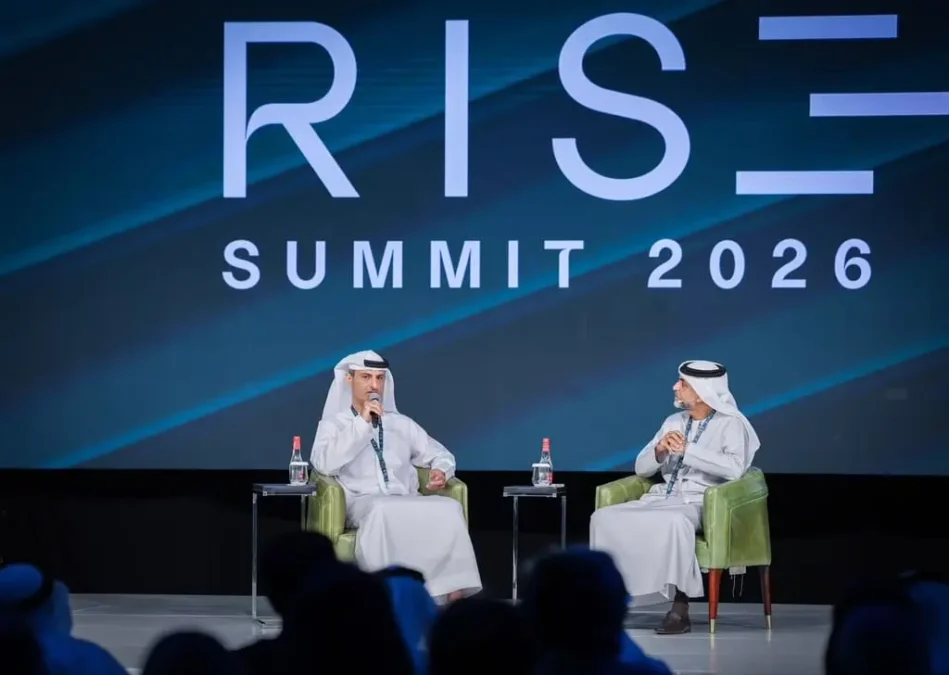
RISE Summit 2026 Dubai defined the room. The event brought together global leaders and investors in Dubai. Officials spoke about markets, policy shifts, and long-term growth. The atmosphere encouraged candid questions and practical takeaways. Participants noted shared challenges and opportunities across regions.
On October 14, over 250 international investors and leaders gathered at Dubai World Trade Centre. Moreover, they gathered under the theme Recharging Momentum in Global Economies. The day highlighted momentum in global economies and regional collaboration. Attendees exchanged ideas that could shape policy and investment strategies.
The Numbers Behind the Confidence
Before the debates began, the backdrop deserved attention on its own terms. Dubai’s non-oil private sector PMI climbed to 54.5 in September 2026. It was the strongest reading of the year and signals genuine momentum. The data shows momentum, not just a recovery from a low base.
Related Stories
UAE non-oil foreign trade reached AED1.937 trillion in the first half of 2026, up 13.1 percent year on year. The Dubai International Financial Centre surpassed 10,000 active registered companies for the first time in H1 2026, reaching 10,018. It marked a 30 percent increase year on year. Analysts note this aligns with the RISE Summit 2026 Dubai.
These are not vanity statistics assembled for a press release. They are the operating conditions that make Dubai a credible host for a conversation about global capital allocation. Countries do not get to convene the world’s investment community to discuss where money should go unless they have demonstrated, repeatedly and verifiably, that they know something useful about the answer.
Related Stories

The Great Capital Shift and Why Dubai Sits at Its Centre
José Manuel Barroso, Chairman of International Advisors at Goldman Sachs and former President of the European Commission, opened the Global Leaders Series with what amounted to a very calm description of a very dramatic situation.
The world, he said, is experiencing something that goes beyond the geopolitical tensions dominating headlines. It is a simultaneous scientific, technological and economic revolution, and the way capital gets allocated in response to that combination is going to change more in the next decade than it has in the previous three. His advice to long-term investors was practical and pointed. Do not pay any price for growth. Keep liquidity. Above all, diversify, geographically and across sectors.
On the United States, Barroso was balanced. The US will remain the centre of the global economy by virtue of the dollar’s dominance, its innovation ecosystem and its geopolitical weight. But global investors, he noted, will not want exposure concentrated there, which creates precisely the diversification opportunity that the Gulf has been quietly and wisely positioning itself to capture. “The Gulf has been wise in keeping its options open,” he said, “using its centrality to play an articulation role between new destinations for investment.”
Related Stories

That articulation role is not accidental. It has been built through years of strategic neutrality, infrastructure investment, visa liberalisation, financial market development and the deliberate cultivation of a reputation as a place where capital from East and West can meet without friction.
What Happens When the AI Boom Runs Out of Steam
Ludovic Subran, Group Chief Investment Officer and Chief Economist at Allianz, brought a more cautious register to the day’s discussions, and the concern he raised deserves to be taken seriously.
AI investment and data centre capital expenditure have been doing enormous amounts of heavy lifting in global economic growth statistics. Strip them out, Subran observed, and global trade is effectively in recession this year. The AI economy is not supplementing growth. In significant parts of the global economy, it is the growth.
The question this raises is uncomfortable but unavoidable. What happens when AI investment cycles inflect, as all investment cycles eventually do? What is the next driver of growth? Outside the AI economy, companies are already exercising considerable caution about future investment decisions.
The answer Subran gestured toward involves real assets, but real assets that have become considerably more complicated to define. The boundaries between real estate, infrastructure and technology are blurring, particularly in logistics and warehousing. For institutional investors building portfolios, this creates interesting opportunities but also genuine complexity. The asset class you think you are buying may not be exactly what it was five years ago.
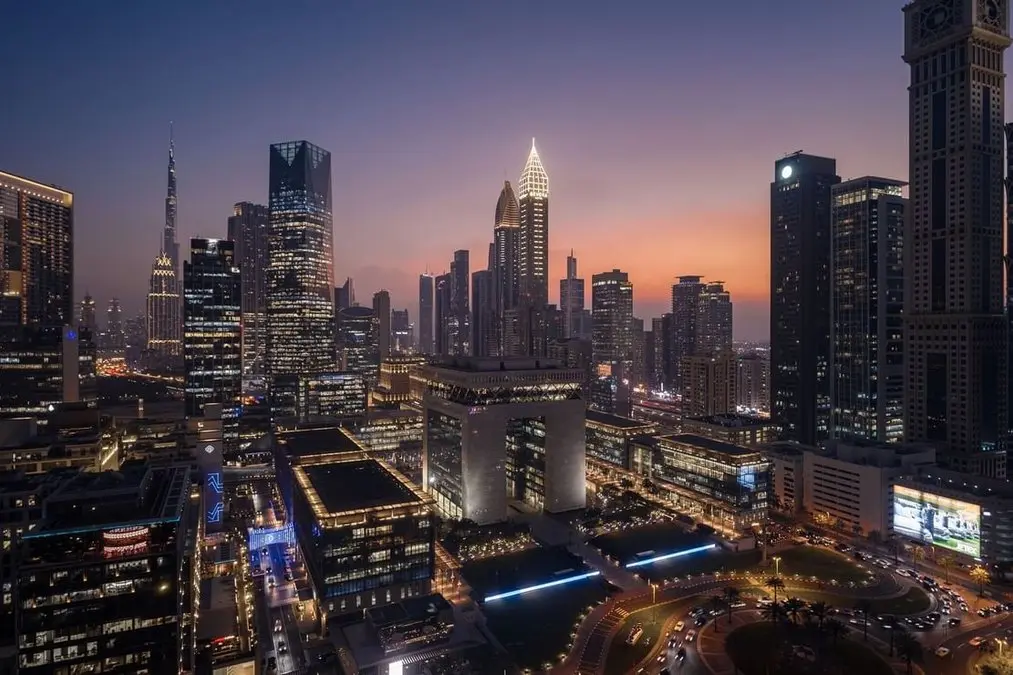
Dubai’s Development Story Within the Global One
Mohamed Alabbar, Founder and Managing Director of Emaar Properties, brought the macroeconomic conversation back to something concrete: what it actually looks like to build a city through changing market cycles with long-term conviction rather than short-term optimism.
Emaar’s trajectory is instructive here. The company built the Burj Khalifa during the aftermath of the 2008 financial crisis, a decision that seemed questionable at the time and defining in retrospect. That pattern of building through uncertainty rather than pausing for certainty has shaped Dubai’s physical landscape in ways that are now the foundation of its global attractiveness.
Issam Kazim, CEO of the Dubai Corporation for Tourism and Commerce Marketing, connected those development instincts to the D33 Economic Agenda, the framework targeting Dubai’s position among the world’s top three urban economies by 2033.
“Companies establish their regional headquarters in Dubai not simply for the four million residents here,” Kazim said, “but because of the global population and markets they can reach from Dubai.” That statement explains why Dubai keeps attracting events like RISE Summit 2026 Dubai. The city’s value proposition to international business is not primarily about its domestic market. Moreover, it centers on what that market gives you access to.
South Asia, East Africa, the broader Middle East, the Indian Ocean rim, and their trade corridors connect them.
The UAE Minister’s Promise About 2027
Abdulla bin Touq Al Marri, UAE Minister of Economy and Tourism, made a statement at RISE Summit that was deceptively simple and actually quite significant.
“When you ask about 2027,” he said, “we’re not going to come back to the same economy. We’re going to have a different economy in 2027, a more productive economy.”
A more productive economy is a specific claim. Productivity in economic terms means more output per unit of input, whether that input is labour, capital or natural resources. The UAE’s push toward AI adoption across government and private sector activity, the expansion of free zone infrastructure, the liberalisation of ownership rules, the investment in education and healthcare visible in the newly approved federal budget, all of these are bets on productivity rather than simply bets on volume.
The global investors at RISE Summit 2026 understand the distinction. They have spent careers learning that growth without productivity improvement is expensive to sustain and quick to reverse. A government that measures its ambitions in productivity rather than just GDP is one that serious long-term capital takes seriously.
Where Dubai Fits in the Bigger Picture
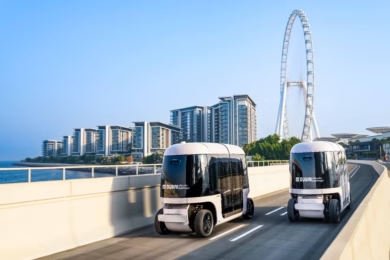
RISE Summit is not the only lens through which to view Dubai’s role in global investment conversations, but it is a revealing one. The same week that global institutional investors were gathering at DWTC to discuss capital allocation, Dubai was testing autonomous transit pods at Bluewaters, approving a Dh292.5 billion federal budget focused on education and healthcare, launching an AI agents championship through the Chamber of Digital Economy and hosting Concordia’s first Middle East event announcement.
The city is not attending the conversation about where the world is heading. It is hosting it.
For investors, policymakers and developers trying to understand where the next decade’s opportunities are being built, that pattern of accumulation, summits, infrastructure, technology, human capital investment, consistent economic data, is the most honest signal available.
RISE Summit 2026 surfaced those signals in a room full of people who know how to read them. The conclusions they reached will not all be published. But the fact that they keep coming back to Dubai to reach them says enough.