
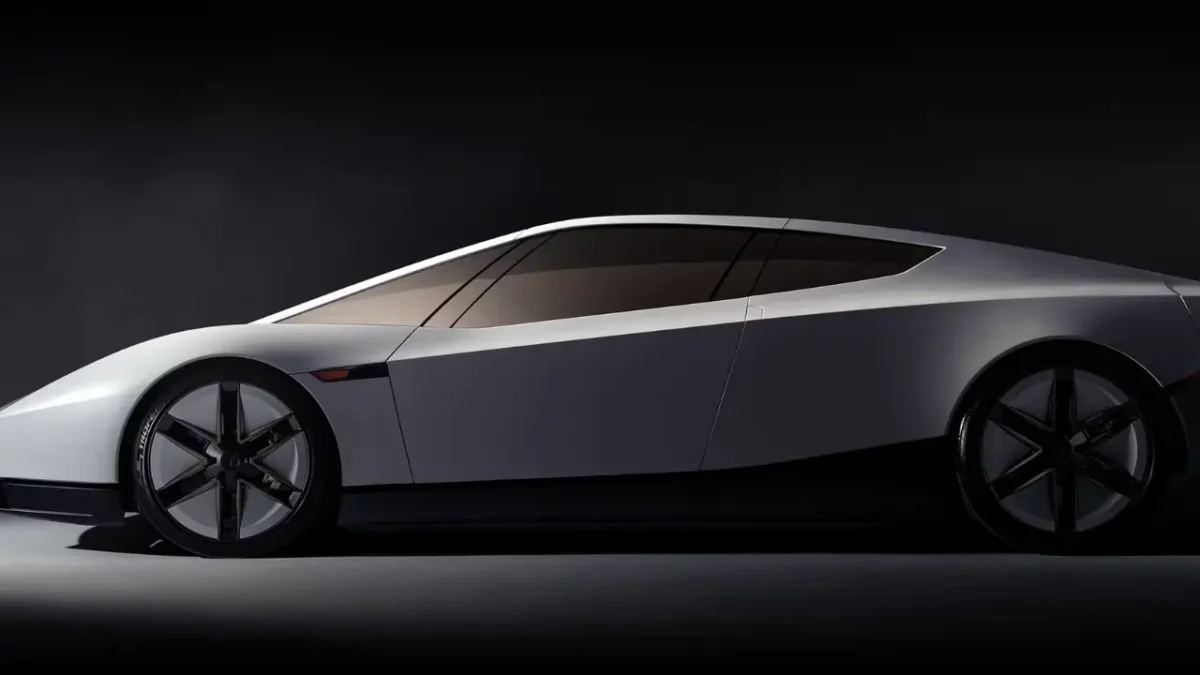
The long-awaited Tesla Roadster finally arrived, and it brought SpaceX thrusters, an upside-down stunt, and the kind of product demo that makes you question what you thought cars were allowed to do.
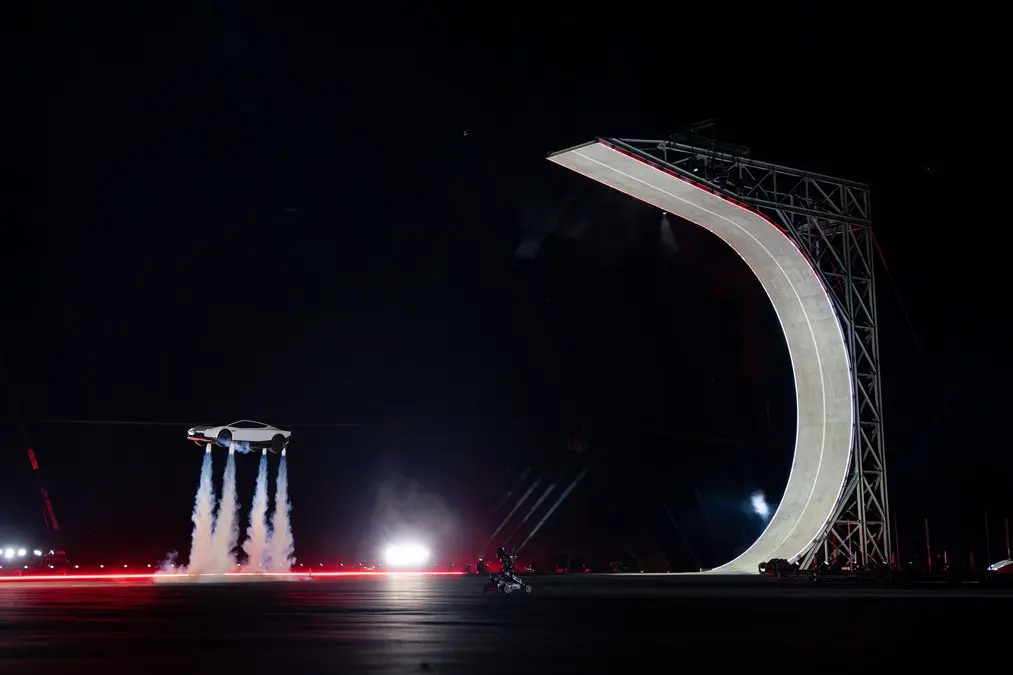
There are product launches. There are good product launches. And then there is whatever Elon Musk did on Thursday night at a SpaceX test site in McGregor, Texas, where a white two-seater electric car drove up a ramp, flipped completely upside down, kept driving, launched itself into the air, twisted mid-flight and landed using rocket thrusters.
Related Stories

“Flying cars are real,” Musk told the crowd.
Nine Years, One Very Dramatic Entrance
Tesla first teased the second-generation Roadster back in 2017. Deliveries were promised by 2020. Then 2021. Then quietly pushed aside while the company focused on Model Y volumes, Cybertruck chaos and the pivot to self-driving technology.
By the time Thursday’s reveal arrived, nine years of waiting had accumulated into an audience that was partly enthusiastic, partly skeptical and partly just curious whether the car would actually appear at all.
Related Stories

It appeared. And then it flew.
The demo version, operated remotely with no one inside, used a suction system to stick to a ramp and drive upside down. It then launched off the track, corrected itself using built-in SpaceX thrusters and landed cleanly. Later in the evening it used those same thrusters to jump over a truck and several other vehicles, rotating in the air mid-jump.
Related Stories

That was the most insane product demo I’ve ever seen,” Tesla investor Sawyer Merritt wrote on X shortly after. “I just saw this in person, and I’m still asking how this wasn’t AI.”
It was not AI. It was a car. Technically.
The Specs That Make Engineers Either Excited or Nervous
The Tesla Roadster’s headline numbers are genuinely extraordinary, with the caveat that these are company claims not yet independently verified for production models.
Zero to 60 miles per hour in under one second with the SpaceX thruster package, which is not a sentence that has ever been written about a road vehicle before. Top speed claimed at over 250 miles per hour. Range of 620 miles on a single charge on the standard version, though notably the earlier 2017 promise was 620 miles and the current demonstration version achieved around 300 miles, so some healthy scepticism around that particular figure is warranted.
Related Stories
The battery is a 200 kWh unit. The layout is all-wheel drive with three motors. The cabin seats four and has a removable glass roof. A base version, a Thrust variant with full thruster integration and a single-seat Rocket model described as invite-only have all been announced.
As for price, Tesla has not confirmed final figures. The reservation page now lists the Thrust version at a 250,000 dollar deposit required. The base Founders Series was originally quoted at 200,000 dollars back in 2017. Production is now guided for 2028.
Which means, as things stand, you can reserve a car that will cost at least 200,000 dollars, will arrive no earlier than two years from now and whose most dramatic features involve thrusters that Tesla has not confirmed will ship on production vehicles.
Why This Matters Even If You Are Not Buying One
The Tesla Roadster is not a car for most people. Morningstar projects around 2,000 annual sales, against the approximately 1.6 million vehicles Tesla sold last year. Musk himself has called it a small potato situation financially.
But halo cars have never been about volume. They are about narrative.
Tesla’s current lineup, the Model 3, Model Y, Model S and Model X, is ageing. The Cybertruck arrived years late and has faced significant criticism. Cybercab, Tesla’s robotaxi concept, has no steering wheel and no confirmed launch date. The Optimus humanoid robot is generating more investor excitement than consumer confidence.
The Roadster, whatever its commercial limitations, reminds the world that Tesla can still produce something that makes other car manufacturers look like they are playing in a different, significantly less interesting game.
Tesla does not currently have a halo car,” Morningstar analyst Seth Goldstein wrote. “The Roadster will be Tesla’s new halo car.”
Gene Munster of Deepwater Asset Management was considerably less diplomatic. “It was an engineering flex with no commercial value beyond embarrassing traditional car makers,” he posted on X.
Both assessments are probably correct. The two things are not mutually exclusive.
The SpaceX Question Nobody Wants to Ask Directly
Some observers noted that a Tesla product built so visibly around SpaceX technology, operated at a SpaceX test site, positioned as a collaboration between Musk’s two biggest companies, raises an obvious question about what Musk is building toward.
The idea of a Tesla and SpaceX merger has been floated before. Musk has discussed the overlap between the two companies publicly. A product that physically cannot be demonstrated without SpaceX’s involvement is an interesting choice for a company that officially has nothing to do with SpaceX.
Whether that is strategic positioning or incidental engineering is a question that Tesla’s October 21st quarterly results will probably not answer.
The car, however, answered the only question that mattered on Thursday night.
Can it fly? Yes. Apparently it can.