

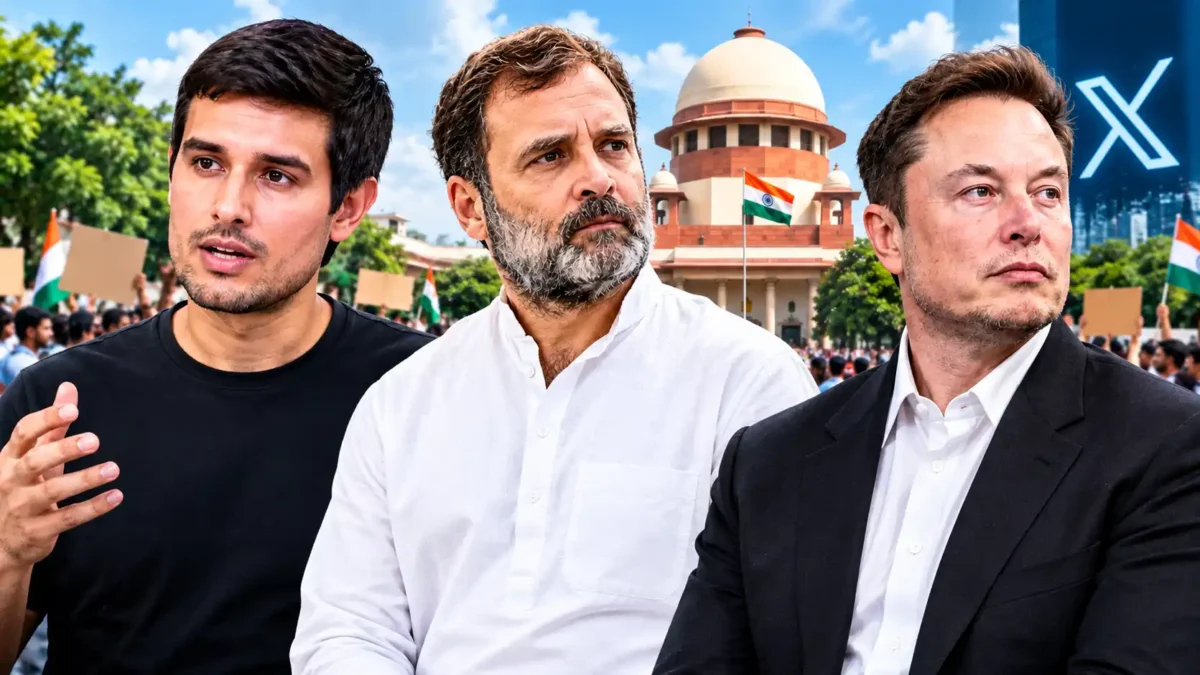
The demand for electoral accountability deserves serious scrutiny. But beyond the protests, detentions and political rhetoric, India needs clarity on what meaningful reform would actually look like.
India’s political discourse has become increasingly difficult to follow. One controversy gives way to another, hashtags become political battlegrounds, public figures join the debate, and before citizens have fully understood one issue, the next national flashpoint arrives.

The latest Cockroach Janta Party (CJP) protests, demanding the resignation of Chief Election Commissioner Gyanesh Kumar, have brought several critical questions about electoral integrity, freedom of expression and institutional accountability into focus.
The controversy has attracted YouTuber Dhruv Rathee, actor-activist Prakash Raj, opposition leaders and student organisations. It has also triggered a significant police response in Delhi, with thousands reportedly detained as authorities moved to prevent demonstrations at Jantar Mantar. The detentions have intensified the debate over the right to peaceful protest and the limits of state intervention. Reuters and The Indian Express have reported on the unfolding events.
But amid the noise, an important question deserves greater attention: what exactly do the protesters want to achieve, and what happens after the demonstrations end?
Related Stories

From education protests to electoral reform
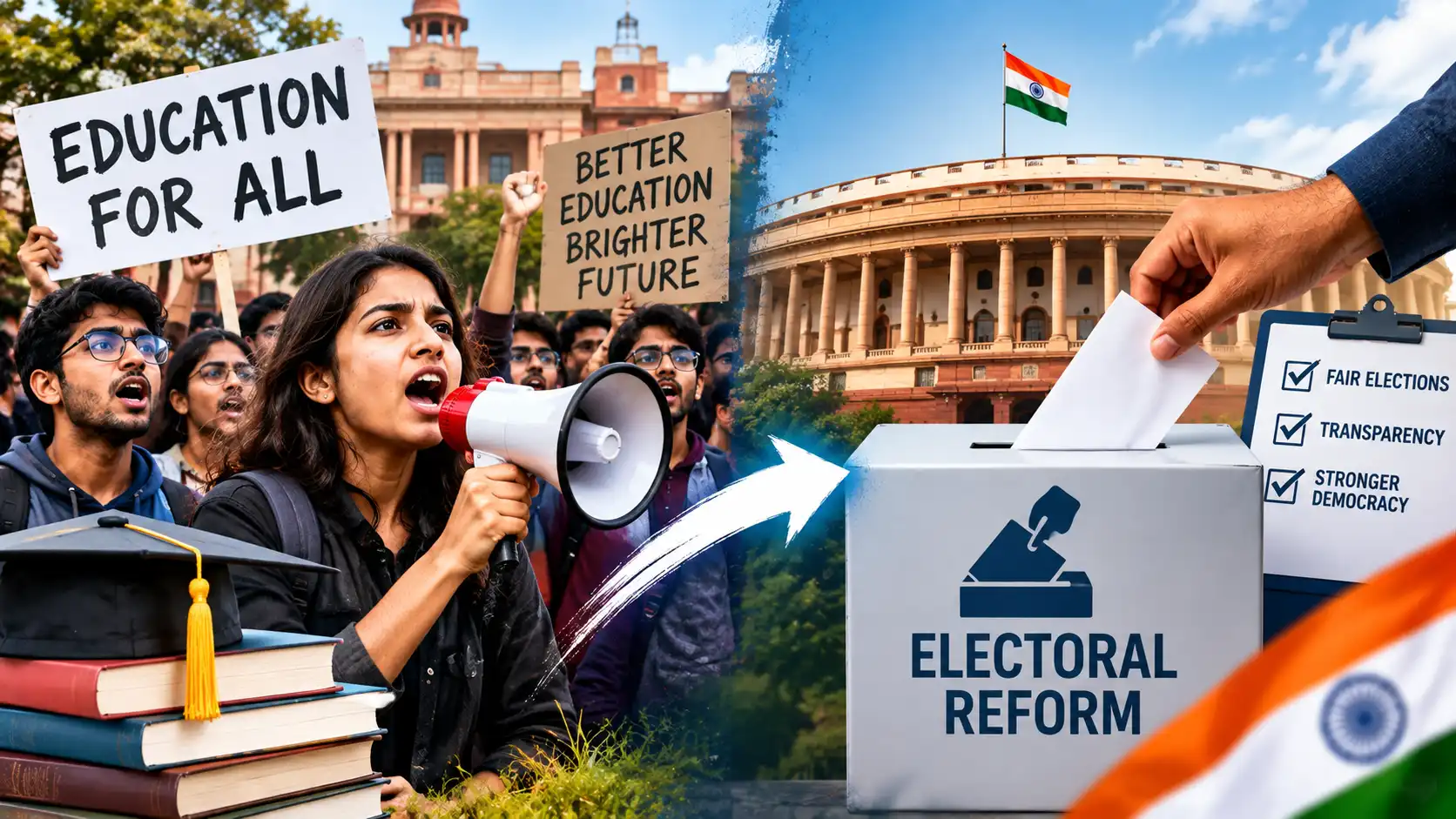
CJP first gained national attention through its campaign over examination irregularities and the controversy surrounding the NEET-UG examination. The movement made the resignation of Union Education Minister Dharmendra Pradhan a central demand. On 25 July 2026, Pradhan resigned amid the protests, after which the movement announced the withdrawal of its agitation following government assurances concerning outstanding demands, including examination reforms, compensation and cases against protesters. The Indian Express reported on the resignation.
It was a significant political development. Yet a minister’s resignation is not, by itself, proof that the underlying problems have been resolved.
The more meaningful test is whether examination systems become more transparent, accountability mechanisms improve and students are better protected from administrative failures.
That distinction is relevant to CJP’s latest campaign. The movement has shifted its focus to the Election Commission, with demands that include the resignation of Gyanesh Kumar, the rollback of the Special Intensive Revision (SIR) of electoral rolls and a return to paper ballots.
These are consequential demands. They should be debated on their merits rather than dismissed because of the political affiliations of those supporting them.
The voter-list controversy cannot be brushed aside
The SIR exercise is intended to review electoral rolls, identify duplicate or ineligible entries and ensure that voter lists are accurate. Maintaining clean electoral rolls is a legitimate administrative objective. The concern arises when the process risks excluding eligible voters or lacks sufficient transparency to establish whether errors have occurred.
Critics have alleged wrongful deletions and questioned the fairness of the verification process. The Election Commission and the government reject allegations of deliberate electoral manipulation and maintain that revisions are necessary to preserve the integrity of voter lists.
The distinction between names removed from electoral rolls and eligible voters unlawfully excluded is crucial. A reported number of deletions cannot automatically be treated as proof of disenfranchisement on the same scale.
However, even a small number of wrongful exclusions would be serious. The right to vote is fundamental to representative democracy, and every eligible citizen must have a fair opportunity to register, verify their status and challenge an incorrect deletion.
The Election Commission should therefore be able to explain the process clearly, publish credible data, provide accessible correction mechanisms and demonstrate that legitimate voters are not being unfairly excluded.
This is where the debate should begin: with evidence, transparency and remedies.
Why must the demand begin and end with a resignation?
CJP’s demand for Gyanesh Kumar’s resignation has become the headline issue. Rathee and Prakash Raj have joined protests in Bengaluru, while Rahul Gandhi has publicly backed the wider campaign.
Public figures have every right to participate in peaceful demonstrations. Their involvement can bring attention to issues that might otherwise struggle to reach a wider audience. Equally, a large following or a prominent political position does not make an allegation true by default.
The claims made by Rathee, Gandhi, Raj or any other public figure must be examined on their evidence. The same standard must apply to the government and the Election Commission.
A demand for resignation is a political position. Establishing misconduct requires evidence and due process. Moreover, the Chief Election Commissioner is a constitutional office-holder whose removal is subject to a specific constitutional process. Under Article 324(5), removal follows the same manner and grounds applicable to a Supreme Court judge.
That does not make criticism of the CEC illegitimate. It does mean that the campaign must explain what evidence supports its demands and what institutional changes it seeks.
Suppose Gyanesh Kumar resigned tomorrow. Would disputed voter lists automatically be corrected? Would eligible voters who were wrongly removed be restored? Would an independent review establish the extent and causes of any errors? Would safeguards be introduced to prevent similar problems in future?
These questions are more important than the identity of the person occupying the office.
If the central objective is electoral integrity, the reforms must be designed to outlast the individual at the centre of the controversy.
The paper ballot debate needs more than slogans
The demand to return to paper ballots is another major component of the wider protest campaign. Opponents of electronic voting have raised concerns about transparency and public confidence in the electoral process.
These concerns deserve a serious hearing. Electoral systems must be verifiable, secure and trusted by voters, regardless of which party benefits from the outcome.
But a demand to replace Electronic Voting Machines with paper ballots does not, on its own, establish that elections conducted using EVMs have been manipulated.
Nor should the alternative be exempt from scrutiny. Paper ballots bring their own practical challenges, including counting delays, invalid ballots, physical security and the possibility of malpractice.
The appropriate response is not to dismiss concerns about electronic voting, nor to assume that paper ballots would automatically eliminate electoral fraud. It is to examine the evidence, assess the safeguards available under each system and establish what changes would best protect electoral integrity.
There is also a question of political consistency. Parties that challenge the voting system while in opposition must be prepared to explain how their position differs from the arguments they made when they were in power. Electoral credibility cannot depend on which party wins.
The objective should be a system that voters across the political spectrum can trust, supported by transparent procedures and credible verification.
Detentions raise a separate question about democratic rights
The Delhi protests have expanded the controversy beyond electoral reform. Delhi Police denied permission for the proposed gathering at Jantar Mantar, and extensive security measures were imposed as demonstrators attempted to assemble at different locations.
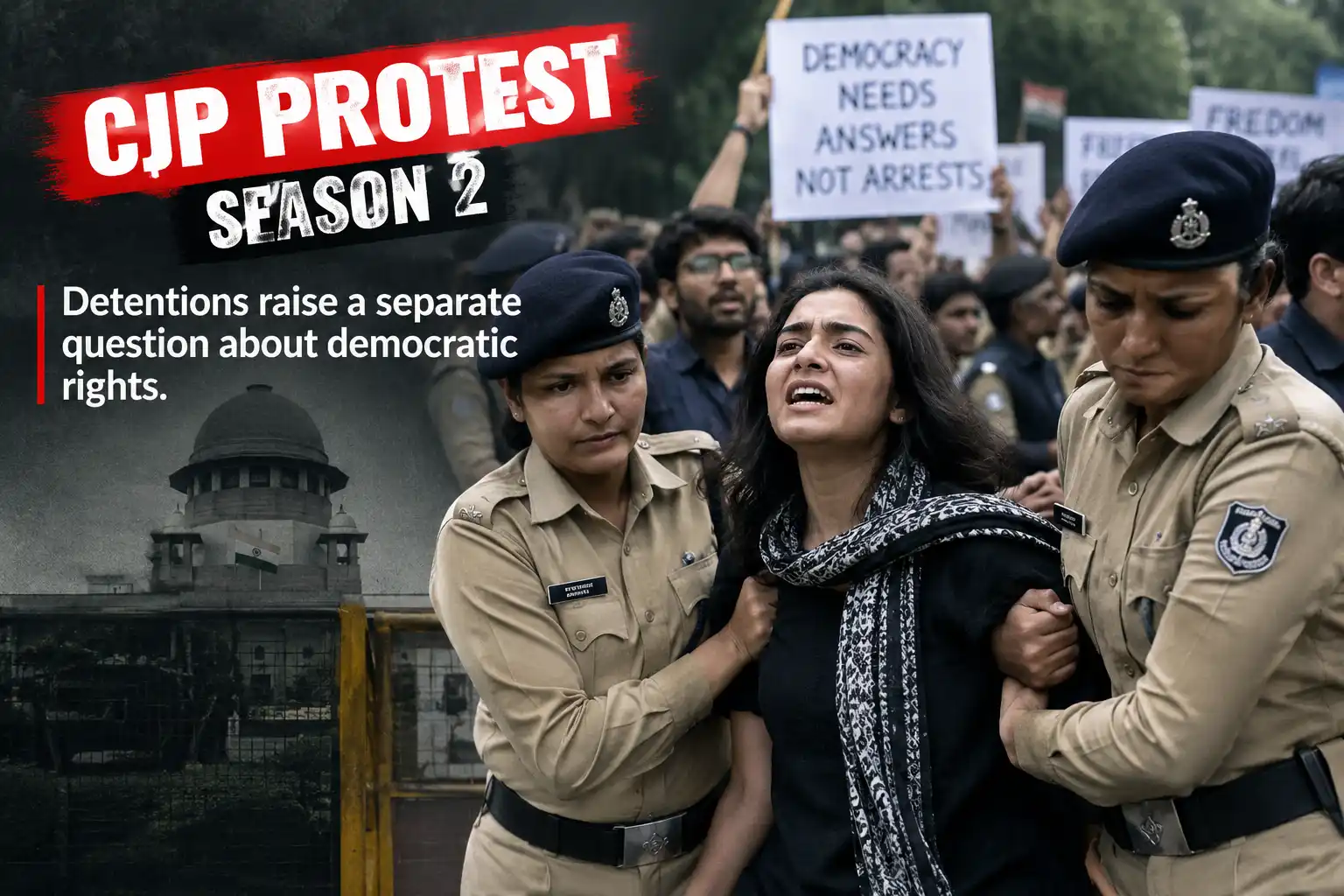
Reports of thousands of detentions have raised questions about proportionality, public order and the right to peaceful assembly. The authorities may impose lawful restrictions to maintain public order, but the existence of restrictions does not automatically settle whether every detention was necessary or proportionate.
These questions require independent legal scrutiny. If protesters have acted unlawfully, the authorities must establish the basis for their actions. If restrictions or detentions have breached legal protections, those responsible must be held accountable.
Neither the state nor a protest movement should be beyond scrutiny.
The right to protest is not a favour granted by the government. At the same time, exercising that right does not remove the obligation to comply with the law. A democracy must protect peaceful dissent while ensuring that public-order measures remain lawful and proportionate.
When political support becomes political theatre
Rahul Gandhi’s support for the protests is unsurprising. Electoral integrity is a legitimate issue for the opposition to raise, and political parties should be able to question the conduct of constitutional institutions.
But political endorsement is not evidence. The fact that an opposition leader supports a movement does not prove its allegations, just as the involvement of opposition parties does not automatically invalidate its concerns.
The danger is that a serious institutional question becomes another contest in India’s permanent election campaign. The public is left with competing slogans, dramatic accusations and political point-scoring, while the practical questions about electoral rolls and remedies receive less attention.
This is not an argument against political mobilisation. It is an argument for making mobilisation accountable to its stated objectives.
The same principle applies to public figures and online commentators. Social media can help explain complicated issues, but it can also turn suspicion into certainty and simplify difficult questions into a battle between heroes and villains. The larger the audience, the greater the responsibility to distinguish verified information from allegations and opinion.
Elon Musk, Mukesh Ambani and the temptation to connect every controversy
The debate around Elon Musk’s Starlink service and Mukesh Ambani’s Reliance Jio has also entered the wider political conversation. Musk has publicly questioned the regulatory delays affecting Starlink’s commercial launch in India, while the government has defended its approach to the satellite-internet sector.
The dispute raises legitimate questions about competition, regulatory transparency and market power. But it is a separate business and regulatory issue, and there is no verified evidence that Musk is coordinating with CJP or supporting its protests.
The overlap in timing may make the stories appear connected, but coincidence is not proof of coordination. An allegation that a competitor is influencing regulatory decisions must be supported by evidence, not merely by a provocative social-media post.
India’s regulatory processes should be transparent enough to withstand scrutiny without relying on speculation about powerful individuals.
What should success look like?
This is the central question for CJP and the wider protest movement.
A serious campaign should be able to identify its objectives, explain how they will be achieved and establish how the public can judge the outcome.
That could mean publishing comprehensive data on voter-list revisions, creating an effective appeals process for wrongly excluded voters, independently examining allegations of irregularities and introducing safeguards to prevent future errors. It could also mean a transparent public assessment of voting-system safeguards and the merits of proposed alternatives.
These are measurable outcomes. They can be examined, debated and assessed.
The resignation of an individual may be one demand, but it cannot substitute for a reform programme. Nor should the campaign’s success be measured only by the size of a rally, the number of people detained or the reach of videos circulating online.
The same accountability must apply to the government, the Election Commission, the opposition and the protest movement itself.
If there is evidence of wrongdoing, investigate it. If voters have been wrongly excluded, correct the error. If peaceful protesters have been unlawfully detained, establish responsibility. If allegations cannot be substantiated, acknowledge that too.
Accountability cannot be selective. It cannot depend on whether the person being questioned belongs to a party we support or oppose.
India’s electoral integrity is too important to be reduced to a contest of political loyalties. The right to vote, the independence of constitutional institutions and the right to peaceful protest all deserve serious protection.
The CJP protests have brought these issues into sharp focus. The challenge now is to ensure that public anger translates into credible answers and lasting reforms.
Because democracy does not become stronger simply because another person resigns or another protest trends online. It becomes stronger when institutions are transparent, citizens can exercise their rights without fear, and those who wield power — political or otherwise — are held to consistent standards.
The question is not whether India needs protests. It is whether the protests can help deliver the changes they promise.
That is the standard by which this movement, like every other, should ultimately be judged.