
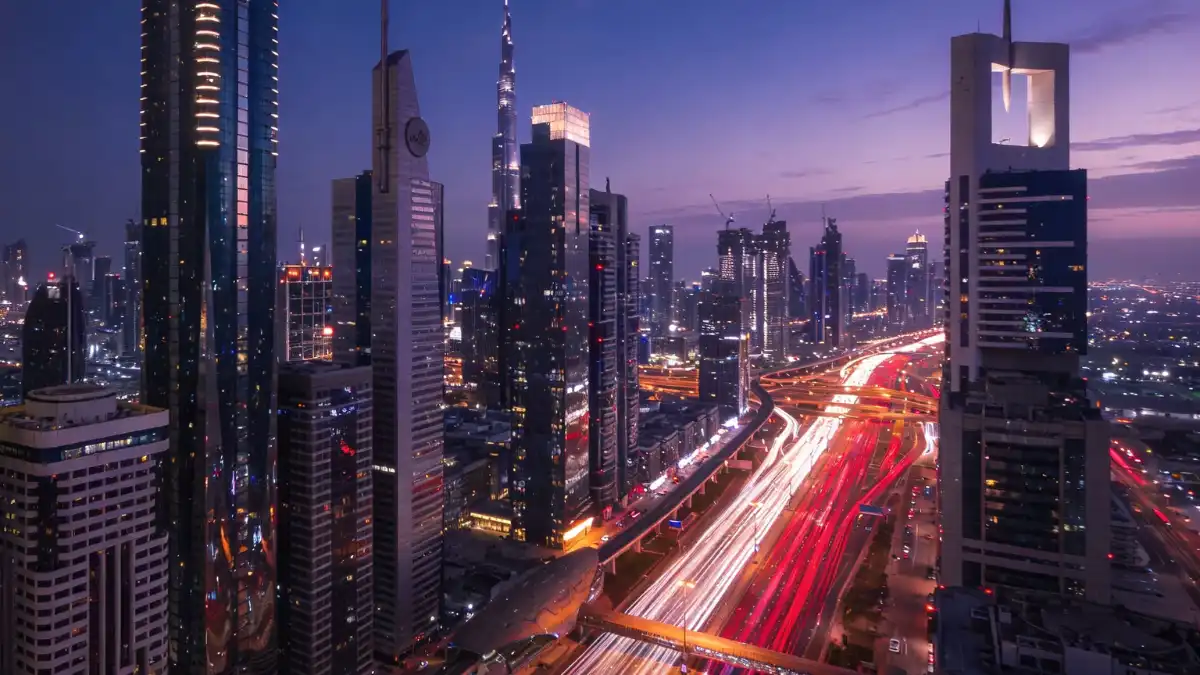
Dubai is commonly referred to as a metropolis that does not sleep. Whereas most cities unwind after midnight, the after-hours economy of Dubai goes into full swing with thousands of workers, businesses, and services operating all night long to keep Dubai running.
The Nighttime Economy
The nighttime economy in Dubai is a huge and expanding industry consisting of late-night restaurants and 24-hour supermarkets, round-the-clock delivery services, and 24-hour construction and cleaning services.
Related Stories

According to industry experts, a large percentage of the Dubai retail, hospitality, and logistics industries run operations after midnight to serve a population that works, socialises, and shops at all times. Wholesale and retail trade alone represent around 25% of Dubai’s real GDP, with a large slice of that activity happening after dark.
Who’s Keeping Dubai Awake?
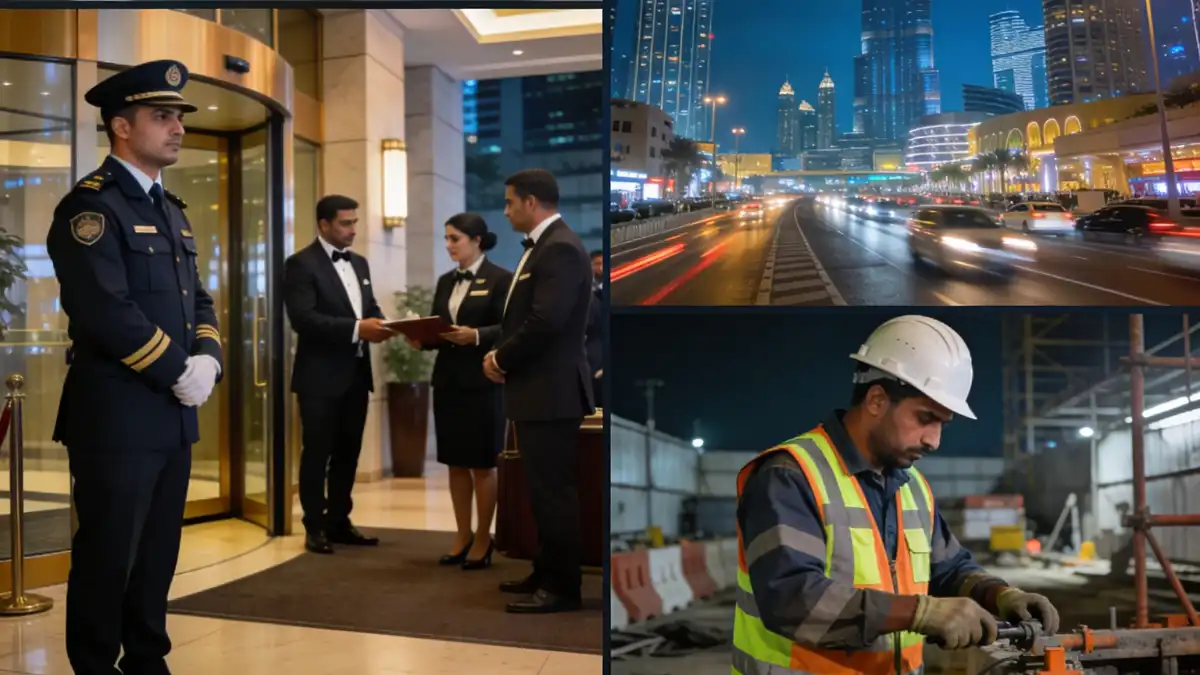
The workforce of nothing less than diversity is the after-hours workforce of the city. Some important workers who ensure Dubai operates even at night include:
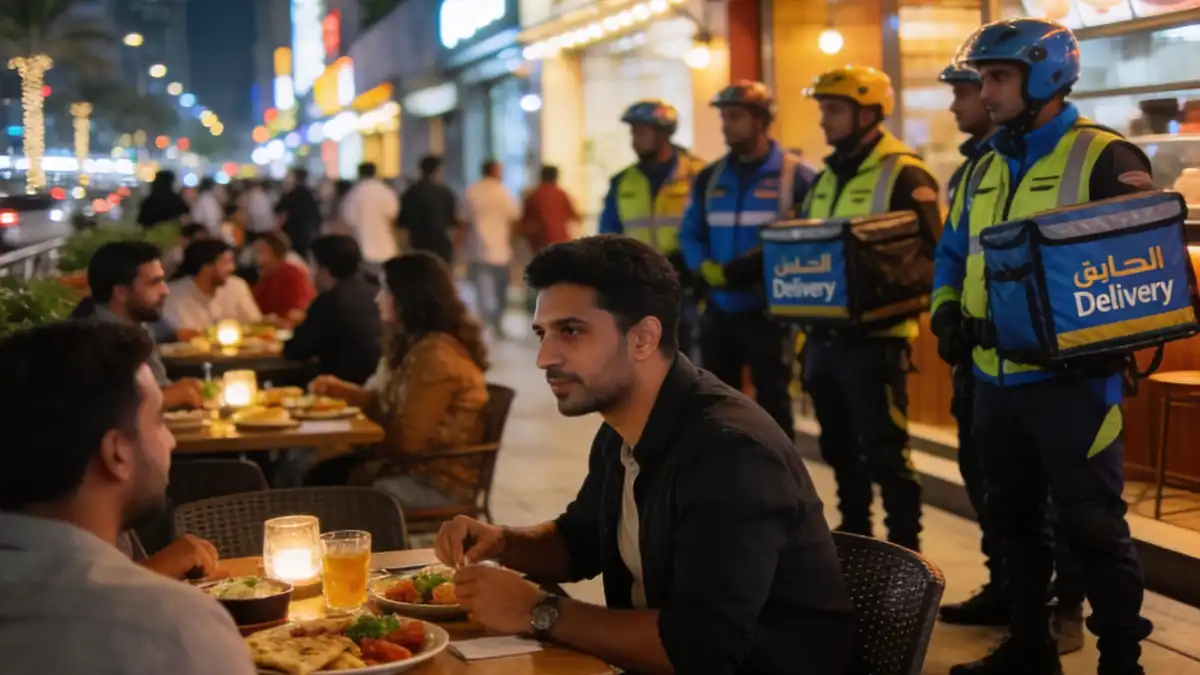
· Delivery riders
· Hotel and hospitality workers.
· Security personnel
· Emergency & medical workers
· Building and infrastructure workers
· Supermarket and retail staff
· Airport staff
A large number of these workers are shift-based employees, who alternate between working on the day shift and the night shift and form the main part of the round-the-clock operation in Dubai.
The Companies that Take off at Night
Dubai has several industries whose peak occurrences include midnight to dawn.
Food and Delivery: Late-night food delivery companies report some of the highest order volume between 11 pm and 2 am due to the large number of young, working people with irregular work schedules. More than 52% of UAE residents order food delivery several times a week, with delivery platforms recording their highest order volumes after midnight.
Retail: There is a wide variety of supermarkets and convenience stores located throughout Dubai, most of which stay open 24 hours, and the number of people visiting them remains the same as late as midnight. 32% of the UAE workforce is employed in retail, hospitality and healthcare with irregular hours, directly fuelling late-night demand.
Entertainment and Hospitality: Licensed venues, hotel lounges, and entertainment establishments all tend to have their busiest hours between 10 pm and 3 am, especially during the weekends.
Construction: The extreme heat of the day, much of the year, sends much of the construction activity to night hours, keeping a plentiful number of construction workers up at daybreak.
Economic Scale of Dubai After Dark
The nighttime economy is not only a cultural phenomenon, but also an important economic activity.
According to the Dubai Statistics Center, nearly 22% of Dubai’s economic activity now happens between 10 PM and 6 AM.
The Dubai government has been continuously promoting the expansion of the night economy by licensing, infrastructure development, and granting business extended working permits.
Problems of Running a 24-Hour City
Being available twenty-four hours a day comes with problems of its own for both the business and the workers.
Employers who operate night shifts are mainly concerned with staff retention and fatigue. Transportation can also be an issue because the frequency of public transport decreases considerably after midnight, meaning that many night-shift workers are left depending on taxis or ride-hailing applications.
Community ordinances and noise ordinances also tend to impose restrictions on some forms of nighttime activity, especially in residential neighborhoods.
What the Future Holds
The after-hours economy of Dubai doesn’t seem to be putting a stop to anything anytime soon. As part of the Expo City developments, with the increasing tourism and the growing number of young professionals, the demand for round-the-clock services is going to grow steadily up to 2026 and beyond.
Planners and business leaders of cities are also taking a closer look at how the nighttime economy can be formalised and extended to cover more areas, and at a later time.
By 2030, Dubai’s night economy is projected to double its GDP contribution, with property returns in nightlife districts rising 20–30% faster than daytime-only zones.
A City That Never Stops
The identity of Dubai as a global city cannot be separated from the fact that this city is capable of functioning at high capacity both in daytime and at night. The 2 AM city is not only a dream to the thousands of workers who continue to work there after the close of the day, but also millions of people enjoy its after-hours services.
Also Read: Dubai’s Rail Infrastructure is the New Real Estate Catalyst