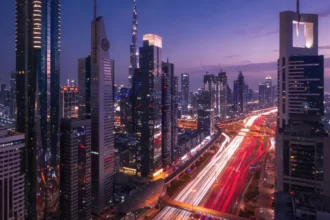
Dubai does not have a water crisis. What it has is something more complex and arguably more demanding to manage. Dubai’s water demand keeps breaking its own records, quarter after quarter, driven by a population that grew by 65,000 new utility accounts in the last twelve months alone. The issue is not if the city is running out of water. The question is, can the infrastructure that is producing, delivering and charging for water grow quickly enough to keep pace with a city that is expanding at this rate?
As yet, the answer is yes. But the complacency is becoming more and more limited and the figures in DEWA’s latest operational reports are evidence enough.
Dubai’s Water Demand: Record Highs
In February 2026, DEWA’s full-year 2025 results showed that the demand for desalinated water increased by 6.62 percent from the previous year to a record high of 161.505 billion imperial gallons. It’s the highest annual total on record. The average daily peak of Dubai’s water demand was 487 million imperial gallons compared with 455 million the year before. The city’s growth intensity can be seen in the 32 million gallons of additional demand the city experienced in one day.
The momentum has not slowed in 2026. DEWA’s Q1 2026 results, published on May 12 and sourced from the Dubai Media Office, show desalinated water production reaching a record 37.57 billion imperial gallons in the first quarter alone, a 5.51 percent increase compared to Q1 2025. Customer accounts grew by 19,803 in the quarter, with 65,086 new accounts added over the past twelve months. This annual growth of 5.08 percent is the highest rate recorded in recent years. Each new account is another household or business drawing from the same desalinated water grid. And the grid is being asked to grow at the same pace as the population.
Why Dubai Depends on Desalination
Dubai has a challenge to solve which is best understood by learning what Dubai has to work with in nature. In an average year, the average rainfall in the emirate is less than 100 millimetres. No rivers, no lakes and no major renewable freshwater reserves. Natural surface water, apart from the Dubai Creek, is extremely insignificant. Groundwater aquifers are also present in the city but are no longer adequate for a population of nearly 4 million and water from desalinated, seawater sources now constitutes 99.5 percent of Dubai’s water supply.
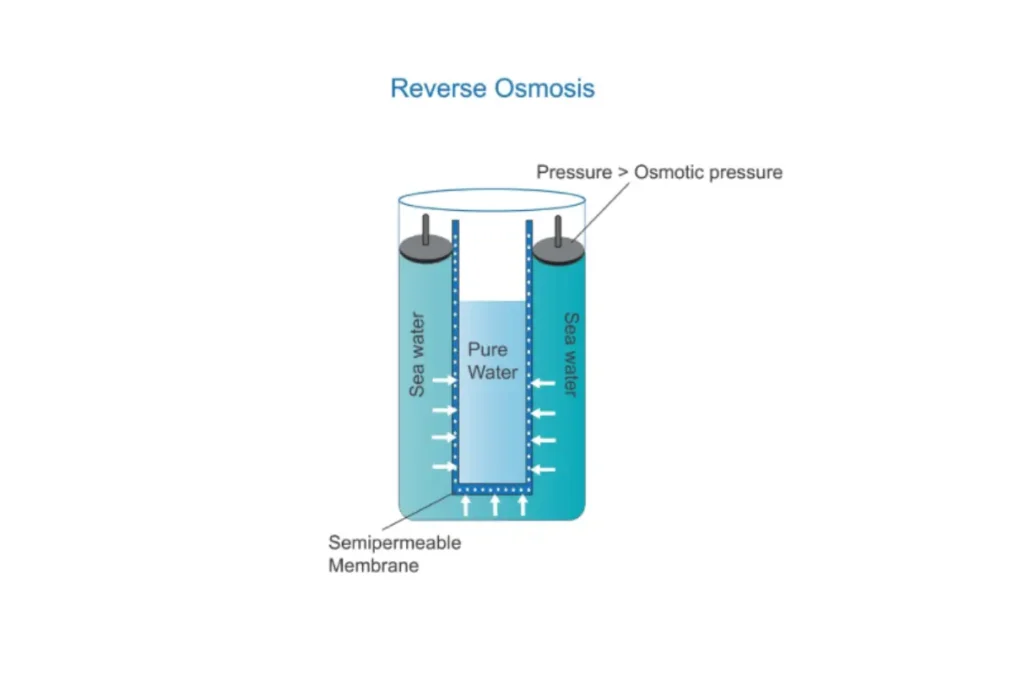
Dubai’s desalination system is based on extracting seawater from the Arabian Gulf, and then passing it through two key technologies. The first one is Multi-Stage Flash Distillation, where seawater is heated to generate steam which is then harvested as pure water. The second and growing more prevalent is Seawater Reverse Osmosis. This technology pumps water under pressure through ultra-fine membranes to strip away salt and contaminants. Due to its lower energy consumption, RO is much more advantageous than MSF and can be coupled with renewable energy sources and hence DEWA is gradually moving towards RO.
DEWA has completed the installation of Unit A of the Hassyan Seawater Reverse Osmosis desalination plant, increasing the plant’s capacity to 60 million imperial gallons per day in Q1 2026, to reach a total installed capacity of 555 million imperial gallons per day. Seawater Reverse Osmosis is now 23 percent of DEWA’s water production mix, up from 5.3 percent just a few years ago in 2019. This is a change in water production structure in the city. Since both energy costs and carbon footprint are on the agenda, the transition is important as it will impact both the energy cost and the carbon footprint of each litre produced.
Dubai’s Water Demand: Cost of Keeping Up
The financial scale of meeting Dubai’s water demand is significant and growing. DEWA invested AED 11.72 billion in 2025, primarily to expand renewable energy capacity, desalination plants, and transmission and distribution networks. That investment level is not discretionary. It is the minimum requirement to stay ahead of a demand curve that adds the equivalent of a mid-sized city’s consumption to the grid in a single year.
For residents, the cost of this infrastructure is increasingly visible in utility bills. DEWA’s 2026 residential water tariff structure charges between AED 7.699 and AED 10.118 per cubic metre depending on consumption level. The cost of the desalination-related energy is also reflected by an obligatory fuel surcharge of AED 1.10 per cubic metre. In 2024, the sewerage fee was raised from 1 fil per gallon to 2 fils per gallon, and it is expected to go up to 2.8 fils per gallon in 2027. That would represent a three-year hike in sewerage rates of exactly 180 per cent because of the need to invest in the infrastructure to provide services to a growing population.
The 2030 Target
The authority’s 2030 roadmap is the most telling indicator of the amount of Dubai’s water demand is expected to continue to grow at. DEWA expects to increase the total installed desalination capacity from 555 million imperial gallons per day (IGD) to 730 million IGD by 2030. This would represent an increase of 180 million imperial gallons per day, 32 per cent of the current capacity, to be added within the next five years or less. Of those 730 million imperial gallons per day, 303 million will be generated by Seawater Reverse Osmosis (SWRO) using renewable energy, marking a change in the way the city’s water is produced.
With the resilience of its business model, disciplined execution and constantly growing demand, DEWA CEO Saeed Mohammed Al Tayer called 2025 the best financial and operational performance ever recorded in DEWA history. The Q1 2026 results continued this trend, with net profit rising to AED 940 million on consolidated revenue of AED 6.45 billion, both the best-ever first-quarter results. The record performance was achieved “in the face of a difficult geopolitical environment”, Al Tayer said, alluding to the regional geopolitical instability and operations since February 2026. That’s the picture DEWA is trying to maintain, that they’re keeping up with a growing city.
DEWA’s record production numbers, customer additions, and investment in new capacity are not signs of a system under stress. They are signs of a system working at maximum output to stay one step ahead of the demand it was built to serve. Whether that one-step lead is sufficient depends entirely on how fast Dubai grows next. On its current trajectory, the answer to that question has consistently been: ‘faster than expected.’
Read More: A Unique Connection Between the UAE Date Palm Trees and Earthquake-Affected Japan