
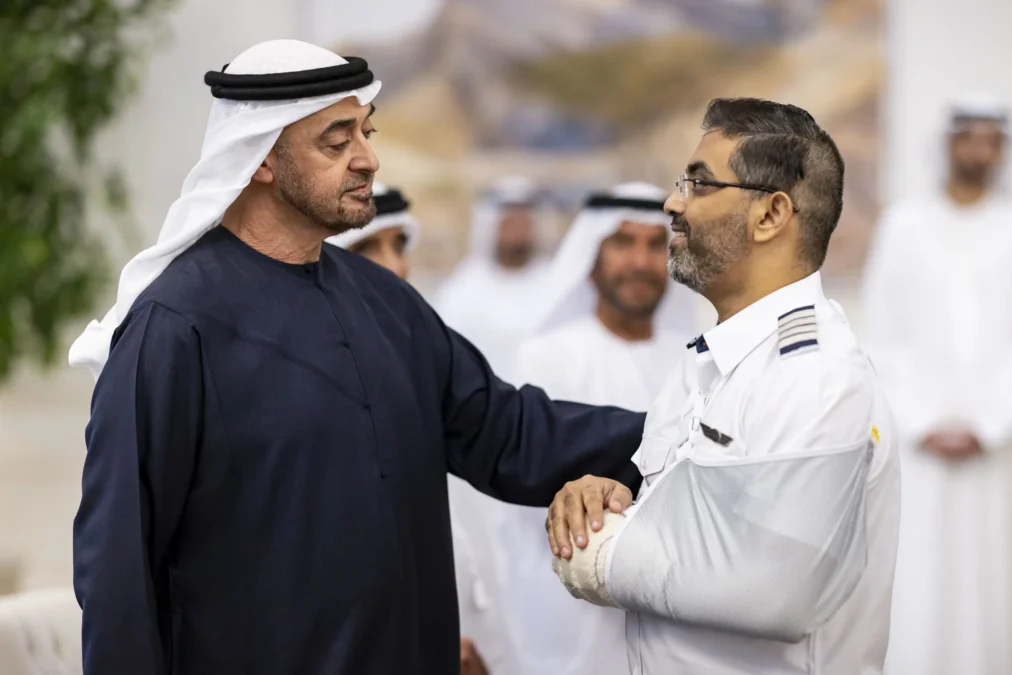
Four weeks after flight FZ1073 made an emergency landing in Tabuk, the UAE President received the crew in Abu Dhabi and conferred upon them the First Class Order of Zayed II.
There are moments when a nation stops and says, collectively and without ambiguity: we saw what you did, and we will not let it go unrecognised.
Related Stories

October 27th was one of those moments.
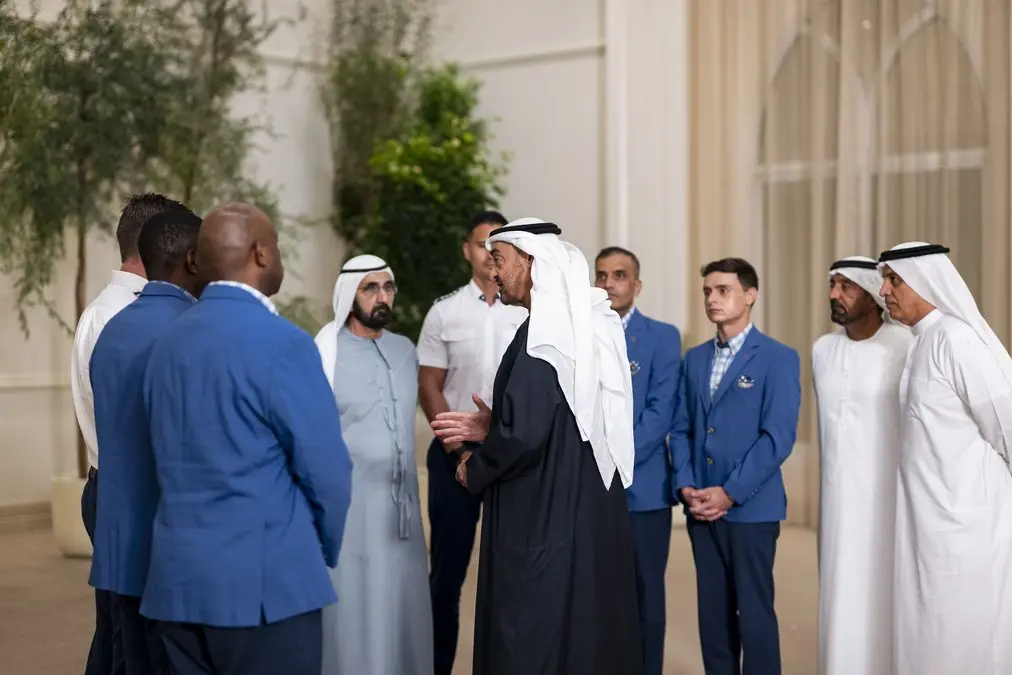
UAE President His Highness Sheikh Mohamed bin Zayed Al Nahyan received the flydubai crew members involved in the September 30th in-flight incident at a ceremony in Abu Dhabi, attended by His Highness Sheikh Mohammed bin Rashid Al Maktoum, Vice President, Prime Minister and Ruler of Dubai, alongside members of the UAE’s senior leadership.
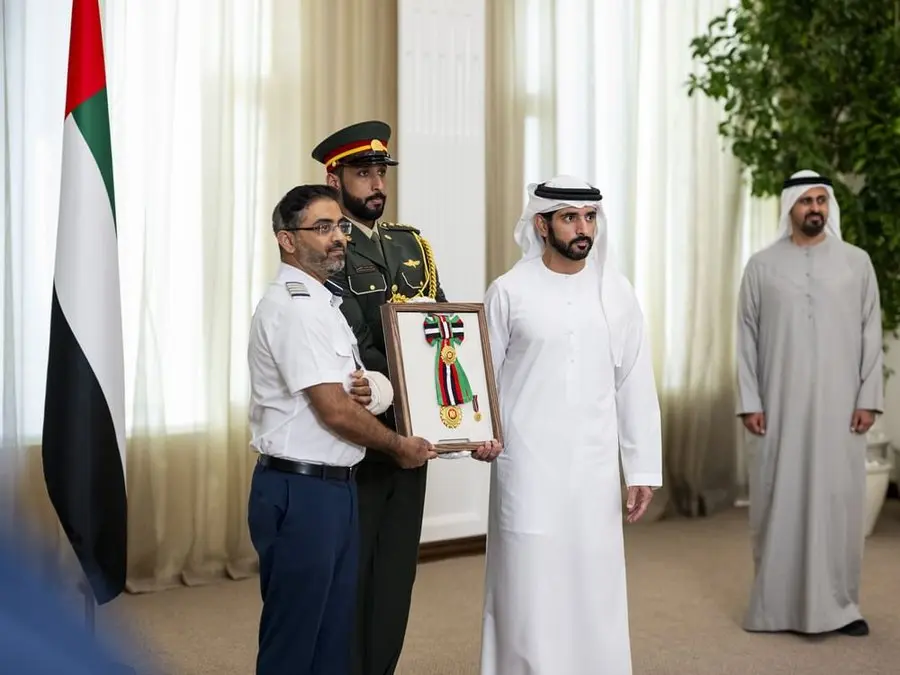
In the same gathering, the UAE President conferred the First Class Order of Zayed II upon each of the crew members, the country’s recognition rendered not in words alone but in one of its most significant state honours.
Related Stories

What the Honour Means
The Order of Zayed is not presented routinely. It carries the name of the UAE’s founding father and is awarded in acknowledgement of acts that reflect the values the nation holds most fundamental. Courage under extraordinary pressure. Devotion to the safety of others at personal cost. The kind of conduct that does not calculate risk before acting, because the calculation has already been made by character rather than circumstance.
The honours were presented by His Highness Sheikh Hamdan bin Mohammed bin Rashid Al Maktoum, Crown Prince of Dubai, Deputy Prime Minister and Minister of Defence of the UAE, who commended the crew’s actions and their profound sense of responsibility in circumstances that would have tested anyone.

The crew members, receiving the honours in the presence of so much of the nation’s leadership, expressed their pride and their gratitude — though pride, in this context, seemed the more fitting of the two emotions. What they had done four weeks earlier needed no embellishment. The honour simply made permanent what the country already knew.
The Story Behind the Recognition
For those who followed the events of September 30th, the faces in that Abu Dhabi ceremony carry the weight of everything that was at stake on that morning.
Flight FZ1073 departed Dubai International Airport bound for Tel Aviv. Somewhere over Saudi Arabian airspace, an attack took place inside the cockpit. Captain Smit Machchhar, a thirteen-year veteran of commercial aviation and one of flydubai’s most experienced commanders, was assaulted by the co-pilot using the aircraft’s emergency axe. Despite serious wounds concentrated on the head, the captain fought back, activated the cockpit door release from the floor and enabled fellow crew members and passengers to overpower the attacker.
Related Stories

A pilot travelling on the flight as a passenger noticed something wrong with the cockpit door. He entered using the access code, witnessed the assault and intervened immediately. A cabin crew member and several passengers joined him. Together they restrained the co-pilot, stabilised the situation and handed control back to the aircraft’s return-flight crew.
The Boeing 737 MAX 8, which had dropped 14,000 feet in under thirty seconds, was brought under control and diverted safely to Tabuk Airport in Saudi Arabia. All 174 people on board landed alive.
A UAE judicial investigation subsequently confirmed what the flight data had suggested from the beginning: this was a premeditated terrorist act, planned over years by the co-pilot who carried it out. The attack was designed to crash the aircraft into the passenger terminal at Ben Gurion Airport with the intention of causing mass casualties.
It did not succeed because of the people now standing in a room in Abu Dhabi, receiving the First Class Order of Zayed II from their President.
A Country Acknowledges Its Own
Their Highnesses Sheikh Mohamed bin Zayed and Sheikh Mohammed bin Rashid conveyed to the crew that protecting human life and safeguarding the security of passengers remain among the UAE’s most deeply held commitments. The statement issued following the reception was brief but carried the gravity that such occasions deserve.
The ceremony was attended by a gathering of the UAE’s senior leadership including Sheikh Hamdan bin Zayed Al Nahyan, Lt. General Sheikh Saif bin Zayed Al Nahyan, Sheikh Ahmed bin Saeed Al Maktoum and a number of senior officials and guests, reflecting the weight the nation assigned to the occasion.
Captain Smit Machchhar, who is recovering in Dubai following surgery in Tabuk and subsequent transfer, was praised by leaders globally in the days following the incident — by India’s Prime Minister Narendra Modi, by Israel’s Prime Minister Benjamin Netanyahu, by the President of India and by the US President. His own country’s recognition, arriving now, carries a particular completeness.
The crew of FZ1073 did not know, on the morning of September 30th, that the day would ask what it eventually asked of them. They answered anyway, under conditions that most people will fortunately never face. The UAE, in its characteristic way, did not let that pass without acknowledgement.
Some medals are awarded for service rendered over years. These were awarded for thirty minutes in the sky over Saudi Arabia that changed the outcome for 174 lives.
They were earned.