
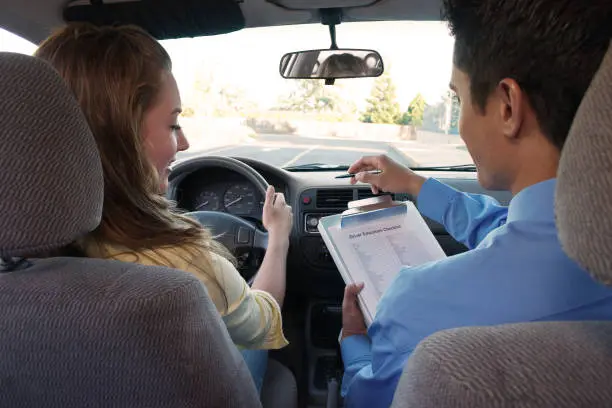
Many learners in the UAE believe they will pass their test if they get an overall score of 75%.
But all the road transport authorities in the various emirates, including Dubai’s Roads and Transport Authority (RTA) and the traffic departments at Abu Dhabi and Sharjah police, have strict marking criteria.

Following guidelines, even if the learners perform three-quarters of the manoeuvres correctly, they can still fail on the spot if they make certain mistakes.
Major Errors Trigger Immediate Automated Disqualification
Each licensing authority has strict rules for determining a pass grade for a candidate.
Minor mistakes will result in penalty points being taken away from the total. Major mistakes will invalidate any scoring.
Related Stories

Major safety-related offenses such as not giving way to oncoming traffic, following too closely, incorrect entry onto highways, and failing to give way to pedestrians will automatically fail their test. Learners will have to retake re-training.
Risk Assessment and Defensive Driving Over Pure Scoring
Examiners are looking for people to take a positive approach to risk and being a safe driver. If the student driver is not showing confidence with their vehicle but is overly cautious at roundabouts, tailgating, or can’t adapt their speed to dangerous situations, they will fail.

The traffic safety officials stress that if the learner avoids high-risk situations and is anticipating the traffic around you, then they are much less of a risk than someone who just knows the test routes.
High-Tech Sensors and AI Telematics Track Driver Inputs in Real Time
Licensing authorities across Dubai and Abu Dhabi use smart vehicles equipped with automatic telematics and in-built sensors to help eliminate bias.
Cameras and GPS monitors show how well the learner can drive accurately, stay in their correct lane, drive at the correct speed, and brake abruptly. This is recorded onto the examiner’s tablets by showing when they get it wrong.

Overall this ensures there is no debate in regard to any serious safety issues, such as not checking over your shoulder when merging lanes.
Smart Testing Technology and Telematics Audits
The licensing authorities in the UAE have now introduced smart testing cars, which include accurate telematics, dashboards, and automatically measured sensors.
Both Dubai and Abu Dhabi use automatic testing systems to measure lane keeping, stopping distances, seatbelt usage, and speed control whilst the candidate is being tested by a human examiner.
This means any serious infringements will be documented accurately. Candidates can never argue that they failed instantly, as their overall score from the manual test may look fine.
Zero-Tolerance Policy Frameworks and Mandatory Remedial Training
Driving test standards have been brought in line with national zero tolerance targets by the Ministry of Interior and local transport authorities.
In instances where an applicant has been disqualified due to a serious safety issue, they must attend specialist remedial courses at an approved driving centre.
This will reduce the total number of collisions by new drivers in the emirates by ensuring that learners are re-examined to a high standard following serious mistakes.
Bridging the Gap Between Passing the Test and Safe Driving
Driving institutes throughout the UAE are adapting their teaching methods to help students move away from scoring high numbers on their tests.
Instructors point out that to pass the practical test, they must be able to demonstrate full control of their car and ensure everyone around them on the road is safe.
By recognizing that safety is given priority in these tests, students will work hard to ensure they do not have any dangerous driving habits.
Also Read: Dubai Desert Camping Gets an Essential Upgrade—Registrations Open

