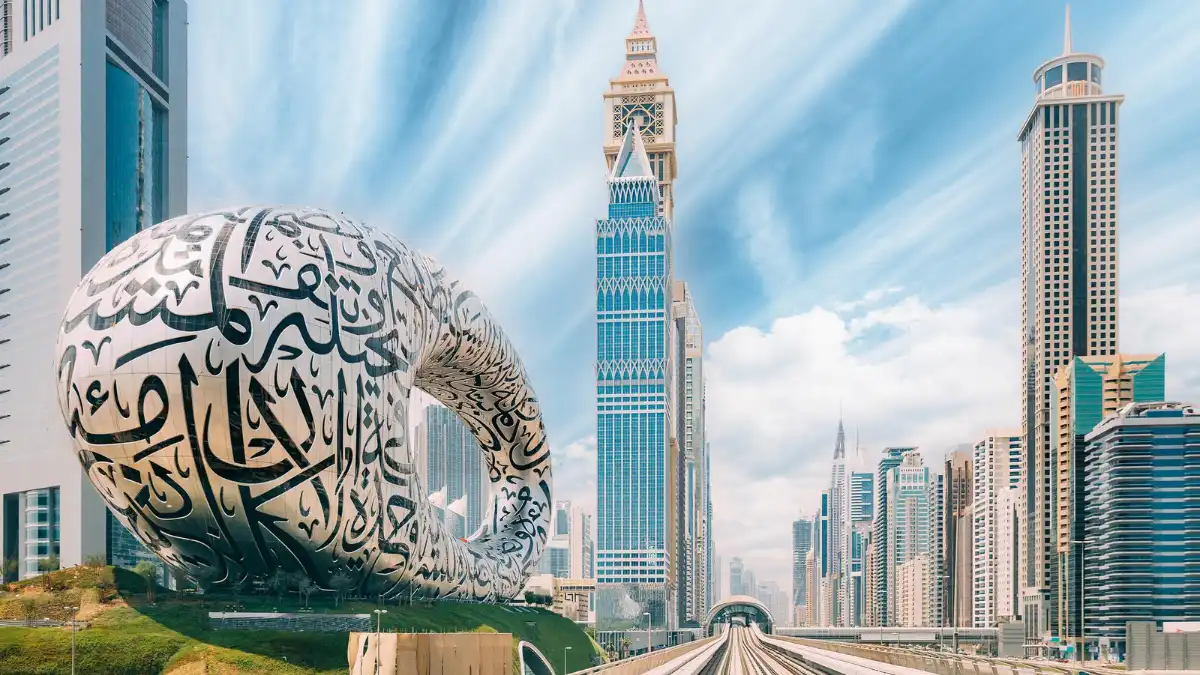
Dubai’s economic transformation is increasingly being driven by industries beyond oil. Trade, financial services, logistics, tourism, real estate, construction and technology now form the foundation of the emirate’s modern economy.
Economic diversification has been a long-term strategy for Dubai and the wider UAE. Instead of depending heavily on hydrocarbon revenues, policymakers have invested in infrastructure, global connectivity, business-friendly regulations and emerging industries.
Related Stories

The latest figures show why this strategy remains important. Dubai’s economy reached AED232 billion in the first quarter of 2026, recording 2.4% growth compared with the same period a year earlier. Dubai’s government said the performance reflected the “strength, resilience, and adaptability” of the economy, supported by the diversity and integration of its economic activities.
At the UAE level, non-oil economic activity continues to account for a growing share of national output. In the first quarter of 2026, UAE real GDP grew by 3%, while non-oil GDP expanded by 4.8%. The share of non-oil activities reached 79.4% of the national economy, up from 78% in 2025.
These figures underline the broader transformation taking place across Dubai and the UAE.
Moving Beyond an Oil-Dependent Economic Model
Dubai’s economic development has followed a different path from many traditional oil-producing economies. While oil revenues played an important role in the emirate’s early growth, Dubai steadily developed alternative industries capable of supporting long-term expansion.
Its strategic geographic location between Asia, Europe and Africa helped create opportunities in trade and logistics. Investments in ports, airports, roads and free zones then transformed this advantage into a broader commercial ecosystem.
Today, Dubai’s economy is diversified across more than 20 economic categories, with more than 95% described as non-oil based, according to Dubai’s Public Debt Management Office.
This means economic growth is no longer dependent on a single commodity. Instead, multiple industries contribute to employment, investment and business activity.
Trade and Logistics Remain at the Centre of Growth
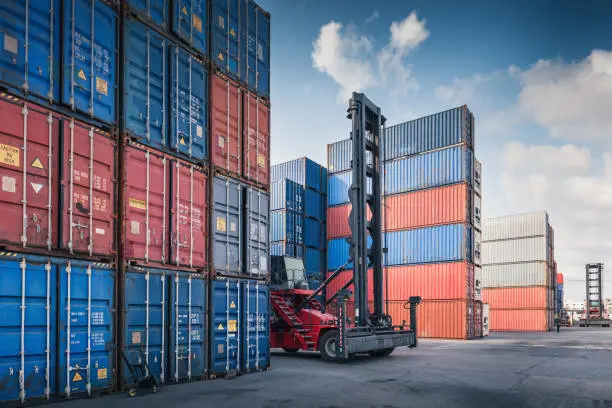
Trade remains one of the strongest pillars supporting Dubai and the UAE’s non-oil economy.
Dubai’s ports, airports, logistics centres and free zones have helped establish the emirate as a major gateway for international companies. Businesses can use Dubai to connect markets across the Middle East, Africa, Europe and Asia.
The latest trade figures show the scale of this activity. UAE non-oil foreign trade reached AED1.937 trillion during the first half of 2026, representing annual growth of 13.1%. Non-oil exports reached a record AED452.8 billion.
Commenting on the results, His Highness Sheikh Mohammed bin Rashid Al Maktoum said:
“These figures are more than trade statistics, they are a testament to the strength of our economy, the effectiveness of our development choices and the world’s confidence in the UAE.”
For Dubai, trade creates economic activity far beyond the movement of goods. Shipping companies, warehouses, financial institutions, insurers, technology providers and other service businesses all benefit from a strong commercial ecosystem.
Financial Services Are Becoming an Even Bigger Economic Driver
Dubai has also developed into one of the region’s most important financial centres.
The growth of banking, investment management, insurance, fintech and digital financial services has helped expand the non-oil economy and attract international companies.
The importance of finance is also visible in the latest national data. In 2025, financial and insurance activities grew by 10.4%, making the sector one of the fastest-growing major industries in the UAE.
Financial and insurance activities also accounted for 13.2% of non-oil GDP, highlighting the sector’s importance alongside trade, construction and manufacturing.
A strong financial sector supports the wider economy by helping companies access capital, financing infrastructure projects and attracting global investment.
Tourism Creates a Wider Economic Multiplier
Tourism is another major component of Dubai’s diversification strategy.
Visitors contribute to the economy through hotels, restaurants, shopping, entertainment, airlines and transport services. Dubai has also expanded its tourism strategy beyond traditional leisure travel by attracting business travellers, conference delegates, families and luxury visitors.
The sector has a significant multiplier effect. A visitor does not only spend money on accommodation; tourism also supports retail, food services, entertainment, transport and other businesses.
This interconnected structure is one of the key advantages of diversification. Growth in one industry can generate additional activity across several others.
Real Estate and Construction Continue to Support Expansion
Real estate and construction remain closely connected to Dubai’s wider economic growth.
As the city attracts businesses, investors and residents, demand increases for housing, offices, hotels, retail centres and logistics facilities.
At the UAE level, construction was the fastest-growing major sector in 2025, expanding by 11.1%. Real estate activities grew by 7.9%.
These industries also benefit from the expansion of other sectors. Growing tourism creates demand for hotels, expanding trade requires warehouses and logistics facilities, while financial and technology companies need commercial space.
However, diversification also means Dubai is increasingly focused on ensuring that growth is supported by productive industries rather than relying solely on property development.
Technology and Innovation Shape the Next Phase
The next stage of Dubai’s diversification strategy is likely to be increasingly digital.
Artificial intelligence, fintech, e-commerce and advanced digital services are becoming more deeply integrated into traditional industries such as finance, logistics, real estate and retail.
The UAE government has continued to emphasise the role of technology and innovation in future economic development.
Speaking about the country’s economic performance, Abdulla bin Touq Al Marri, UAE Minister of Economy and Tourism, said the continued expansion of non-oil sectors reflects progress towards a more diversified and competitive economy. He also highlighted investment in the digital economy, technology and innovation as part of efforts to strengthen long-term economic growth.
Technology is particularly important because digital businesses can create new economic opportunities while improving efficiency across existing sectors.
Why Diversification Improves Economic Resilience
A diversified economy is generally better positioned to manage sector-specific shocks.
If an economy depends primarily on one commodity, a major decline in prices or demand can have a significant impact. A broader economic structure spreads economic activity across multiple industries.
Dubai’s model is based on this principle. Trade, tourism, financial services, construction and technology do not always move in the same direction at the same time. Strength in one sector can help offset weaker conditions elsewhere.
This does not eliminate economic risks. Recent regional shipping disruptions, for example, created challenges for logistics and trade activity in 2026. The UAE Central Bank said such disruptions could temporarily affect transportation, wholesale trade and tourism-related services, although continued diversification and public investment were expected to support positive non-hydrocarbon growth.
This highlights the importance of building an economy with multiple sources of growth.
Dubai’s Diversification Strategy Continues
The latest data shows that Dubai and the UAE continue to build on the foundations created over previous decades.
In 2025, UAE GDP grew by 6.2% to reach AED1.9 trillion, while non-oil GDP increased by 6.8% to AED1.5 trillion. Trade accounted for the largest share of non-oil GDP at 16.9%, followed by financial and insurance activities at 13.2%, construction at 12.9% and manufacturing at 12.8%.
These figures demonstrate that diversification is no longer simply a future objective. Non-oil industries are already the main drivers of economic activity.
For Dubai, the next challenge will be maintaining this momentum while strengthening innovation, competitiveness and productivity. Trade and tourism will remain essential, but technology, digital services and new economy industries are likely to become increasingly important.
Dubai’s economic story is therefore not simply about moving away from oil. It is about building a connected economy where trade supports logistics, finance supports investment, tourism supports services and technology improves the efficiency of every sector.
That interconnected model is helping shape Dubai into a more resilient and diversified global economy.
Frequently Asked Questions
What is Dubai’s non-oil economy?
Dubai’s non-oil economy includes sectors such as trade, logistics, tourism, financial services, real estate, construction, technology, retail and hospitality.
How important is the non-oil sector to Dubai?
Dubai’s economy is heavily diversified. Dubai’s Public Debt Management Office states that more than 95% of the emirate’s GDP is non-oil based.
What was Dubai’s latest GDP growth?
Dubai’s GDP reached AED232 billion in the first quarter of 2026, recording growth of 2.4% compared with the same period in 2025.
Which sectors are driving non-oil growth?
Key sectors include trade, financial and insurance activities, construction, manufacturing, real estate, logistics and tourism. In 2025, construction grew by 11.1%, while financial and insurance activities expanded by 10.4%.
How does diversification make Dubai’s economy more resilient?
Diversification reduces dependence on a single industry. When economic activity is spread across trade, finance, tourism, technology and other sectors, the economy is generally better positioned to manage industry-specific shocks.
What is the future of Dubai’s non-oil economy?
Dubai is expected to continue strengthening established sectors such as trade, finance and tourism while expanding its focus on technology, artificial intelligence, digital services and other new economy industries.
Read More: Non-Oil Trade Goal: The Future of India UAE Trade