
The UAE-Türkiye CEPA has started showing measurable economic impact. The UAE Ministry of Economy official figures show that the non-oil trade between the countries increased to $45.2 billion in 2025. The numbers imply how the UAE trade agreements are reshaping its economy beyond oil.
The Comprehensive Economic Partnership Agreement (CEPA) was officiated in September 2023. According to the ministry of economy, the main aim of the agreement was to reduce tariffs and improve market access. It also aims at simplifying custom procedures and increasing investment flows between the UAE and Türkiye. The bilateral trade has accelerated faster than expected since its implementation.
Related Stories

As per Ministry of Economy and WAM reports, the non-oil trades between the two countries increased 60 percent compared to the pre-CEPA levels. It increased by 11.5 percent from last year to reach $45.2 billion. Türkiye has become one of the UAE’s fastest growing strategic trade partners outside the Gulf and the Asian markets.
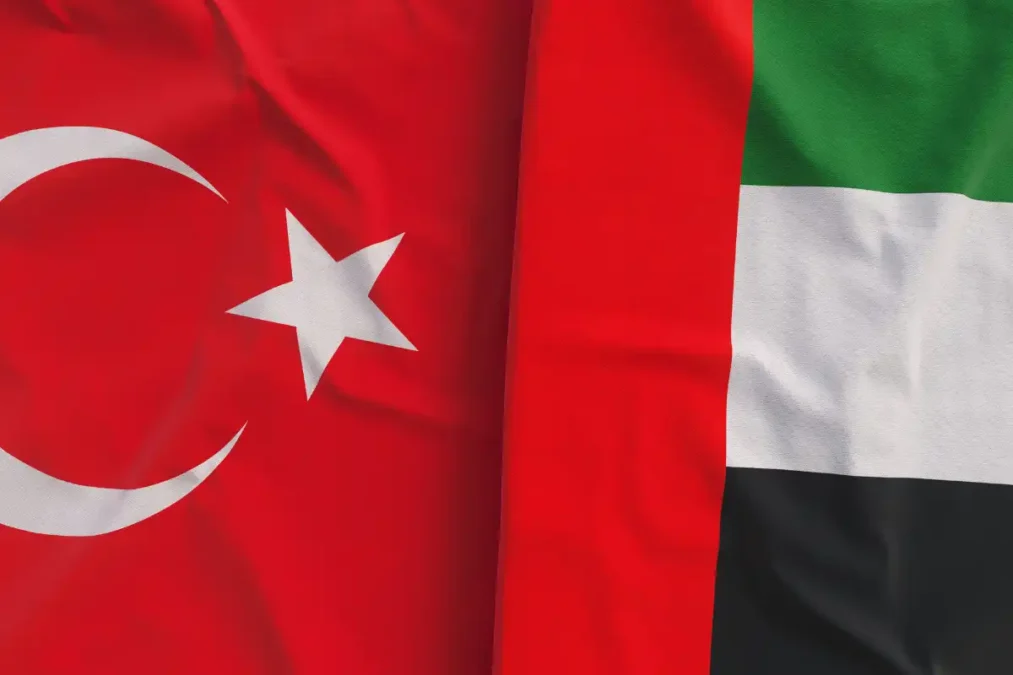
What UAE-Türkiye CEPA Actually Means?
The UAE-Türkiye CEPA is a part of a broader economic strategy by the UAE. CEPA agreements are designed with an aim to sway the country away from dependence on hydrocarbons by expanding its impact in non-oil sectors like logistics, advanced manufacturing, food trade, digital services, renewables, and financial services.
Unlike the conventional trade agreements focused on lowering tariffs, CEPA targets investment cooperations, supply chain integration, intellectual property protections, and private sector collaboration. The UAE has actively expanded this strategy since 2021. The countries that have signed the CEPA agreement are India, Indonesia, Türkiye, Cambodia, Costa Rica, South Korea, and several other economies.
With over ten CEPAs globally, the agreements are expected to help raise the non-oil exports by more than 33 percent and contribute approximately AED 153 billion to the UAE economy by 2031. According to official statements by the UAE government, the long term target is to increase the country’s total non-oil foreign trade to AED 4 trillion.
Türkiye stands at an important position in this framework because of its geography and industrial capacity. Its exports crossed $255 billion in 2025, according to the data from the Turkish Statistical Institute. The industrial base of Türkiye spans across logistics, textile, machinery, and other sectors that the UAE increasingly wants to integrate into its logistics and re-export ecosystem.
The country acts as a European manufacturing hub and a logistic bridge between Europe, Asia, and the Middle East. stronger ties with Türkiye improve the UAE’s access to industrial supply chains and consumer markets beyond bilateral trade.

Why is the Trade Rising?
The UAE-Türkiye CEPA growth is driven by several sectors. All, including gold, machinery and electronics, food products, petrochemicals, construction material, and logistics services, recorded a stronger trade activity after the reduction of the tariff barriers. According to an analysis by The National, the agreement significantly improved customs efficiency. It also argues that the operational cost for businesses across both countries also reduced. This matters for exporters and logistic firms which depend highly on the fast turnaround times and predictable trade routes.
The geopolitical environment has also strengthened the importance of diversified trade corridors. The regional disruptions caused by the US–Israel’s war on Iran have made the shipping and supply chains volatile. These pushed the Gulf economies more towards deepening the trade relationships beyond their traditional trade partners. Türkiye’s manufacturing base and geographic position has become strategically more valuable.
UAE’s growth data is self explanatory. According to the data from the World Trade Organisation, the UAE became one of the top ten merchandise exporters in 2025. The Ministry of Economy claims that non-oil sectors contribute to more than 7 percent of the GDP now. The UAE-Türkiye CEPA supports a much larger upcoming transition of the UAE economy, the one where trade, logistics, manufacturing, technology, and other services replace oil as the primary catalyst of economic growth.

Other Countries
The Türkiye agreement highlighted that rather than focusing on domestic production only, the UAE is trying to become the central connecting node between Asia, Europe, and the Middle East. The CEPA strategy is a reflection of that ambition. While the India-UAE CEPA elevated the non-oil trades after implementation, the Indonesia and South Korea agreements indicate the UAE’s larger expansion into major Asian manufacturing economies. Agreements with Costa Rica and Georgia help diversify the agricultural and logistics chain.
These trade agreements are not just isolated deals. Economists view them as a connected economic network. With each agreement the UAE’s role as the regional re-export, logistic, and investment hub expands and signifies. Jebel Ali Port, Abu Dhabi’s industrial zones,and Dubai’s aviation infrastructure equally benefit from more trade flow through the country.
This strategy also creates a political leverage for the UAE. In a global economy becoming increasingly fragmented, the countries that maintain broad trade relationships across multiple regions are more resilient to the geopolitical shocks. For the UAE, where CEPAs are economic instruments, they also act as long-term strategic tools.

The Broader Outlook
The immediate headline are the $45.2 billion trade numbers. However, the bigger story lies underneath. It’s how quickly the UAE is restructuring its economic identity. Oil still enormously matters to the middle east, but the agreements like UAE-Türkiye CEPA show the country’s future growth model. The one that is being built around trade corridors, logistics infrastructure, and diverse global partnerships rather than hydrocarbons alone.
According to the IMF’s regional outlook for the Middle East and Central Asia, Gulf economies are increasingly pivoting towards non-oil diversification because long-term market transitions indicate the diversification is strategically necessary for the future growth and stability. The UAE’s CEPA strategy fits right into the transition model.
Read More: Indian Crew Member Died In A Fire at Hormuz, Speculations Increase