Every city has a workforce that keeps it moving. Electricians, construction workers, cleaning, drivers, delivery workers. Dubai’s resident population recently surged past 4.58 million people (with a peak daytime population exceeding 6.39 million), supported by an industrial workforce that numbers in the hundreds of thousands across major labor zones. Many of these workers were buying their daily supplies from unlicensed markets that were not monitored for safety and hygiene standards, and lacked adequate infrastructure.
Over the years, many of these workers were engaging in their daily activities at these unlicensed markets, which lacked basic health monitoring and hygiene protocols and were poorly equipped with facilities. That model is changing. According to the Dubai Municipality official announcement on August 19, 2026, three integrated community markets are now fully operational, and a fourth is in progress.
What Has Been Built
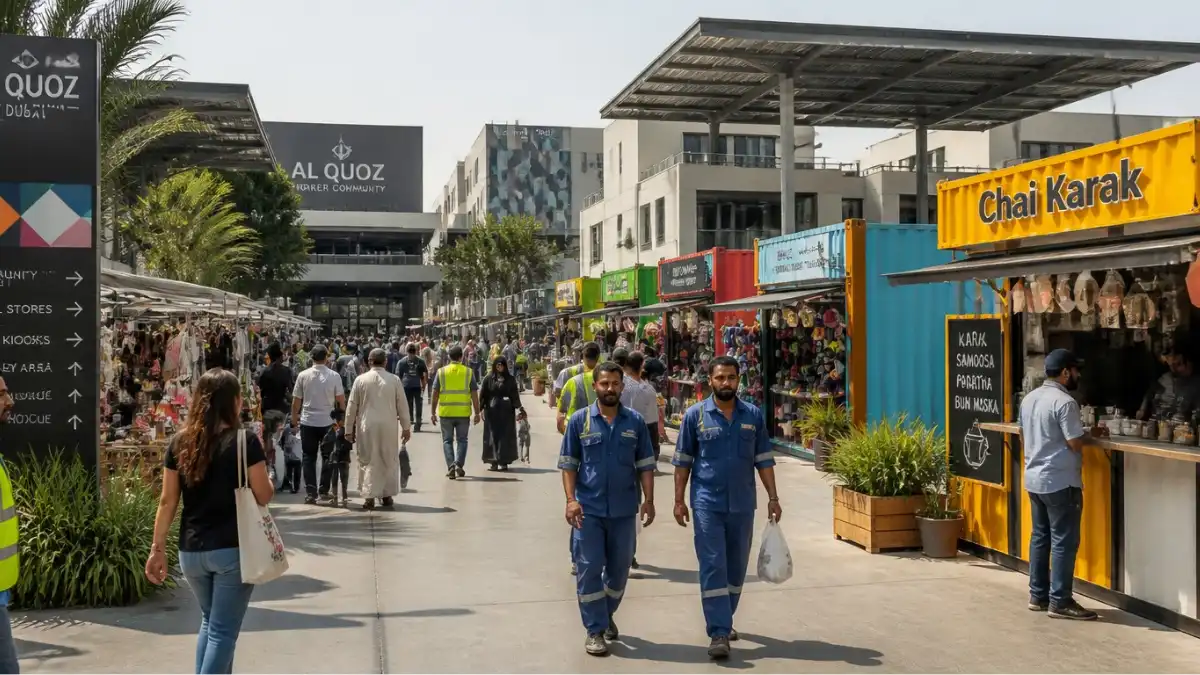
The three completed markets sit in Muhaisnah 2, Al Quoz Industrial Area 3, and Al Quoz 4. Together, they span more than 69,000 square metres. A fourth market in Jebel Ali Industrial Area 1 will open in the coming months, extending the network into one of the city’s largest industrial zones.
Each of the Dubai workers community markets offers eight distinct categories of service: food kiosks, fruit and vegetable outlets, meat and fish shops, consumer goods stalls, barber shops, tailoring services, sports facilities, and dedicated spaces for health awareness programmes and community events. That range is deliberate. The design reflects what workers actually need within walking distance of where they live, rather than what is easiest to build.
The three operational markets contain 866 kiosks and stalls in total. Furthermore, private sector operators manage them under health, safety, and sustainability standards set by Dubai Municipality. The model is already being evaluated for scalability across other parts of Dubai and potentially across the wider UAE.
Related Stories

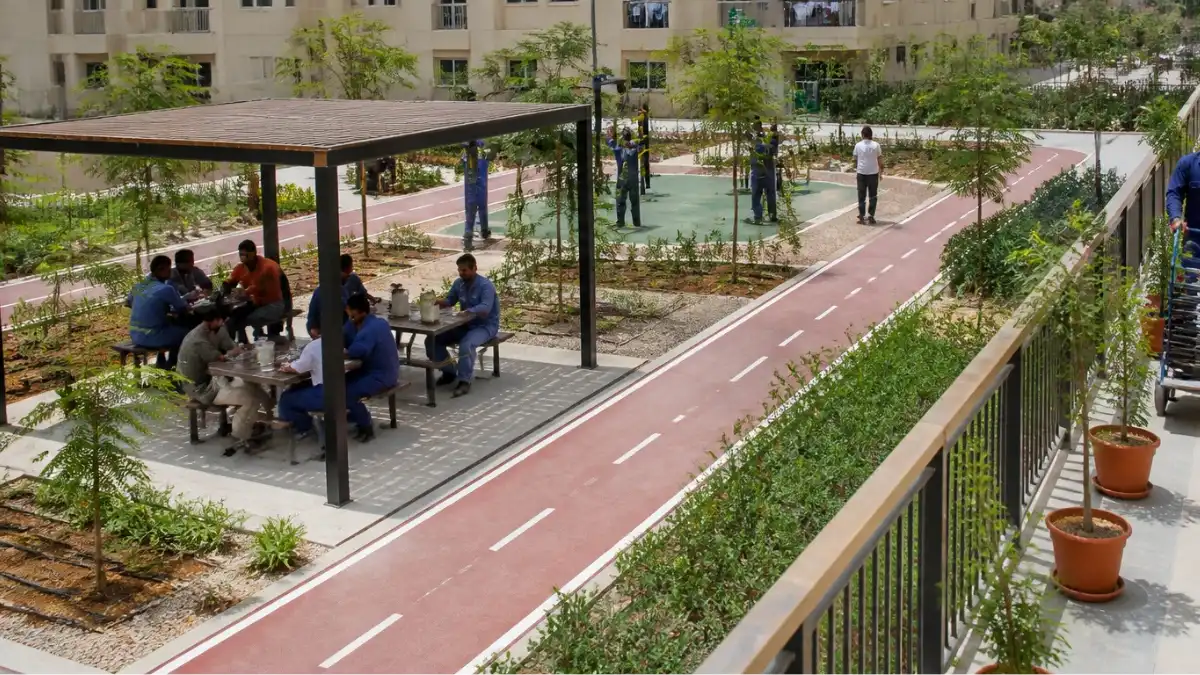
Why Location Matters
The positioning of each market is as important as what is inside it. Muhaisnah 2, Al Quoz, and Jebel Ali Industrial Area are among the highest-density labour accommodation zones in the city. Workers in these areas can number in the hundreds of thousands. Yet for years, the closest formal retail infrastructure was often a significant commute away, requiring a bus, a taxi, or a long walk in heat that makes either option genuinely difficult after a full shift.
Dubai workers community markets within walking distance of accommodation change the daily math for workers. A haircut is no longer a walk but a hike. Fresh produce is not a planned item of your meal, but something you grab along the way on the way home. The art of tailoring, mobile top-ups, variety in food and social space become part of the daily routine as opposed to the weekend exception.
Related Stories

This is important to wellbeing not only because it is convenient, but for other reasons as well. Numerous studies have demonstrated that availability of community services, social space and recreational facilities can positively impact on mental health for migrant worker populations. The markets provide all of those things within a single location.
The Numbers Behind the Impact
According to the sources, the three markets have already helped to improve the lives of over 640,000 workers. The satisfaction among customers is 99 percent. A total of over 800,000 people have attended these events since they began, with more than 69 community events held. In addition, the municipality conducted 16 awareness sessions at the markets, reaching more than 16,500 workers directly, on health and safety, food safety, first aid, public health and emergency preparedness.
Those numbers deserve to be read slowly. 640,000 workers reached. 800,000 event attendances. 99 percent satisfaction. These are not modest outcomes for a social infrastructure project. They reflect consistent, repeated use by a population that clearly needed this provision and values it when it exists.
Related Stories
The project has also received external recognition. It received the British Safety Council Award in Category A, an independent validation of the health and safety standards embedded in the market design and operations.
What the Authority Said
Dr. Naseem Mohammed Rafie, Acting CEO of the Environment, Health and Safety Agency at Dubai Municipality, addressed the purpose of the project directly. “The development of integrated community markets for workers reflects Dubai Municipality’s commitment to providing safe, healthy and accessible environments that enhance quality of life and wellbeing,” he said. “These projects have been developed in line with planning and organisational standards that support convenient access to essential services, efficient infrastructure and sustainable facilities that respond to workers’ daily needs.”
The emphasis on quality of life rather than simply service provision signals a policy shift. A market that only provides goods treats workers as consumers. A market that also provides sports facilities, health workshops, community events, and social space treats them as residents whose daily experience matters.
Beyond Accommodation
Dubai’s approach to worker welfare has evolved considerably over the past decade. From the midday outdoor work ban to the Al Freej Fridge hydration campaign to dedicated rest stops for delivery riders, the city has built a layered system of protections and provisions for its outdoor and blue-collar workforce. The community markets add a permanent, place-based dimension to that system.
Beyond that, there is the public health aspect of the informal, unlicensed markets to professional, regulated and managed community space. Frequent food and health safety monitoring, licensed food handlers, certified meat and fish vendors, minimizes the risk of disease spread throughout a whole residential area. That benefit reaches the broader city, not only the workers directly using the market.
The fourth market in Jebel Ali Industrial Area 1 will complete the current phase of the project. After that, according to Dubai Municipality, the scalable model could support similar facilities in other parts of the city. For the workers who use them, that expansion cannot come quickly enough.
Read More: What Humanitarian Campaigns Mean for Low-Income Workers